
Small Space Small Sectional Sofa with Recliner: The Complete Guide
A compact sectional with a built-in recliner can transform a small living room into a comfortable lounging hub. This guide explains how to choose the right size, layout, mechanism, and materials so your small space feels intentional, comfortable, and easy to live in.
If you are researching a small space small sectional sofa with recliner, you likely already know what you want: comfortable seating that fits a compact room without overwhelming it. The challenge is that reclining sectionals vary widely in footprint, recline clearance, seat depth, and configuration. Choosing well means balancing seating capacity, lounging comfort, and the realities of a smaller floor plan.
This guide walks through the practical decisions that matter most. You will learn how to measure your room correctly, compare reclining mechanisms, evaluate upholstery for real life, and plan a layout that keeps walkways open. By the end, you should feel confident comparing models and choosing the one that fits your space and your daily routine.
Why a Small Reclining Sectional Works in Compact Rooms
A small sectional with a recliner offers a combination that few other furniture pieces match: corner-friendly seating plus built-in lounging. Instead of adding a separate recliner chair, the reclining seat is integrated into the sectional, which saves floor area and keeps the room visually calmer.
Key benefits include:
- Efficient corner use: an L-shaped or curved layout uses the corner of a room that a standard sofa leaves empty.
- Built-in lounging: a reclining seat provides a comfortable spot for reading, watching TV, or resting without a second chair.
- Defined seating zone: in open-plan apartments, a small sectional visually anchors the living area.
- Fewer pieces: one well-chosen sectional can replace a sofa plus a recliner, reducing clutter in a tight room.
For more context on compact living layouts, see our guide to small living rooms and our overview of the small sectional sofa category.
How to Measure for a Small Sectional with Recliner
Measurement is the single most important step. A reclining sectional has two footprints to consider: the closed footprint and the fully reclined footprint. Both must fit your room.
Measure the room, not just the wall
Record the length and width of your living area, then note doorways, windows, radiators, and traffic paths. A sectional that blocks a walkway or a door swing will feel cramped regardless of how compact it is.
Account for the reclined footprint
When a recliner seat opens, the footrest extends forward. Traditional mechanisms need several inches of clearance behind the frame plus open floor space in front. Wall-hugger and zero-wall mechanisms need very little rear clearance, which is a major advantage in small rooms.
Check seat depth and height
Deeper seats feel more lounging-friendly but take more floor space. In small rooms, a moderate seat depth keeps the room feeling open while still supporting comfortable sitting. Seat height matters for ease of standing up, especially for older household members.
Verify delivery access
Measure doorways, hallways, stairwells, and elevator dimensions. Modular sectionals that arrive in separate pieces are often easier to move into apartments and tight stairwells than a single large frame.
For a broader measurement framework, see our small sectional sofa for apartment guide and our small corner sofa for small spaces overview.
Popular Configurations for Compact Reclining Sectionals
Configuration determines how the sectional fits your room and how many people it seats. These are the most common layouts for small spaces:
L-shaped with one recliner
An L-shaped sectional with a single reclining seat is the most common compact option. The recliner is usually at one end, and the chaise or corner section provides lounging space. This layout works well against a corner wall.
Recliner plus chaise
A recliner combined with a chaise offers two lounging positions in one footprint. This works well in rectangular rooms where the chaise extends along one wall. See our small sectional sofa with recliner and chaise guide for layout examples.
Curved or rounded sectional with recliner
A gently curved sectional softens hard corners and can improve flow in a small room. Curved models with a recliner are less common but available. See our small curved sectional sofa with recliner overview.
Modular reclining sectional
Modular pieces can be rearranged as your space or needs change. A modular reclining sectional lets you add or remove a reclining seat and adapt the layout. This flexibility is valuable in apartments and rental homes.
Wall-hugger reclining sectional
Wall-hugger mechanisms slide the seat forward as the back reclines, so the frame can sit close to the wall. These are ideal for narrow rooms. See our small reclining sectionals for small spaces guide for more detail.
Leather options are also worth exploring: our small leather sectional sofa with recliner and small leather sectional sofas for small spaces guides cover material trade-offs.
Recliner Mechanisms Explained
The mechanism determines how the seat moves and how much clearance the sectional needs. In a small space, this is often the deciding factor.
Manual lever or handle
Manual mechanisms are simple, reliable, and lightweight. They use a lever or handle to release the footrest. Manual recliners are common in entry-level and mid-range sectionals and are easy to maintain.
Push-back recline
Push-back recliners require you to lean back to recline, using body weight to move the mechanism. They have fewer visible parts and a cleaner look, which suits modern small rooms. Push-back mechanisms are common in mid-tier models.
Power recliner
Power recliners use a motor and a button or remote. They offer smooth, precise positioning and are easier for people with limited mobility. Power mechanisms add weight and require a power source, so plan the outlet location. Power reclining sectionals are typically premium or high-end tier.
Wall-hugger and zero-wall
Wall-hugger and zero-wall mechanisms allow the sectional to sit close to a wall while still reclining fully. They are the best choice for narrow rooms and small apartments where every inch of floor space matters.
For related compact seating, compare our small wall hugger recliners for small spaces and small reclining chairs for small spaces pages.
Comfort and Support: What to Look For
Comfort is personal, but a few structural details reliably predict how a sectional will feel over time.
Frame construction
Look for kiln-dried hardwood or high-grade engineered wood frames with reinforced joints. A solid build resists wobble and squeaks, which matters more in a reclining sectional because the mechanism adds moving parts.
Cushion filling
High-resilience foam and pocketed coil systems provide durable support. Down-blend or fiber-wrapped cushions feel softer but need regular fluffing. In a small room, firmer cushions often hold their shape better and look tidier.
Seat depth and back support
A moderate seat depth supports upright sitting, while a slightly deeper seat encourages lounging. Lumbar support and a gently contoured back help prevent fatigue during long sitting sessions.
Armrest and footrest comfort
Padded arms and a smoothly extending footrest make the reclining seat genuinely usable. Test the recline motion if possible, or read owner feedback about the mechanism's smoothness.
Upholstery and Material Choices
Upholstery affects durability, cleaning, and how the sectional feels in a small room.
Performance fabric
Performance fabrics resist stains and moisture and are easy to clean. They are a practical choice for households with children or pets and are widely available in mid-range and premium models.
Microfiber and woven fabrics
Microfiber is soft, durable, and easy to maintain. Woven fabrics offer texture and warmth. In small rooms, lighter tones can make the space feel larger, while darker tones create a cozy, grounded feel.
Leather
Top-grain leather is durable, easy to wipe clean, and develops a patina over time. It can feel cool initially and warms with use. Bonded leather is a lower-tier option with less longevity. See our small leather sofas for small rooms guide for more detail.
Slipcovers
Removable slipcovers make cleaning and restyling easier. If you are considering a slipcovered reclining sectional, review our slipcovered sectional sofa with chaise and slipcovers for reclining sofas and loveseats pages.
Layout Ideas for Small Rooms
Layout determines how spacious the room feels. A few practical patterns work well with compact reclining sectionals.
Corner placement
Place the sectional in a corner with the recliner at the open end. This preserves the center of the room for a coffee table or open floor space and keeps walkways clear.
Floating layout
In open-plan apartments, a floating sectional can define the living zone without blocking flow. Leave a clear path behind the sectional for movement.
Pair with compact tables
Choose a coffee table or side tables that fit the remaining floor space. Slim side tables that tuck near the sofa keep the room flexible. See our small side tables that slide under sofa and small console table with storage guides.
Lighting and rugs
A rug can visually anchor the seating area and make a small room feel cohesive. Keep the rug proportionate to the sectional so the floor does not feel crowded. For broader space planning, see our small apartment living room set up guide.
Recommended Small Space Small Sectional Sofas with Recliner
⚠️ AFFILIATE DISCLOSURE: This website contains affiliate links. As an affiliate Associate, we earn from qualifying purchases. If you make a purchase through these links, we may receive a small commission at no additional cost to you. Read our full affiliate policy.
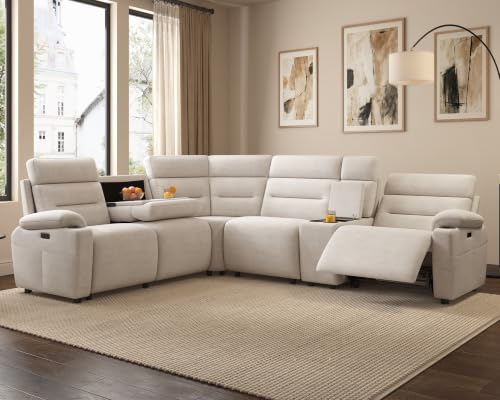
AMERLIFE L-Shaped Power Reclining Sectional Sofa for Living Room, Beige | Modular Power Sectional Recliner Couch,Fixed Console,Flip-Back,Cup Holders,USB,Hidden Storage,Linen Upholstery Sofa Moderno
Check price on Amazon
EBELLO Manual Reclining Sectional Sofa Set for Living Room, Soft Fabric Recliner Corner Sectional Couch with Center Console, Cup Holder and Storage, Brown
Check price on Amazon
EBELLO Faux Leather L-Shaped Reclining Sectional Sofa Couch, Manual Recliner Sofa, with Cup Holders, Storage Space, a Convertible Backrest 5 Seats Home Furniture Set for Living Room, Black
Check price on Amazon
EBELLO Fabric L-Shaped Reclining Sectional Sofa Couch for Living Room, Manual Recliner Oversized Sofa, with Padded Headrest, 2 Cup Holders, Storage Space, 5-Seater Home Furniture Set, Grey
Check price on Amazon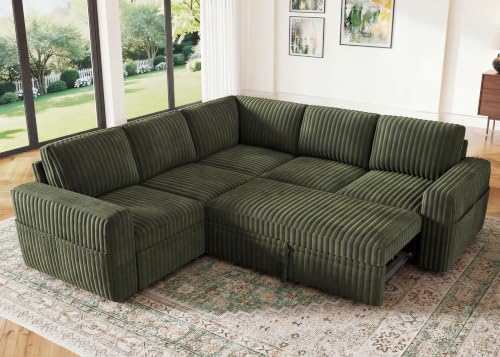
HONBAY Corduroy L Shaped Sectional Sleeper Sofa with Pull Out Bed,Green | modular design,built-In storage, couches for living room and apartment guest sleeping space,removable cushions
Check price on Amazon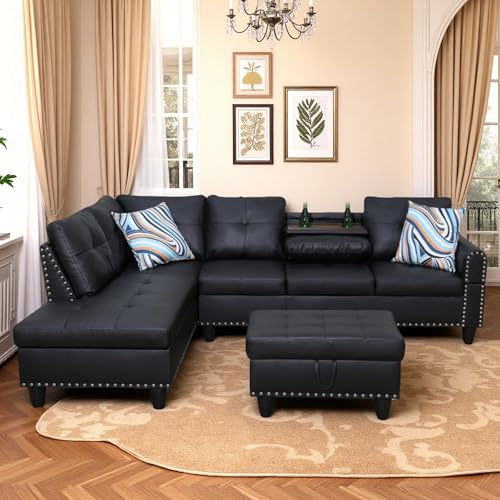
Trygoal Leather 3-Piece L-Shaped Couches for Living Room, Sectional Sofa with Storage Ottoman & Movable Chaise, Modular Convertible Couch for Bedroom & Apartment, Midnight Black
Check price on Amazon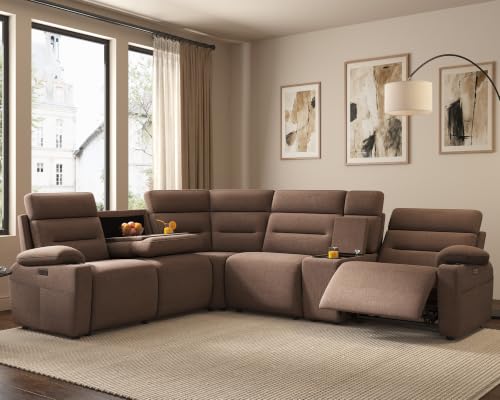
AMERLIFE L-Shaped Power Reclining Sectional Sofa with Dual Consoles, Brown | Dual Power Reclining Seats, Fixed & Flip-Back Consoles, Cup Holders, USB, Hidden Storage, Linen Upholstery, Modular Seating
Check price on Amazon
FORTEVA 5-Seat Power Reclining Sofa L-Shaped Sectional,2 Console,Light Gray | Electric Recliner Couch,Dual Infinite-Position Recline, Flip-Down Table, Console Table, Linen, Hidden Storage, USB, Modular
Check price on AmazonFrequently Asked Questions
What size sectional sofa fits a small space with a recliner?
Most compact reclining sectionals are roughly 70 to 90 inches wide, with wall-hugger or zero-wall mechanisms that need only a few inches of clearance behind the frame. Always measure your room, doorways, and the reclined footprint before choosing.
Do reclining sectionals need space behind them?
Traditional recliners require several inches of clearance to fully recline. Wall-hugger and zero-wall reclining sectionals need very little clearance, making them a strong option for small living rooms and apartments.
Is a small sectional with a recliner good for apartments?
Yes. A compact sectional with a recliner can define a seating zone, add comfortable lounging, and use corner space efficiently. Choosing a low-profile or modular design helps it feel lighter in a small apartment.
Which upholstery is best for a small reclining sectional?
Performance fabric, microfiber, and top-grain leather are popular choices. Performance fabrics resist stains and are easy to clean, while leather develops character over time and is simple to wipe down. Consider household members and pets when deciding.
Can a reclining sectional fit through a narrow doorway?
Modular and sectional pieces that arrive in separate sections are generally easier to move through narrow doorways and stairwells. Measure all access points before ordering and confirm whether the model ships in modules.
Final Thoughts
A small space small sectional sofa with recliner is a practical way to combine comfortable seating and lounging in a compact room. Focus on accurate measurements, choose a wall-hugger or zero-wall mechanism if clearance is tight, and prioritize durable upholstery and a supportive frame. With the right configuration and layout, a compact reclining sectional can make a small living room feel both functional and inviting.
If you are still comparing options, revisit our guides on small sofas, small sofas for small rooms, and small space living room sofa bed to weigh alternatives before deciding.