
Small Curved Sectional Sofa with Recliner: The Complete Buying Guide
A small curved sectional sofa with recliner combines two of the most requested living room features into one compact footprint: the soft, conversational flow of a curved silhouette and the lounge-ready comfort of built-in reclining seats. This guide walks you through sizing, layout, materials, and comfort details so you can choose with confidence.
Explore Recommended ModelsWhy this piece deserves your attention: A curved reclining sectional solves a common design conflict. Curved sofas soften boxy rooms and encourage conversation, while recliners deliver the comfort people expect for movie nights and long reading sessions. When the footprint is scaled down for apartments and smaller living rooms, the result is a versatile centerpiece that fits tighter spaces without sacrificing function.
What Makes a Curved Sectional with Recliner Different
A curved sectional with recliner is not simply a standard sectional bent into a curve. The frame geometry, seat depth, and reclining mechanism are engineered together. The curve usually appears in the front rail or overall seating arc, creating a gentle cradle shape. Recliner seats are integrated into one or more positions, often the end seats, while the middle seat may remain a stationary lounging spot.
The compact versions of this design are sometimes called small curved reclining sectionals. They typically use a shorter overall length, narrower seat depth, and wall-hugger or zero-wall reclining hardware that lets the seat recline without needing extra clearance behind the backrest. This makes them viable for rooms where a full-size sectional would overwhelm the floor plan.
For readers comparing alternatives, it helps to understand how this piece fits alongside other compact seating. A small sectional sofa with recliner offers similar comfort with a more angular footprint, while a small curved sofa focuses on the soft arc without reclining hardware. The curved reclining sectional sits between these two ideas.
Key Benefits of a Compact Curved Reclining Sectional
Understanding the practical advantages helps you decide whether this category matches your room and lifestyle. The most common benefits reported by owners of compact curved reclining sectionals include:
- Conversation-friendly shape: The curve gently angles seats toward the center of the room, which improves sightlines and makes the seating feel more social than a straight sofa.
- Space efficiency: Compact models reduce overall length and depth, so they fit into apartments, studios, and narrow living rooms more comfortably than full-size sectionals.
- Multi-function comfort: Reclining seats support lounging, reading, and screen time without requiring an extra armchair or ottoman.
- Softened room edges: Curved fronts break up rigid lines and reduce the visual weight of large seating, which is helpful in small rooms.
- Flexible configuration: Many models are available in left-arm or right-arm recliner setups, so you can orient the recliner toward the TV, window, or fireplace.
Sizing and Layout: Making It Fit Your Room
The most common mistake when buying a curved reclining sectional is underestimating the space required for the recline. A curved front looks compact, but the reclining seats still need room to extend. Before choosing a model, map out three measurements: overall length, overall depth, and recline clearance.
As a general planning guide, compact curved reclining sectionals fall into a few size bands. Use the table below to match a size band to your room type. The tier column uses descriptive size categories rather than numeric measurements, because exact dimensions vary by manufacturer.
| Size Tier | Best For | Typical Seating | Layout Notes |
|---|---|---|---|
| Compact tier | Studio apartments and tight living rooms | 2 to 3 seats, 1 recliner | Keep at least one open side; confirm recline clearance |
| Balanced tier | Small to medium living rooms | 3 seats, 1 to 2 recliners | Works well with a coffee table and one accent chair |
| Extended tier | Open-plan living and family rooms | 4 seats, 2 recliners | Use the curve to define the seating zone in open spaces |
For rooms with limited floor area, the placement strategy matters as much as the sofa size. Placing the curve toward the room center and keeping the recliner on the outer edge preserves walking paths. If the room is narrow, consider a small space small sectional sofa with recliner plan that keeps the recliner away from high-traffic zones. In studios, a small sectional sofa for studio apartment layout usually works best when the sofa anchors one wall and the recliner faces the entertainment area.
Apartment dwellers should also measure doorways, stairwells, and elevator dimensions. Curved pieces and recliner mechanisms can complicate delivery, so it is worth confirming whether the model ships in modular sections. A small sectional sofa for apartment checklist that includes doorway clearance will prevent delivery-day surprises.
Recliner Mechanisms: Wall-Hugger vs. Standard Recline
The reclining mechanism is where small curved sectionals earn their space-saving reputation. Two main types dominate the market, and each suits a different room layout.
Wall-Hugger Recline
The seat slides forward as the backrest reclines, so the sofa can sit close to a wall. Ideal for small rooms where every inch of clearance matters.
Zero-Wall Recline
Similar to wall-hugger designs, zero-wall mechanisms allow a near-wall placement while still providing a full recline. Confirm the exact clearance figure for your model.
Standard Recline
Requires open space behind the backrest to lean back. Often found on larger models; less suitable for tight rooms unless you have extra depth to spare.
If your room has a wall directly behind the sofa, prioritize wall-hugger or zero-wall hardware. If the sofa floats in an open-plan space, a standard recline can work, but you still need to keep the recline path clear of rugs, side tables, and traffic lanes. Readers comparing recliner-focused seating may also find value in the guidance on small reclining sectional sofas for small spaces, which covers clearance planning in more detail.
Upholstery Materials: Choosing for Durability and Comfort
The curve and recliner hardware are only part of the story. Upholstery determines how the sofa feels, how it ages, and how easy it is to maintain. For a compact curved reclining sectional, the best material depends on household traffic, pets, and cleaning preferences.
- Leather and leather-match: Durable, easy to wipe clean, and well-suited to households with children or pets. Leather softens over time and develops a comfortable patina.
- Performance fabric: Tightly woven textiles with stain-resistant treatments offer a softer hand feel while remaining cleanable. Good for family rooms.
- Velvet and textured weaves: Visually rich and comfortable, but require more careful maintenance. Best for lower-traffic living rooms.
- Microfiber: Soft, resilient, and generally easy to spot clean. A solid mid-tier choice for everyday use.
If you prefer the look and durability of leather, the guide to a small leather sectional sofa with recliner covers care routines and material grades in more depth. For rooms where the sofa doubles as a guest bed, consider how upholstery interacts with sleeper mechanisms; a small sectional sleeper sofa with chaise comparison can help you weigh comfort versus convertibility.
Comfort and Support: What to Look For
A curved sectional with recliner should feel supportive in both the upright and reclined positions. When evaluating a model, pay attention to seat depth, cushion construction, and back support.
Seat depth is especially important in compact models. A shallower seat keeps the sofa from dominating the room, but too shallow a seat can feel perched. A depth that supports the full thigh with feet flat on the floor is generally comfortable for most adults. Cushion construction matters too: high-resilience foam cores wrapped in fiber or down blend offer a balance of support and softness, while sinuous spring suspensions provide even weight distribution.
For the recliner seats, check the leg rest angle and lumbar support. A well-designed recliner supports the lower back in the reclined position rather than leaving a gap. If you plan to use the sofa for long movie sessions, prioritize models with padded leg rests and adjustable headrests where available.
Placement Ideas for Small and Curved Spaces
The curve is a design asset, but it needs the right placement to shine. In a small living room, angle the sofa so the curve opens toward the room's focal point, such as a television, fireplace, or window. This orientation preserves the conversation-friendly shape while keeping the recliner oriented for comfortable viewing.
In bay windows and alcoves, curved seating can follow the architecture of the room. If your room has a bay window, the guide to a small curved sofa for bay window offers placement ideas that translate well to curved reclining models. In small living rooms generally, the overview of small living rooms provides layout principles for balancing seating, traffic flow, and visual openness.
For studio apartments, define the living zone with a rug and place the sofa's curve toward the sleeping or dining area. This creates a soft visual boundary without walls. A small sectional sofa for studio apartment guide can help refine the zone-based layout.
Curved Reclining Sectional vs. Other Compact Seating
Buyers often compare this category with other small-space seating. The table below highlights the practical trade-offs without focusing on numeric specifications, since exact dimensions vary by model.
| Seating Type | Best For | Trade-Off to Consider |
|---|---|---|
| Small curved sectional with recliner | Conversation-focused rooms with lounge comfort needs | Requires recline clearance planning; curve limits some wall placements |
| Small L-shaped sectional | Corner placement and efficient wall use | More angular look; less conversation-oriented than a curve |
| Small curved sofa (no recliner) | Compact rooms prioritizing style and flow | No built-in lounge recline; may need an ottoman |
| Small reclining loveseat | Two-person seating in very tight spaces | Fewer seats; no sectional configuration flexibility |
If the room can accommodate a corner footprint, a small L-shaped sectional sofa may offer more seating along the walls. If the priority is the soft arc and visual flow, the curved reclining sectional is the stronger choice.
Buying Checklist for a Small Curved Reclining Sectional
Before you commit, confirm these points
Measure the room length and depth, including walkways. Confirm the recline clearance for each recliner seat. Check doorway and stairwell dimensions for delivery. Decide whether you need wall-hugger hardware. Confirm the upholstery cleaning code. Verify the orientation of the recliner (left-arm or right-arm). Ask about modular shipping if the room is hard to access. Review the warranty coverage for frame, mechanism, and upholstery.
Buyers who plan to entertain or host overnight guests may want to explore convertible options. A small sectional sofa with pull-out bed adds sleeping capacity, while a small sectional sleeper sofa overview helps compare mechanisms. For rooms where the sofa will face a television, a small sectional sofa with recliner and chaise combines lounge comfort with a chaise extension for feet-up relaxation.
Recommended Small Curved Sectional Sofas with Recliner
⚠️ AFFILIATE DISCLOSURE: This website contains affiliate links. As an affiliate Associate, we earn from qualifying purchases. If you make a purchase through these links, we may receive a small commission at no additional cost to you. Read our full affiliate policy.

BELUOR ISFREMA Power Recliner Sectional Sofa, 6-Seater Air Leather Curved Reclining Couch with LED Light, Cup Holder and Storage Console, Living Room Furniture Set for Home, Office & Apartment, Black
Check price on Amazon
EBELLO Fabric L-Shaped Reclining Sectional Sofa Couch for Living Room, Manual Recliner Oversized Sofa, with Padded Headrest, 2 Cup Holders, Storage Space, 5-Seater Home Furniture Set, Grey
Check price on Amazon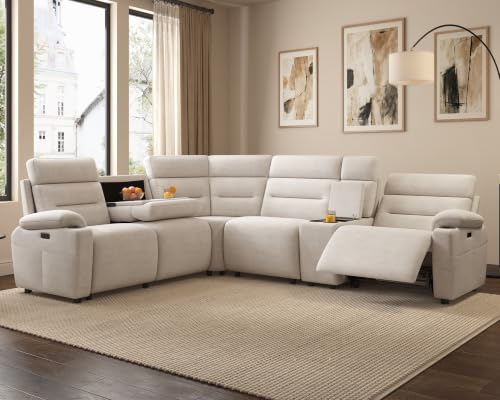
AMERLIFE L-Shaped Power Reclining Sectional Sofa for Living Room, Beige | Modular Power Sectional Recliner Couch,Fixed Console,Flip-Back,Cup Holders,USB,Hidden Storage,Linen Upholstery Sofa Moderno
Check price on Amazon
EBELLO Manual Reclining Sectional Sofa Set for Living Room, Soft Fabric Recliner Corner Sectional Couch with Center Console, Cup Holder and Storage, Brown
Check price on Amazon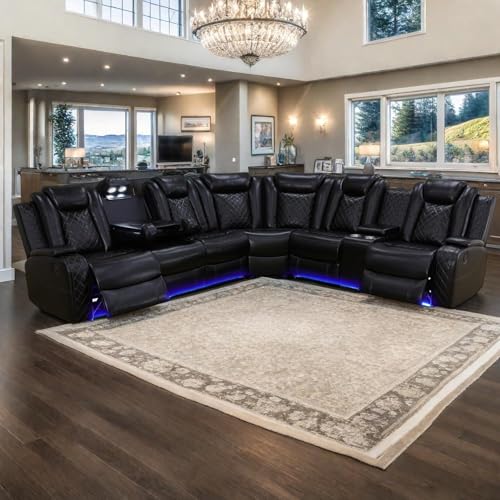
Power Recliner Sofa Sectional Sofa with LED Light for Living Room, Air Leather Reclining Corner Sectional Sofa Set, Cup Holder, Storage Console for Home Theater Seating (Black, Sectional)
Check price on Amazon
virezzalux Manual Reclining Sectional Sofa for Living Room Sectional Couch | Anti-Scratch Leather Recliner Sofa with Console, 2 Cup Holders & Storage, L-Shaped Sectional Corner Reclining Couches, Grey
Check price on Amazon
Reclining Sectional sofa, Reclining Sofa, Leather Sectional, Beige Brown | Power Reclining Sofa with Storage & USB, Adjustable Headrest & Cup Holders, Leather Sectional Couches for Living Room
Check price on Amazon
EBELLO Faux Leather Reclining Sectional Sofa Set, Included 1 Recliner Chair and L-Shaped Corner Manual Recliner Sofa with Overstuffed Armrests, 5-Seater Home Furniture Sofa for Living Room, Gray
Check price on AmazonFrequently Asked Questions
What is a small curved sectional sofa with recliner?
It is a compact seating piece that combines a gently curved footprint with built-in reclining seats. The curved shape softens the room and encourages conversation, while the recliners provide lounge-style comfort. Compact versions are designed for apartments and smaller living rooms.
How much floor space does a small curved reclining sectional need?
Most compact models need roughly 6 to 8 feet of wall or open floor length and about 3 to 4 feet of depth, plus clearance behind the recliner seats. Wall-hugger and zero-wall mechanisms reduce the clearance needed. Always confirm the exact recline clearance for the specific model you are considering.
Can a curved sectional with recliner fit in a small apartment?
Yes, when you choose a compact model with a shallow footprint and wall-hugger or zero-wall reclining hardware. Measure doorways and hallways before delivery, because the curve and recliner mechanism can affect how the piece moves through tight spaces. Modular shipping can make delivery easier in walk-up buildings.
What materials work best for a small curved reclining sectional?
Leather and leather-match upholstery are durable and easy to wipe clean, while performance fabric and tightly woven textiles offer a softer feel with good stain resistance. For homes with pets or children, look for reinforced seams and cleanable covers.
Is a curved sectional with recliner comfortable for everyday use?
Yes, when the seat depth, cushion support, and recline angle suit your body and habits. High-resilience foam cushions, padded leg rests, and lumbar support make a noticeable difference for daily lounging. Test the recline position and leg rest angle before committing if possible.