
Glider Armchair Buying Guide: Comfort, Motion & Style
Understand how glider mechanisms work, which frame and cushion builds last, and how to place a glider armchair in a nursery, reading nook, or living room with confidence.
Why this guide matters: A glider armchair looks simple, but the motion hardware, frame joinery, and cushion density determine whether it stays smooth for years or develops a wobble within months. This guide walks you through the decisions that actually affect long-term comfort so you can shortlist the right model before you buy.
What Is a Glider Armchair?
A glider armchair is a single-seat upholstered chair mounted on a sliding mechanism that moves forward and backward along a fixed track. Unlike a rocking chair, which pivots on curved rails, a glider travels on a horizontal carriage, producing a smooth, controlled motion that feels closer to a gentle sway than a rock. That distinction matters: gliders typically distribute weight more evenly across the base, they are far less likely to mark hardwood or laminate floors, and the motion is quiet enough for a nursery or a shared living space.
The category overlaps with several related seating types. A standard armchair or occasional chair is stationary, while a glider adds motion without changing the footprint much. Some models pair the glide with a swivel base, letting you rotate toward a crib, a fireplace, or a conversation partner. Others add a manual or powered recline, which turns the chair into a hybrid between a glider and a compact recliner chair. If you are comparing motion seating broadly, the reclining armchair category covers the powered and manual recline options in more detail.
Glider armchairs are most commonly found in three settings: nurseries, where the smooth motion helps settle a baby; reading corners, where the glide supports a relaxed posture; and living rooms, where an upholstered glider in a neutral fabric functions as a normal accent chair until someone sits down and discovers the motion.
Glider Motion Types Explained
The motion mechanism is the single most important component to evaluate. It determines the feel, the noise level, the maintenance needs, and how long the chair stays smooth under daily use.
1. Standard Glider (Track-and-Carriage)
A fixed track runs along the base and a carriage slides forward and backward on bearings or nylon glides. This is the most common and typically the most durable configuration. Look for sealed or shielded bearings and a track that is recessed into the base rather than exposed, since exposed tracks collect dust and hair that accelerate wear. A well-built standard glider should feel silent and consistent across the full travel range, with no lateral play.
2. Swivel Glider
A swivel glider adds a rotating ring between the seat and the glide base, so the chair rotates 360 degrees while still gliding. This is a practical choice when the chair serves more than one direction — toward a crib, toward a window, or toward a television. The swivel ring is an extra mechanical interface, so it is worth checking that the rotation feels firm rather than loose, and that the ring does not introduce a wobble.
3. Glider Recliner
A glider recliner combines the glide track with a recline mechanism, usually a push-back or a lever, and sometimes a powered version with a hand control. These are heavier and require more rear clearance, so measure the footprint carefully. If a powered recline appeals to you, the power glider recliner guide explains how the motor, wiring, and battery backup typically work. For a manual push-back design, the lumbar support reclining option is a useful comparison point because lumbar contouring matters a great deal in a chair you sink into.
4. Rocker-Glider Hybrid
Some chairs pair a curved rocker rail with a glide track, giving a compound motion. These tend to be more complex to maintain and are less common in living room settings. They can be pleasant in a nursery, but inspect the rail-to-track junction carefully for creaks and exposed fasteners.
Frame and Mechanism Build Quality
The frame is the skeleton that keeps the motion true. A glider that develops a rocking or sideways wobble is almost always suffering from a loose joint or a frame that was not designed for the load it carries.
- Hardwood vs. engineered wood: Kiln-dried hardwood frames (often oak, maple, or beech) hold fasteners better and resist warping. Engineered wood and particle board frames are acceptable in entry-level chairs but are more prone to loosening over time, especially at the arm and base joints.
- Joint construction: Look for glued and doweled joints, corner blocks, and reinforced screw plates. Staples alone are a sign of a lighter build.
- Track and bearings: Sealed bearings and a steel or heavy-duty nylon track last longer than open nylon glides. A track that is bolted through the frame rather than screwed into a thin panel will stay tight.
- Weight rating: Entry-level gliders often support around 250 pounds, mid-range models with reinforced frames typically reach 300 to 350 pounds, and heavy-duty models exceed that. Always confirm the manufacturer rating rather than assuming.
- Base stability: A four-point base with a wide stance resists tipping. If the chair has a swivel ring, check that the ring is metal rather than plastic.
If long-term durability is your priority, a heavy-duty extra-wide recliner frame philosophy — reinforced joints, higher load ratings, and a wider base — is worth borrowing from even when you are shopping for a standard glider.
Cushioning and Upholstery
A glider armchair is a chair you sit in for long stretches, so cushion density and upholstery choice matter more than they would on a decorative accent piece.
Seat Cushion
High-resilience foam with a density of at least 2.0 pounds per cubic foot holds its shape well. Foam wrapped in a polyester fiber layer feels softer initially but compresses faster. Pocket-coil or spring-supported seat decks add durability in mid-range and premium models. A seat cushion that is too soft will bottom out and make the glide feel unstable, because your weight shifts as the chair moves.
Back Cushion
Fiber-filled back cushions are common and comfortable but need regular fluffing. Foam-backed or tight-back designs hold their shape with less maintenance. If you plan to use the chair daily, a tight-back or foam-core back is generally the lower-maintenance choice.
Fabric vs. Leather
Performance fabric, microfiber, and tightly woven cotton blends are the most practical choices for a glider because they resist pilling and clean up easily. Leather and faux leather gliders are easier to wipe down but can feel cold and may squeak against the mechanism over time. For families with pets or small children, look for removable, washable covers — the same logic that applies to washable-cover sectionals applies to gliders. If you want a leather look, the leather upholstery guide explains how to judge hide quality and finish.
For a coordinated living room, a glider in a neutral fabric can sit alongside a larger tight-back sectional or a single-cushion sofa without looking like a nursery piece that wandered in.
Size, Footprint, and Placement
Gliders need rear clearance for the glide travel and, if they recline, additional clearance behind the backrest. Measure the full travel distance, not just the static footprint.
- Seat height: A seat height of 18 to 20 inches suits most adults. In a nursery, a slightly higher seat (around 20 inches) makes it easier to stand up while holding a baby.
- Seat depth: 20 to 22 inches is comfortable for most people. Deeper seats suit taller users but can leave shorter users with their feet dangling.
- Arm height: Arms should be high enough to rest your elbows at roughly 90 degrees. Padded arms are more comfortable for feeding and reading.
- Rear clearance: Allow at least 6 to 12 inches behind the chair for glide travel, and more if the chair reclines.
- Rug placement: A glider on a rug needs a rug that does not slide. A rug pad underneath is essential, especially on hardwood.
In a small living room, a glider can replace a standard accent chair without adding much footprint, and pairing it with an armchair ottoman extends the lounging function without a full recliner. If the room is very tight, a wall-hugger recliner uses a different mechanism to save rear clearance and is worth comparing if recline matters more than glide.
Quality Tiers: What Changes Across the Market
Glider armchairs fall into recognizable tiers. The table below describes what typically distinguishes each tier so you can match the build to how hard the chair will be used. These are relative descriptors, not absolute specifications.
| Tier | Best For | Typical Build Characteristics | Motion Feel |
|---|---|---|---|
| Entry-level | Occasional use, guest rooms, short-term nursery setups | Engineered wood frame, stapled joints, open nylon glides, standard foam cushions | Functional glide; may develop slight play over time |
| Mid-range | Daily nursery use, reading nooks, primary living rooms | Hardwood frame with glued and doweled joints, sealed bearings, high-resilience foam, removable covers on select models | Smooth, quiet, consistent across full travel |
| Premium | Long daily use, multi-user households, design-forward living rooms | Kiln-dried hardwood, reinforced corner blocks, steel track, pocket-coil seat support, performance upholstery | Silent, precise, minimal lateral play even after years |
| Luxury / commercial-grade | Heavy daily use, hospitality, oversized users | Hardwood and metal hybrid frame, commercial-rated mechanism, high-density molded foam, extended load rating | Controlled and stable under heavy loads; designed for continuous cycling |
A mid-range glider is usually the sweet spot for a household that will use the chair every day. The jump from entry-level to mid-range typically buys a smoother mechanism and a frame that stays tight, while the jump from mid-range to premium buys longevity and refined upholstery rather than a dramatically different glide feel.
Comfort Features Worth Prioritizing
- Lumbar contouring: A shaped lower back reduces fatigue during long sits. This is one of the features that separates a chair you tolerate from one you seek out.
- Adjustable headrest: More common on glider recliners than on standard gliders, but useful if multiple people of different heights share the chair.
- Locking mechanism: Some gliders let you lock the glide in a fixed position. This is handy when you want a stable seat for reading or eating.
- Padded arms and arm caps: Arms take a lot of wear. Fabric-wrapped or removable arm caps extend the life of the upholstery.
- Hidden recline lever: On glider recliners, a lever tucked between the seat and arm looks cleaner than an exposed handle.
How to Test a Glider Before You Buy
If you can sit in the chair in person, run through this sequence. If you are buying online, use the same checklist against the product specifications and return policy.
- Sit down and glide through the full travel range slowly, then quickly. Listen for creaks, clicks, or a grinding sound.
- Push side to side while seated. There should be minimal lateral play in the mechanism.
- Lean back and shift your weight forward. The chair should not tip or feel like it is lifting off the front of the base.
- Check the seat cushion by pressing down firmly with your palm. It should rebound rather than stay compressed.
- If it swivels, rotate a full turn and check that the ring feels firm, not loose.
- If it reclines, operate the mechanism several times and confirm it returns to the upright position cleanly.
- Look underneath: exposed fasteners, thin panels, and unsealed bearings are warning signs.
Quick Buyer's Checklist
- Confirm the weight rating against the heaviest regular user
- Measure rear clearance for glide travel and recline
- Check seat height and depth against your body proportions
- Verify the frame material and joint construction
- Confirm whether covers are removable and washable
- Review the warranty terms on the mechanism specifically, not just the frame
- Check the return policy if buying without sitting in the chair first
Care and Maintenance
A glider needs relatively little maintenance, but a few habits keep the motion smooth. Vacuum the track area monthly to remove dust and hair, which are the main causes of gritty glide feel. Wipe the mechanism with a dry cloth rather than applying lubricant, since most household lubricants attract dust. Tighten any accessible bolts every few months, especially on the base and arm joints. For upholstery, follow the manufacturer's cleaning code; the general principles in the sofa cleaning and maintenance guide apply to gliders as well. If you notice a persistent wobble or a grinding sound that does not resolve with cleaning, check the warranty and returns guide before attempting a repair yourself.
Common Mistakes to Avoid
- Buying for the nursery only: A glider that is too small or too styled for a nursery may not work in the living room later. Choose a design that can transition.
- Ignoring the mechanism warranty: The frame warranty is often longer than the mechanism warranty. The mechanism is the part most likely to fail first, so read that clause carefully.
- Underestimating rear clearance: A glider that hits a wall mid-glide will feel broken even when it is not.
- Choosing a soft seat for a motion chair: A cushion that is too soft makes the glide feel unstable. Firmer, high-resilience foam is better here.
- Skipping the floor protection question: Most gliders are floor-friendly, but a poorly finished base can still scuff. Felt pads under the base are a simple safeguard.
Frequently Asked Questions
What is the difference between a glider armchair and a rocking chair?
A glider armchair slides forward and backward on a fixed track mechanism, while a rocking chair pivots on curved rocker rails. Gliders generally produce a smoother, more controlled motion and are less likely to mark floors, which makes them popular in nurseries and living rooms.
Is a glider armchair suitable for a living room?
Yes. Upholstered glider armchairs in neutral fabrics or leather blends read as standard accent chairs when the motion is stationary, and the gentle glide adds comfort for reading, feeding, or conversation.
How much weight can a glider armchair support?
Load ratings vary by frame and mechanism. Entry-level models often support around 250 pounds, while mid-range and premium gliders with reinforced hardwood frames commonly support 300 to 350 pounds. Always confirm the manufacturer rating before purchase.
Do glider armchairs require assembly?
Most glider armchairs ship partially assembled and require attaching the base, arms, or backrest with included hardware. Assembly typically takes 20 to 45 minutes with basic tools.
Can a glider armchair be used outdoors?
Standard upholstered gliders are designed for indoor use. Outdoor gliders exist but use weather-resistant frames and fabrics, and they are a separate category from indoor nursery and living room gliders.
Final Takeaway
A glider armchair is a motion chair first and a style piece second. The mechanism and frame determine whether the motion stays smooth, so prioritize those over decorative details. Choose a mid-range model with a hardwood frame, sealed bearings, and high-resilience foam for daily use, size the chair to the room and the user, and confirm rear clearance before you commit. With those basics in place, a glider becomes one of the most-used seats in the house — equally at home beside a crib, a bookshelf, or a supportive reclining sofa in the main living space.
Recommended Glider Armchairs
⚠️ AFFILIATE DISCLOSURE: This website contains affiliate links. As an affiliate Associate, we earn from qualifying purchases. If you make a purchase through these links, we may receive a small commission at no additional cost to you. Read our full affiliate policy.
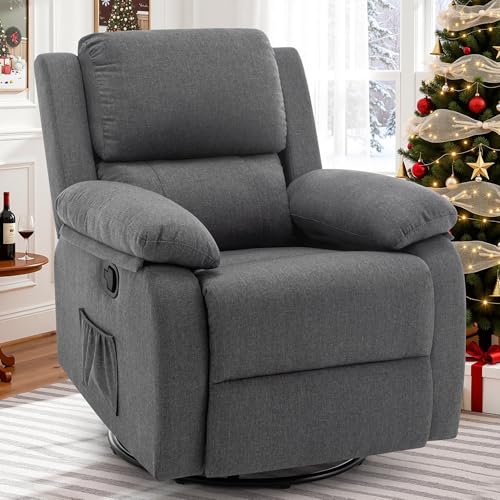
Korser Recliner Chair, 360 Swivel Rocker Chair for Adults, Small Rocking Recliner for Small Spaces, Upholstered Fabric Glider Recliner Nursery
Check price on Amazon
Adult 360° Rocking Recliner Chair,Nursery Rocker Reclining Chair with Side Pocket, a Comfy upholstered Single Sofa Armchair. Suitable for Living Room, Bedroom Nursing use, Velvet Fabric in Beige
Check price on Amazon
Korser Recliner Chair, Swivel Rocking Recliner Chair for Adults, Glider Rocking Chair, Small Nursery Chair Recliner for Living Room, Reclining Chair with Modern-Designed Armrests, Chenille, Beige
Check price on Amazon
SAETSFEG Rocking Chair Nursery Teddy Upholstered Glider Rocker Rocking Accent Chair Padded Seat with High Backrest Armchair Comfy Side Chair for Living Room Bedroom Offices (Grey Teddy)
Check price on Amazon
KISLOT Swivel Rocking Recliner Chair, Manual Nursery Glider, Tan Plaid | Comfy Upholstered Fabric Reclining Chair Rocker Single Sofa for Nursery Bedroom Living Room
Check price on Amazon
KeyEnergy Manual Rocker Recliner Chair for Adults, High Back Glider with Deep Seat, Upholstered Fabric Armchair for Living Room & Nursery, Beige
Check price on Amazon
Oversized Swivel Rocker Recliner with Massage and Heat, Swivel Nursery Recliner With Adjustable Headrest, Manual Rocker Recliner Chair with Two Removable Pillows, High Back Barrel Armchair,White
Check price on Amazon
LUCKLIFE Rocking Chair Nursery with Ottoman,Teddy Glider Rocker Armchair | with Side Pockets,Cozy High Backrest,Curved Solid Base,for Nursery,Bedroom,Living Room
Check price on AmazonReady to Choose Your Glider Armchair?
Use the checklist above to compare motion type, frame build, and cushion density before you decide. The recommended models at the top of this page are a practical starting point for narrowing your shortlist.