
Wood Armchair: The Complete Buying Guide for Solid Wood Accent Chairs
Everything you need to know before choosing a wooden armchair — from wood species and frame joinery to comfort, style, and long-term care.
Why a wood armchair deserves a place in your living room: A well-made wooden armchair brings warmth, structure, and a natural texture that upholstered furniture alone cannot replicate. It works as a reading chair, a conversation piece, an accent seat beside a sofa, or a practical extra chair that never goes out of style.
If you have already decided that a wood armchair is the right addition to your home, this guide is designed to help you move from research to a confident purchase. We break down the wood types, construction details, comfort factors, and design considerations that separate a long-term investment from a short-lived compromise.
Why Choose a Wood Armchair?
Wood armchairs offer a distinct set of advantages over fully upholstered seating. The exposed frame creates an airy visual footprint, which makes wooden armchairs particularly effective in smaller rooms or open-plan layouts where bulky furniture can feel heavy. At the same time, solid wood delivers structural integrity that holds up well to daily use when the joinery is done properly.
From a design standpoint, wood tones are remarkably versatile. A light oak or ash frame pairs naturally with Scandinavian and coastal interiors, while a dark walnut or espresso finish anchors industrial and mid-century spaces. Many homeowners use a wooden armchair to introduce contrast next to a fabric sofa, or to echo other wood elements such as a wood console table or wood sofa table in the same room.
Wooden armchairs also tend to age gracefully. Unlike fabric that can stain or fade, a solid wood frame can often be sanded, re-oiled, or refinished to restore its appearance. That repairability is a key reason wood armchairs are considered a long-term investment rather than a disposable purchase.
Light Visual Footprint
Open frames and visible legs keep sightlines clear, making wooden armchairs a smart fit for compact living rooms and apartments.
Structural Durability
Hardwood frames with proper joinery resist wobble and creaking, supporting years of daily seating without loosening.
Timeless Versatility
Neutral wood tones blend with fabric sofas, leather sectionals, and a wide range of interior styles from rustic to modern.
Refinishable Surface
Solid wood can be sanded and re-treated, extending the chair's useful life far beyond most upholstered alternatives.
Wood Types: What to Look For
The species of wood has a direct impact on durability, weight, grain character, and how the chair responds to humidity over time. Hardwoods are denser and generally more resistant to denting, while softwoods are lighter and more prone to surface marks. Here is how the most common options compare.
| Wood Type | Characteristics | Best For |
|---|---|---|
| Oak | Dense hardwood, prominent grain, excellent strength and shock resistance | High-traffic living rooms, rustic and traditional interiors |
| Walnut | Rich dark tone, fine grain, naturally stable and resistant to warping | Mid-century modern, contemporary, and premium settings |
| Maple | Hard and uniform grain, light color, takes stain and paint well | Clean minimalist looks and painted finishes |
| Ash | Resilient hardwood, lighter appearance, good bending strength | Scandinavian, coastal, and light-toned interiors |
| Rubberwood | Mid-density hardwood, uniform grain, commonly used in entry-level frames | Starter-tier chairs and secondary seating |
| Pine | Softwood, light weight, prone to denting under heavy use | Occasional seating and decorative accent pieces |
For a primary reading chair or a seat that will be used daily, oak, walnut, maple, and ash are the most dependable choices. Entry-level frames often use rubberwood or engineered wood with veneer — these can still be solid choices for the tier, but they generally will not match the lifespan of a true hardwood frame. If you are comparing options across the category, it helps to read about wooden arm chairs for living room setups to see how different wood species perform in real-world layouts.
Construction Details That Matter
Two chairs can look identical online but differ dramatically in how they hold up after a year of use. The difference usually comes down to joinery and frame assembly. A well-built wood armchair should feel rigid when you gently rock it, with no wobble at the legs or looseness where the arms meet the seat frame.
Look for mortise-and-tenon or dowel joints at the critical stress points — where the legs meet the seat, and where the back posts connect to the arms. Corner blocks and braces add further rigidity. Staples and glue alone are a warning sign in a chair intended for regular use. A quality finish should be smooth and even, with no rough patches under the arms or along the edges.
- Frame feels rigid with no wobble when gently rocked
- Mortise-and-tenon or dowel joinery at stress points
- Corner blocks or braces reinforce the seat frame
- Even, smooth finish with no rough edges
- No creaking under weight or when shifting position
- Felt pads or floor protectors included or easy to add
If the chair includes a cushioned seat or back, check how the cushion is attached. Removable cushions are easier to clean and replace, while fixed upholstery can be more streamlined but harder to maintain. For chairs with a visible woven or cane back, inspect the weave tension — a loose weave will sag faster under repeated pressure.
Comfort and Ergonomics
Wooden armchairs are often assumed to be less comfortable than upholstered seating, but that is a generalization rather than a rule. Seat height, seat depth, back angle, and arm height all play a role in how a chair feels during a long reading session. A well-proportioned wood armchair can be genuinely comfortable without thick padding.
As a general reference, a seat height around 17 to 19 inches suits most adults, while a seat depth of 18 to 22 inches accommodates average proportions. A backrest that reclines slightly rather than sitting perfectly upright reduces fatigue during extended use. Armrests should be high enough to support the forearms without forcing the shoulders upward.
If lumbar support is a priority, look for chairs with a curved back rail or an included lumbar cushion. Some buyers pair a wooden armchair with a small throw pillow for added lower-back comfort — a simple adjustment that makes a noticeable difference. For related seating options with built-in support, you may also want to compare armchairs with lumbar support as an alternative direction.
Styles and Placement Ideas
Wood armchairs span a wide stylistic range. A spindle-back or Windsor-inspired chair leans traditional and pairs well with farmhouse or cottage interiors. A bentwood or steam-bent frame reads more sculptural and suits modern and mid-century spaces. A clean-lined upholstered wooden armchair — where the frame is visible but the seat and back are padded — bridges both worlds and works in almost any room.
Placement matters as much as style. In a living room, a single wooden armchair angled toward the sofa creates a natural conversation zone. In a bedroom, a wooden armchair near a window becomes a reading nook. In an entryway or home office, a compact wooden armchair adds seating without consuming floor space. If you are building a coordinated seating group, consider pairing a wooden armchair with a wooden sofa or a bent wood armchair for a consistent material story.
Wood tone also influences perceived room size. Lighter woods such as ash and maple tend to make a space feel more open, while darker walnut and espresso frames add depth and formality. Mixing wood tones is acceptable when there is a shared undertone — a light oak armchair next to a walnut console table can work if the room has other warm neutrals tying the palette together.
Market Tiers: Entry-Level to Luxury
Wood armchairs are available across a broad range of quality tiers. Rather than focusing on any single number, it helps to understand what each tier typically delivers in terms of materials, joinery, and longevity. The table below summarizes the practical differences.
| Tier | Typical Materials | Best For |
|---|---|---|
| Entry-Level | Rubberwood or engineered wood with veneer, basic dowel or screw assembly | Occasional seating, secondary rooms, first furniture purchases |
| Mid-Range | Solid hardwood frame with reinforced joinery, removable cushions | Everyday living room seating and primary reading chairs |
| Premium | Kiln-dried oak, walnut, or maple, mortise-and-tenon joinery, fine finish | High-use living rooms and design-focused interiors |
| Luxury | Select hardwoods, hand-finished surfaces, artisan joinery, premium upholstery | Statement pieces and long-term design investments |
Mid-range models generally represent the sweet spot for most households — they offer solid hardwood construction and better joinery without the hand-finished details that push a chair into the premium or luxury tiers. Entry-level chairs can still be a reasonable choice for guest rooms or infrequently used spaces, while premium and luxury frames are best suited to primary living areas where the chair will see daily use.
Care and Maintenance
A wood armchair requires less maintenance than upholstered seating, but a few simple habits will extend its life significantly. Dust the frame regularly with a soft, dry cloth to prevent grit from dulling the finish. Wipe spills promptly with a slightly damp cloth and dry immediately — standing moisture is the main enemy of wood surfaces.
Apply a furniture wax or wood conditioner a few times per year, depending on the finish type. Avoid silicone-based polishes, which can build up and attract dust. Keep the chair out of direct sunlight and away from heat sources such as radiators or fireplaces, since prolonged exposure can cause the wood to dry, crack, or fade. Felt pads under the legs protect both the chair and your flooring.
For upholstered wooden armchairs, vacuum the fabric on a low setting and spot-clean according to the manufacturer's care code. Removable covers make this easier. If the frame develops minor scratches, a matching wood touch-up marker or a light application of wax can usually blend them out. Deeper damage may require sanding and refinishing, which is feasible on solid wood but not on veneered surfaces.
Frequently Asked Questions
What is the best wood type for a wood armchair?
Oak, walnut, maple, and ash are among the most durable hardwoods for a wood armchair. Oak offers excellent strength and visible grain, walnut provides a rich dark tone, maple is prized for a clean uniform look, and ash delivers resilience with a lighter appearance. Softer woods like pine can work for entry-level models but are more prone to denting over time.
How can I tell if a wooden armchair is well built?
Check for joinery such as mortise-and-tenon or dowel construction rather than staples alone. The frame should feel rigid with no wobble when you gently rock it. Look for corner blocks or braces, smooth sanded edges, and a consistent finish with no rough patches. A solid build also means the chair does not creak under weight.
What is the difference between solid wood and engineered wood armchairs?
Solid wood armchairs are cut from a single piece or laminated planks of real hardwood and can be sanded and refinished over time. Engineered wood options such as plywood or MDF with veneer are more uniform and stable against humidity changes but cannot be refinished as deeply. Solid wood is generally a longer-term investment, while engineered wood suits entry-level and mid-range tiers.
How do I care for a wood armchair?
Dust regularly with a soft cloth, wipe spills promptly with a slightly damp cloth, and avoid harsh chemical cleaners. Apply a wood conditioner or furniture wax a few times per year to maintain the finish. Keep the chair away from direct sunlight and heat sources to prevent cracking or fading, and use felt pads under the legs to protect flooring.
Can a wood armchair work in a small living room?
Yes. Many wood armchairs have slim profiles, open frames, and visible legs that create a lighter visual footprint than bulky upholstered chairs. Choose a compact width, a mid-height back, and a light or medium wood tone to keep the space feeling open. Pair it with a small side table rather than a large coffee table.
Related Reading on SofaTopics
Recommended Wood Armchairs
⚠️ AFFILIATE DISCLOSURE: This website contains affiliate links. As an affiliate Associate, we earn from qualifying purchases. If you make a purchase through these links, we may receive a small commission at no additional cost to you. Read our full affiliate policy.

DUMOS Mid Century Modern Accent Chair, 16'' Seat Height Cozy Lounge Chair | Upholstered Armchair with Waist Cushion and Wood Frame for Living Room, Bedroom, Reading Nook, Home Corner, Balcony, Beige
Check price on Amazon
VASAGLE Accent Chair, PU Leather Armchair, Button Tufted, Thick Cushion | Mid Century Modern Lounge Seating, Living Room Chair, Bedroom, Reading Nook, Home Office, Tan, MARY Collection ULYY200KZ02S
Check price on Amazon
Yaheetech Rattan Accent Chair, Boho Vintage Armchair, Ivory | Boucle Fabric Chair, Upholstered Reading Chair with Wood Armrest and Legs for Living Room Bedroom Reception Waiting Room
Check price on Amazon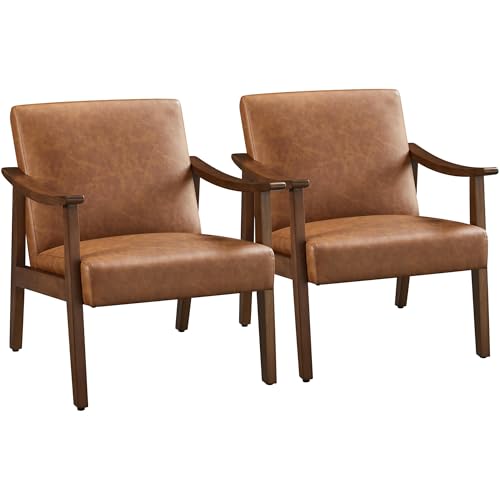
Yaheetech Accent Chairs Set of 2, Mid-Century Faux Leather Armchairs Brown | Cushioned Club Chairs with Supportive Sloped Backrests and Sturdy Wood Arms Fit Small Living Rooms, Offices, Reading Nook
Check price on AmazonFinal Thoughts
A wood armchair is one of the most versatile pieces you can add to a living room. It brings natural texture, structural honesty, and a design flexibility that few other furniture types can match. The key is to choose the right wood species for your use case, verify the joinery before you commit, and confirm that the seat proportions suit the people who will actually sit in it.
Whether you are furnishing a primary living space or adding a reading corner to a smaller room, a well-chosen wooden armchair will serve you for years — and with proper care, it can be refinished and refreshed rather than replaced. Use the checklist above, compare tiers honestly, and let the chair's construction and comfort guide the decision.