


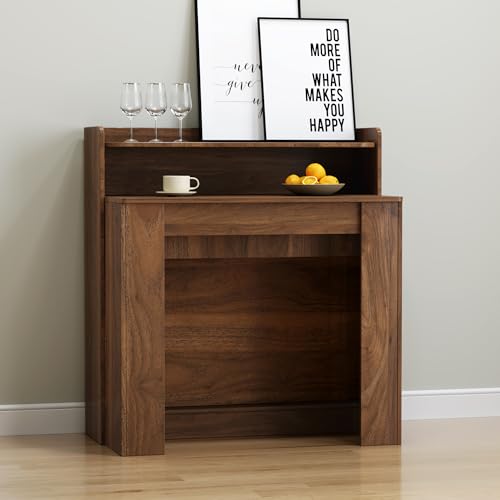


What Is a Sofa Table That Converts to a Dining Table?
A sofa table that converts to a dining table is a multifunctional piece of furniture designed to sit behind or beside a sofa as a console surface, then transform into a full dining-height table when needed. The concept combines the slim footprint of a sofa table with the practical utility of a dining surface, making it a favorite for studio apartments, small living rooms, and open-plan layouts.
These tables are part of a broader category of convertible living room furniture. If you are still mapping out your seating arrangement, our guide to sofa tables for living room configurations can help you see where a convertible model fits best.
Who Should Consider One?
- Studio and apartment dwellers who need a dining surface without dedicating a separate room to it.
- Open-plan homeowners who want flexible entertaining space without visual clutter.
- Remote workers who need a secondary surface for meals, projects, or temporary workspace.
- Hosts who occasionally need extra dining capacity for guests but do not want a permanent dining set.
Design note: A convertible sofa table works best when its console position is already part of your layout. The transformation is a bonus, not a replacement for a dedicated dining room. Plan the footprint around both modes before you buy.
How the Conversion Mechanism Works
The heart of any convertible sofa table is its mechanism. Most models fall into one of three functional families: folding, lifting, or sliding. Understanding how each behaves in daily use will tell you more about long-term satisfaction than any marketing description.
Folding Mechanisms
Folding designs use hinged leaves that swing outward or upward from the console surface. The tabletop may split into two panels that unfold into a larger dining surface. Folding models are generally lighter and simpler to operate, but the hinge hardware quality is critical — a low-grade hinge will loosen over time and cause the surface to wobble.
Lifting Mechanisms
Lifting designs raise the tabletop from a low console height to dining height using a scissor lift, gas strut, or telescoping frame. These offer a clean single-surface transformation and tend to feel more rigid at full height. The trade-off is complexity: lifting hardware needs periodic inspection and should lock firmly in both the low and high positions.
Sliding and Extending Mechanisms
Sliding designs pull the tabletop outward and then extend or flip panels into place. Some models use a combination of sliding and folding, which gives a larger final surface but requires more floor clearance during the transformation. If your room is tight, measure the extension path carefully before committing.
Practical tip: Test the mechanism in both directions. A quality conversion should feel controlled and lock with an audible or tactile click. If a display model feels vague or grinds during operation, that is a signal about the hardware tier.
Types of Convertible Sofa Tables
Convertible sofa tables vary widely in form factor. The right choice depends on where you plan to place the table and how often you expect to use dining mode.
Console-to-Dining Convertibles
These are the most common. In console mode, they sit behind a sofa with a narrow depth, often with shelves or drawers underneath. In dining mode, the top expands and rises to a comfortable eating height. This type pairs naturally with a sofa set for small living room layouts where floor space is at a premium.
Ottoman and Bench Convertibles
Some designs integrate the dining surface into an ottoman or bench base. These tend to be lower and more casual, suitable for coffee-table-style dining rather than formal meals. If you like the idea of a flexible centerpiece, browse sofa table with ottomans underneath options for inspiration.
Stool-Compatible Dining Convertibles
Certain convertible tables are designed to work with stools that tuck underneath the console in its resting position. This keeps seating storage integrated and makes the transition faster. Explore sofa table stools and sofa table with stools for configurations that include matching seating.
Storage-Integrated Convertibles
Models with built-in drawers, cubbies, or compartments add utility beyond the dining function. Storage-integrated tables are especially useful in apartments where every piece of furniture needs to earn its footprint. See sofa table with storage for examples of how storage is typically arranged.
End-Table and Matching-Set Convertibles
Some collections pair a convertible dining surface with matching end tables for a cohesive look. This is a smart approach if you want visual consistency across the room. Browse sofa table with matching end tables to see how coordinated sets work in practice.
Key Features to Evaluate Before You Buy
Because a convertible sofa table does two jobs, the evaluation checklist is longer than for a standard table. Use the following criteria to separate a well-engineered piece from a compromise.
Conversion Effort and Speed
How many steps does the conversion take? Can one person complete it safely? A good design should transform in under a minute with minimal lifting. If the process requires moving the sofa or clearing the entire surface, you will use dining mode far less often.
Dining Height and Seating Clearance
Check the final dining height against standard chair and stool heights. Also confirm knee clearance and legroom at the dining position. A table that is technically dining height but has a crossbar in the wrong place will be uncomfortable for regular meals.
Stability at Full Extension
Stability is the single most important safety factor. At full dining extension, the table should resist lateral wobble. Look for wide-set legs, locking mechanisms, and a base that does not rely solely on the sofa for support.
Surface Area in Both Modes
Measure the console-mode depth and the dining-mode surface area. Some models expand in one direction only, which can limit seating. Decide whether you need a two-person or four-person dining surface and match the expanded dimensions accordingly.
Storage and Cable Management
If the table will double as a work surface or media console, look for cable cutouts, drawers, or shelves that keep the surface clear. Storage features also help you store placemats, napkins, or small dining accessories between meals.
Finish and Edge Protection
Dining surfaces take more wear than console surfaces. Rounded or chamfered edges reduce the risk of chips and bumps, while a sealed finish resists spills. If the table will be used by children, prioritize edge protection and easy-clean surfaces.
Quality Tiers at a Glance
Convertible sofa tables are available across a range of build qualities. The table below uses universal tier descriptors rather than currency figures, so the comparison stays useful regardless of market conditions.
| Tier | Typical Build | Mechanism Feel | Best For |
|---|---|---|---|
| Entry-level | Engineered wood panels, basic hinges, lighter frame | Functional but may need careful handling | Occasional use, light-duty dining, first apartment |
| Mid-range | Mixed solid wood and engineered panels, reinforced hinges | Smoother operation, better locking | Regular daily use, small households |
| Premium | Solid hardwood frame, high-grade hardware, sealed surfaces | Controlled, firm lock, minimal wobble | Frequent entertaining, long-term use |
| Luxury | Hardwood construction, precision hardware, premium finishes | Effortless, near-furniture-grade precision | Design-focused homes, heavy daily use |
In general, mid-range models offer the best balance of mechanism smoothness and long-term durability for most households. Entry-level models can work well for occasional use, while premium and luxury tiers make sense when the table will be used daily and needs to blend into a designed interior.
Materials and Surface Durability
The surface material determines how well the table handles plates, cups, laptops, and daily cleaning. It also affects weight — an important factor for a piece that moves between positions.
Solid Wood Tops
Solid wood offers warmth, repairability, and a premium feel. It handles heat better than laminate but requires periodic sealing and can be sensitive to standing water. Solid wood tops are a strong choice for premium and luxury tiers.
Engineered Wood with Veneer
Engineered cores with veneer surfaces provide a stable, consistent top at a lighter weight. Quality veneers resist warping and look close to solid wood. This is the most common construction in entry-level and mid-range models.
Laminate and Melamine Surfaces
Laminate surfaces are easy to clean and resistant to scratches and stains. They are practical for households with children or frequent casual dining. The trade-off is that chips and edge damage are harder to repair than solid wood.
Metal and Glass Combinations
Metal frames with glass or composite tops create a modern look and are easy to wipe down. Glass tops show smudges more readily but handle heat well. Ensure the glass is tempered and that the frame has proper edge protection.
Durability note: Whatever the material, check how the edges are finished. Edge banding and chamfering are where most wear begins. A well-finished edge extends the useful life of the table more than a thicker top panel.
Space Planning and Placement
A convertible sofa table is a space-saving tool, but it still needs room to transform. Plan around both modes before you commit to a position.
Console Mode Clearance
In console mode, the table sits behind or beside the sofa. Leave enough clearance to access drawers or shelves and to operate the conversion mechanism. A typical console position needs a few inches of working space behind the sofa.
Dining Mode Clearance
In dining mode, you need chair pull-out space on the seating sides. Measure the expanded table dimensions plus at least the depth of a chair on each active side. If the table expands toward a wall or walkway, the usable dining surface shrinks accordingly.
Traffic Flow
Avoid placing the table where its dining extension blocks a main walkway. In open-plan rooms, mark the dining footprint with tape on the floor for a day to test whether the layout feels natural. If you are comparing layouts, the ideas in sofa set for big living room can help you think about zones.
Pairing With Sectionals and Sofa Sets
Convertible tables pair especially well with sectional layouts. If you are working with a sectional, review sofa sectional for small living room arrangements to see how the table can sit relative to the chaise or corner. For coordinated rooms, sofa set and chair combinations can anchor the seating while the convertible table provides the dining function.
Stability and Safety Checks
Because the table changes height and footprint, stability deserves its own checklist. These checks are quick and will save you from a frustrating purchase.
- Locking mechanism: Confirm the table locks firmly in both console and dining positions. There should be no play when you press down on the dining edge.
- Base footprint: A wider base distributes weight better. Avoid designs that rely on the sofa itself for lateral stability.
- Weight rating: Check the manufacturer's load guidance for the dining position, especially if the table will hold heavy serving dishes.
- Pinch points: Folding and lifting mechanisms can create pinch points. Look for covered hinges and smooth operating arcs.
- Floor protection: Ensure the legs have proper glides or pads to protect flooring during movement.
Safety reminder: Always follow the manufacturer's assembly and usage instructions. If the table feels unstable at any point, stop using dining mode until the issue is resolved.
Care and Maintenance
Convertible furniture has more moving parts than a standard table, so maintenance is part of ownership. A simple routine keeps the mechanism smooth and the surface presentable.
Mechanism Care
- Inspect hinges, locks, and sliding rails every few months for looseness.
- Tighten fasteners as recommended by the manufacturer.
- Keep the mechanism free of crumbs and debris, which can jam folding parts.
- Lubricate only with products specified by the manufacturer.
Surface Care
- Wipe spills promptly, especially on wood veneer and solid wood.
- Use coasters and placemats for hot items and beverages.
- Avoid abrasive cleaners on laminate and veneer surfaces.
- For wood tops, reapply a protective finish as recommended.
If the table doubles as a workspace, keep a microfiber cloth nearby to manage smudges and dust. A clean surface also makes the console-to-dining transition feel more intentional.
Final Buying Checklist
Before you finalize your choice, run through this checklist. It summarizes the most important decision factors in one place.
- Measure both modes: Console depth, dining surface area, and chair clearance.
- Test the mechanism: Confirm smooth operation and firm locking in both positions.
- Check stability: No lateral wobble at full dining extension.
- Match the tier to use: Entry-level for occasional use, mid-range for daily use, premium or luxury for frequent entertaining.
- Confirm seating compatibility: Dining height works with your chairs or stools.
- Review storage and cable needs: Enough drawers, shelves, or cutouts for your routine.
- Plan the placement: Ensure the conversion path does not block walkways.
- Check care requirements: Surface and mechanism maintenance match your willingness to maintain.
If you are still comparing sofa table styles more broadly, the sofa table guide and the living room sofa table guide provide additional context on how these pieces fit into a complete room plan.
Frequently Asked Questions
Most convertible sofa tables use a folding, lifting, or sliding mechanism. The tabletop expands or flips upward while the base remains stable, transforming a low console surface into a dining-height table for meals, work, or entertaining.
Focus on the conversion mechanism quality, stability at full extension, seating capacity, surface material durability, and storage features. Check that the dining height is comfortable and that the table locks securely in both positions.
Yes. Convertible sofa tables are ideal for small spaces because they serve double duty. You get a console or sofa table during the day and a dining surface when needed, without dedicating floor space to a separate dining table.
A well-designed convertible table should be operable by one adult without strain. Look for balanced lifting mechanisms, smooth hinges, and clear operation steps. If a display model requires two people, that is a sign the mechanism is not well tuned.
Use placemats and coasters for hot items and beverages. Wipe spills promptly, and avoid abrasive cleaners on veneer and laminate surfaces. If the table has a wood top, reapply the recommended protective finish periodically.
Ready to Choose Your Convertible Sofa Table?
Use the checklist above to compare models with confidence. Focus on mechanism quality, stability, and seating clearance — the three factors that determine whether you will actually use dining mode day after day.
COMPARE FEATURED MODELS