
Sofa Table with Stools: The Complete Buying & Styling Guide
A sofa table with stools turns the space behind your couch into a multifunctional zone for display, drinks, work, and extra seating. Here is everything you need to choose and style one with confidence.
EXPLORE RECOMMENDED PICKSWhy this guide matters: A sofa table with stools is a quiet workhorse of living room design. It anchors the back of your couch, adds a landing spot for keys and coffee, and gives you flexible seating that disappears under the table when not in use. If you are researching before you buy, this guide covers sizing, stool types, materials, styling, and the practical checks that separate a well-chosen set from one that crowds your room.
What Is a Sofa Table with Stools?
The standard sofa table — also called a console or behind-the-couch table — is a long, narrow table designed to sit against the back of your sofa. A sofa table with stools takes that concept one step further: it ships with a matched pair (or trio) of stools that tuck neatly underneath. The result is a piece of furniture that works double duty. On the surface you get space for a lamp, books, a tray, or decorative objects. Pull the stools out and you have a spontaneous coffee spot, a laptop station, or overflow seating for guests.
This hybrid format is especially valuable in open-plan homes where the back of the sofa faces a walkway, dining area, or entry. Instead of a bare wall of fabric, you get a finished, intentional look with practical storage and seating. Designers often treat it as a room divider that stays visually light — narrow depth means it does not block sightlines, which is why it works well in compact and long, open rooms alike.
You can explore the broader family of related designs in our guide to sofa tables for living rooms, and if your priority is pure surface area rather than seating, the classic sofa table overview covers the fundamentals. The stool variant, however, has its own logic around height, clearance, and stool construction that deserves dedicated attention — which is exactly what the rest of this page delivers.
Why Choose a Sofa Table with Stools?
The appeal of these sets goes beyond aesthetics. They solve several common living room problems at once:
- Hidden extra seating: Backless or low stools slide completely under the table, so you gain seating without permanently expanding the visual footprint of your furniture.
- A finished look behind the couch: A floating sofa looks unfinished from behind. The table provides a visual anchor and gives the back of the room a purpose.
- Functional surface at the right height: The tabletop sits at a comfortable height for setting down drinks, placing a table lamp, or resting a book.
- Room definition in open plans: In a studio or open-concept space, the table creates a soft boundary between the living zone and the area behind it, without a full wall or divider.
- Work-from-home flexibility: A stool plus the tabletop becomes an occasional desk when you need a change of scenery from the home office.
- Entertaining convenience: Stools pull out for a casual aperitif or game night, then push back and disappear.
If your room is on the smaller side, the same logic applies in miniature — a compact version is a natural companion to a sectional for a small living room or any layout where every inch counts. And if you like the idea of seating-plus-surface but prefer a different form factor, browse the related concept of sofa tables with benches underneath, which trade individual stools for a continuous bench.
Sizing: Getting the Fit Right
Fit is where most sofa table purchases go wrong, and the stool component raises the stakes. Use these measurements as your checklist before you commit.
Table Length
A well-proportioned table spans roughly two-thirds to three-quarters of your sofa's overall width. On a typical three-seater, that means a table in the 55- to 70-inch range feels balanced. A table that is too short looks orphaned; one that is too long can crowd adjacent doorways or walkways.
Table Depth
Narrow is the point. Most console tables are 12 to 18 inches deep. For a model with stools, confirm the stool depth and tuck-in clearance — a set where stools protrude past the table edge when "stored" defeats the purpose. Twelve to fourteen inches of table depth with compact stools is the sweet spot for tight rooms.
Table Height
The tabletop should land level with or just below the sofa's back. Standard console heights run about 28 to 32 inches. Taller sofas with high backs may need a slightly taller table; low, modern silhouettes often pair better with a lower table. Always measure the sofa back at the point where the table will sit, and check that the stool seat height (typically 17 to 20 inches) leaves comfortable knee clearance under the tabletop.
Clearance Behind the Sofa
This is the number people forget. You need enough room behind the sofa for the table itself plus the depth of the stools when tucked in — and a little breathing room so stools can be pulled out without hitting a wall. As a rule of thumb, plan for at least 12 to 18 inches of total depth behind the sofa, more if the stools will be used frequently.
Stool Count
Two stools are standard for tables up to about 60 inches. Longer tables (65 inches and above) can comfortably accommodate three. Check the manufacturer's recommendation, and make sure the spacing between stool positions leaves room for legs and comfortable seating width — roughly 18 to 20 inches per stool.
Types of Stools That Pair With Sofa Tables
The stool is not an afterthought — it determines how usable the set really is. These are the main categories you will encounter:
- Backless stools: The most common pairing. They slide fully under the table, maximize clearance, and keep sightlines open. Ideal for narrow rooms and open-plan layouts.
- Low-back stools: A small backrest adds comfort for longer sitting sessions while still tucking mostly under the table. Best when the table sits against a wall or in a corner where a little visual height is welcome.
- Upholstered stools: Padded seats in fabric, velvet, or leather-look materials add comfort and color. They work well when the set doubles as occasional dining or desk seating.
- Wooden or metal stools: Hard-wearing and easy to clean, these suit high-traffic homes and industrial or farmhouse schemes. Pair them with a table in a matching or contrasting finish.
- Nesting or stackable stools: Some sets include stools that nest or stack, which is a smart choice if you only occasionally need all the seating.
- Round or square seat shapes: Round seats soften a room and are forgiving in tight spaces; square seats offer a more tailored, architectural look.
Whatever the style, check that the stool frame is sturdy, the seat is comfortable for the sitting duration you expect, and the finish resists scuffs from being pushed in and out repeatedly. For homes with pets, look for easy-clean surfaces and consider how the stool legs interact with rugs and floors — felt pads are a simple upgrade.
Styles and Materials to Match Your Room
The table-and-stool set should feel like it belongs in your room, not like an afterthought. These are the dominant style families and where each shines:
Modern and Minimalist
Sleek metal frames, slim tops, and backless stools with clean lines. This is the most versatile family and works in contemporary, Scandinavian, and transitional rooms. If you are building around a modern sofa, a streamlined set keeps the whole composition light.
Farmhouse and Rustic
Distressed wood tops, turned or X-frame legs, and stools with woven or wooden seats. These sets bring warmth and texture, and they pair beautifully with slipcovered sofas and natural fiber rugs.
Industrial
Reclaimed-wood tops on blackened steel bases, often with metal stool frames. Industrial sets suit loft-style rooms and exposed-brick or concrete backdrops. They are also naturally durable in busy households.
Traditional and Transitional
Rich wood finishes, subtle carvings, and upholstered stools. These read as more formal and work in rooms with classic moldings and layered textiles.
Material Notes
Solid wood tops offer warmth and repairability. Metal tops are durable and easy to wipe clean. Glass tops keep the set visually light but demand more frequent cleaning. For the stools, upholstery adds comfort while wood and metal are more forgiving of spills and daily wear. In homes with cats, review material choices carefully — our guide to sofa material that cats won't scratch offers principles that apply to upholstered stools too.
How to Choose the Right Set: A Practical Checklist
Work through these points in order. They will help you narrow the field quickly and avoid the most common regrets.
1. Measure First, Shop Second
Record your sofa's width and back height, the clearance behind the sofa, and the width of any walkways. Then match those numbers to table length, height, and depth. A set that fits your room will always outperform one that merely looks good in a listing photo.
2. Decide How You Will Use the Stools
Occasional overflow seating calls for backless stools that tuck away. A set that doubles as a desk or breakfast spot justifies upholstered stools with a little more comfort. Be honest about frequency of use — it drives the right stool choice.
3. Confirm the Tuck-In Clearance
Before buying, check that the stool height and table apron allow the stools to slide fully underneath. Reviews and product measurements usually confirm this; when in doubt, look for sets that explicitly state the stools tuck in.
4. Match the Table Height to the Sofa
Level or just below the sofa back is the target. If you cannot find a perfect match, erring slightly lower looks better than a table that towers over the couch.
5. Consider the Floor and Rugs
If the table sits on a rug, check that the legs rest evenly and that stool movement will not catch the rug edge. If it sits on hard flooring, felt pads protect both the floor and the finish.
6. Plan for Storage
Some sets include a lower shelf, drawers, or baskets beneath the top. If storage is a priority, a model with a shelf or compartments adds usefulness without increasing footprint — similar in spirit to the storage-focused sofa table with storage designs.
7. Choose the Style to Suit the Room
Match the table's finish and metal tone to existing hardware, lighting, and sofa legs. Consistency in metal finish is one of the simplest ways to make a room feel designed.
8. Verify Stability
A narrow table should be stable when leaned on. Look for leg designs that splay slightly or include cross bracing, and check that the stools have non-wobble feet.
Sofa Table with Stools: Tier Comparison
Use this table to compare categories at a glance. Tiers describe relative quality and construction, not specific figures.
| Tier | Typical Construction | Best For | Stool Type |
|---|---|---|---|
| Entry-level | Engineered wood or light metal frames, simple finishes | Occasional use, first apartments, rental spaces | Backless wooden or basic metal stools |
| Mid-range | Solid wood or reinforced metal, better joinery and finishes | Daily living, family rooms, home offices | Upholstered or hardwood stools |
| Premium | Hardwood, high-grade steel, refined detailing, durable coatings | High-traffic homes, design-forward interiors | Tailored upholstered or designer stools |
| Luxury | Premium hardwoods, artisan finishes, heirloom-level craftsmanship | Formal living rooms, statement interiors | Custom upholstery, premium materials |
Across tiers, look for the same fundamentals: a level top, stable legs, stools that tuck cleanly, and finishes that match your room. Higher tiers typically bring smoother joinery, more durable finishes, and more comfortable stool seating — differences you notice most in daily use.
Styling Your Sofa Table with Stools
Once the set is in place, styling is what makes it feel intentional. A few principles go a long way:
- Keep the top layered but light: A tray corrals small items, a lamp adds warm light, and one or two decorative objects finish the look. Avoid crowding — the surface should feel usable, not decorated shut.
- Use height variation: Pair a tall lamp or vase with low books or a bowl so the arrangement has a clear silhouette.
- Coordinate stools with the room: If the stools are upholstered, echo the color in throw pillows or a rug. If they are wood, match the tone to other wood pieces.
- Think about the view from behind: The back of the table faces the rest of the room, so style it to look good from both sides — a finished back panel or a shelf with baskets does double duty.
- Add baskets or bins: A lower shelf with two baskets keeps clutter contained and gives the set a practical storage layer.
- Leave breathing room: Resist the urge to fill every inch. Negative space is what keeps a narrow table looking elegant.
If you enjoy layering decorative objects, our sofa styling guide covers complementary techniques for the seating side of the room. And if you are still assembling the broader furniture plan, browsing sofa set options can help you coordinate the table with matching seating.
Common Mistakes to Avoid
- Buying before measuring. The most frequent regret is a table that is too long, too deep, or the wrong height for the sofa.
- Ignoring tuck-in clearance. Stools that stick out past the table edge are a trip hazard and defeat the space-saving purpose.
- Overlooking walkway width. Leave enough room behind the table for people to pass, especially in open-plan layouts.
- Mismatching finishes. A metal tone that clashes with the room's hardware is a small detail that reads as a big error.
- Skipping stability checks. Narrow tables need solid leg design; test or read reviews about wobble before committing.
- Over-styling. A crowded tabletop makes the set feel smaller and less functional.
Recommended Sofa Tables with Stools
⚠️ AFFILIATE DISCLOSURE: This website contains affiliate links. As an affiliate Associate, we earn from qualifying purchases. If you make a purchase through these links, we may receive a small commission at no additional cost to you. Read our full affiliate policy.

Karl home 83.8" Bar Table and Chairs Set, 4 Adjustable PU Stools, Brown | High Top Counter Height Table with 24‑26" Stools for Kitchen Breakfast, Bistro, Dining Room, Living Room
Check price on Amazon
KEIKI 4 Piece Bar Table Set with USB Port, Kitchen Table with 3 Upholstered Stools, Dining Bar Table and Chairs Set, Industrial Breakfast Table for Small Space, Apartment, Dinette, Brown
Check price on Amazon
Merax 59" Bar Table Set with Power Outlet,Industrial Breakfast Table with 3 Upholstered Stools w/Footrest,4 Piece Counter Height Bar Table and Chair Set for Living Room,Dining Room,Kitchen,Black
Check price on Amazon
KEIKI 4-Piece Bar Table Set with Charging Station - 59" Industrial Kitchen Table & 3 Upholstered Stools, USB/Type-C/AC Outlets, Solid Wood Frame - for Dining Room, Apartment, Living Room (Brown)
Check price on Amazon
YWUFUART 59" Counter Height Bar Table Set with Power Outlet, Industrial Breakfast Table with 3 Padded Stools, 4 Piece Bar Table and Chairs Set for Living Room, Dining Room, Brown
Check price on Amazon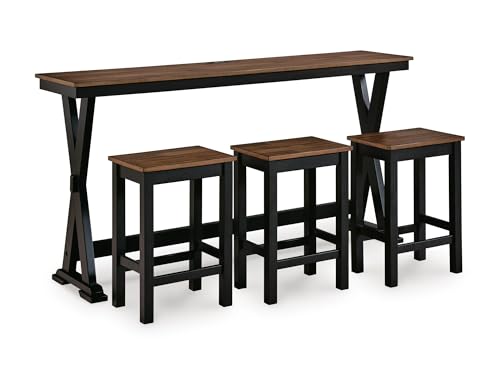
Signature Design by Ashley 4-Piece Counter Height Dining Table Set | Engineered Wood, 3 Backless Stools, 72-Inch Wide Table, Dual USB Ports, Sofa Console, Wildenauer Series
Check price on Amazon
CHOEZON Bar Table and Chairs Set, Counter Height Table and Chairs, with X-Shaped Supports, 1 Pub Table and 2 Chairs, for Dining Room, Living Room, Home Bar, Rustic Brown and Black TBT18BF
Check price on Amazon
YATINEY 70.9" Bar Table and Chairs Set, Dining Table and Chair Sets, 3 Piece Counter Height Table and 2 Stools, Kitchen Table for Home Restaurant, Bar, Rustic Brown BT09BR
Check price on AmazonCare and Maintenance
A sofa table with stools sits in a high-touch zone, so a little routine care keeps it looking sharp:
- Dust the top weekly with a soft cloth to prevent scratches from grit.
- Wipe spills promptly, especially on wood and metal finishes. Use a mild cleaner appropriate to the material.
- Check stool feet regularly and replace worn pads to protect flooring.
- Tighten hardware on table legs and stool frames as part of a seasonal check.
- Rotate decorative items and avoid placing hot or wet objects directly on unfinished surfaces.
- Refresh upholstered stools by vacuuming seats and spot-cleaning according to the fabric care code.
For deeper cleaning guidance on upholstered surfaces, our sofa upholstery cleaner resource covers fabric-safe methods you can adapt to stool cushions.
Frequently Asked Questions
What is a sofa table with stools?
It is a narrow console table designed to sit behind a sofa that comes with coordinating stools. The tabletop provides a display and utility surface, while the stools tuck underneath when not in use, adding flexible seating without expanding the furniture footprint.
How much space do I need behind a sofa for a sofa table with stools?
Plan for at least 12 to 18 inches of depth behind the sofa for the table and tucked-in stools, plus enough room behind the table for stools to be pulled out comfortably. Frequent use calls for a little more clearance.
Are sofa tables with stools suitable for small living rooms?
Yes. A narrow table paired with backless stools is one of the most space-efficient ways to add seating and storage. The key is choosing a shallow table depth and stools that tuck fully underneath.
What height should a sofa table be?
Aim for a tabletop level with or just below the sofa back — commonly around 28 to 32 inches. Measure your sofa's back height at the table's position and check that stool seat height leaves comfortable knee clearance.
Can I use the set as a desk?
Absolutely. A stool plus the tabletop makes a practical occasional workspace. Choose upholstered stools with a comfortable seat and confirm the table height suits your sitting posture for longer sessions.
What stool type is best for a narrow space?
Backless stools are the best choice for narrow spaces because they tuck fully under the table and keep sightlines open. Low-back stools are a good compromise if you want a bit of comfort for longer sitting.
Final Thoughts
A sofa table with stools is one of the most practical additions you can make to a living room. It finishes the back of the couch, adds a useful surface, and gives you seating on demand — all without taking over the floor plan. The keys to a good purchase are straightforward: measure your sofa and clearance first, match the table height to the sofa back, confirm the stools tuck in cleanly, and choose a style and material that suit how you actually live.
If you are still exploring the wider furniture category, the sofa table with storage and sofa table with ottomans underneath guides offer useful alternatives to compare against the stool configuration. And when you are ready to see curated options, the recommended picks above are a solid starting point for your shortlist.