


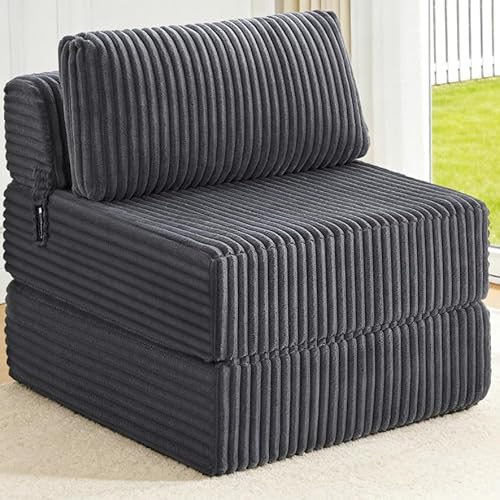


What Counts as a Small Sofa Bed
A small sofa that turns into a bed is a compact seating piece with an integrated conversion system. In living-room terms, "small" generally means a footprint under about 70 inches in width, with a depth shallow enough to leave walking space in front of it. The conversion can be a pull-out mechanism, a fold-down back, a click-clack hinge, or a futon-style frame that opens flat.
These pieces are not just scaled-down versions of full-size sleeper sofas. They are engineered around a different set of priorities: compact folded dimensions, a smooth and repeatable conversion, and a sleeping surface that remains supportive without being bulky. When you shop, look for models marketed as small sleeper sofas, small sofa beds, compact convertible sofas, or small pull-out sofas. Each label points to a slightly different design philosophy, and understanding the difference prevents buying the wrong type for your room.
A compact sleeper is particularly valuable in a small apartment living room where seating and sleeping zones overlap. It also works well as a secondary guest surface in a bedroom, where a small loveseat for the bedroom can replace a full-size sofa without dominating the floor plan.
Conversion Mechanisms Explained
The conversion mechanism is the most important engineering decision in any sleeper sofa, and in small models it matters even more because space constraints limit how much hardware can be used. There are four common systems.
Pull-Out Mechanism
A pull-out sofa hides a folded mattress in a metal frame under the seat. To convert, you lift the seat cushion, pull the frame outward, and unfold the mattress. Pull-out models tend to offer the most mattress-like sleep experience because the support structure is independent of the sofa frame. In a compact room, the main drawback is that the frame needs clear floor space in front of the sofa to extend.
Click-Clack Mechanism
A click-clack sofa uses a hinged backrest that folds backward until it lies flat. The seat and back cushions become the sleeping surface. Click-clack models are common in small sofa beds because they require no internal mattress cavity, which keeps the folded profile slim. They are lighter and easier to move, but the sleeping surface is typically firmer and thinner than a pull-out mattress.
Fold-Down or Flip-Out Design
Some compact sofas convert by flipping the seat forward and dropping the backrest down. These designs are popular in multi-functional pieces that combine seating with storage. The conversion is quick, but check that the folded position locks securely and that the sleeping surface remains level.
Futon-Style Frame
Futon sofas use a wooden or metal frame with a folding mattress. They are among the most space-efficient options because the mattress is the seat and the bed at the same time. A small apartment futon can be a practical alternative when you want a low-profile, lightweight piece. The trade-off is that futon mattresses are usually thinner and may need periodic rotation.
| Mechanism | Best For | Comfort Profile | Space Requirement |
|---|---|---|---|
| Pull-Out | Frequent overnight guests, primary sleeping surface | Traditional mattress feel, supportive | Requires clear floor space in front |
| Click-Clack | Occasional guests, compact rooms, easy movement | Firmer, thinner sleeping surface | Folds in place with minimal extension |
| Fold-Down / Flip-Out | Multi-purpose rooms, storage-integrated pieces | Moderate, depends on cushion density | Moderate forward clearance needed |
| Futon | Studios, lightweight setups, flexible layouts | Firmer, thinner, customizable | Low footprint, opens flat on floor |
Tier note: entry-level compact sleeper sofas often use click-clack or futon frames, while mid-range and premium models tend to offer pull-out mechanisms with thicker mattresses and smoother glides.
Sizing and Placement
Measure before you fall in love with a design. A small sofa bed that does not fit the room, or does not open fully, creates daily frustration. Use this three-step measuring process.
Step 1: Measure the Closed Footprint
Record the width, depth, and height of the sofa in its seated position. Width determines how much wall space the piece occupies. Depth determines how far it projects into the room and whether traffic can pass. Height matters if you plan to place it under a window or beside a sloped ceiling.
Step 2: Measure the Open Footprint
Find the manufacturer's open dimensions. A pull-out model needs the sofa depth plus the extended mattress length. A click-clack model needs the length of the folded backrest. If the sofa opens in front of a doorway, wall, or radiator, the conversion will be blocked. Leave a buffer of several inches on each side.
Step 3: Check Delivery and Door Clearance
Measure your entryway, stairwell, and elevator. Compact sleeper sofas usually ship in one or two boxes, but some arrive assembled. Confirm that the package dimensions and weight are manageable for your building.
If your room is especially tight, compare a small sofa bed for a studio apartment with a small sectional sleeper sofa. A sectional adds corner seating but needs more open floor area. A straight compact sleeper is usually the safer choice below a certain room width.
Mattress and Comfort Factors
The mattress determines whether the sofa functions as a real bed or as an emergency surface. In compact models, mattress thickness is limited by the folded profile, so material quality matters more than thickness alone.
Foam and Memory Foam
High-density foam and memory foam are the most common mattress materials in small sleeper sofas. They fold efficiently, recover their shape after conversion, and provide consistent support for one or two sleepers. Memory foam tends to sleep warmer and conform more closely to the body. High-density polyurethane foam is firmer and more durable under frequent folding.
Innerspring
Innerspring mattresses offer a more traditional bounce and airflow. In a compact sofa bed, they require a thicker fold mechanism and a reinforced frame. They are a good match for guest rooms where the bed is used occasionally and sleepers prefer a familiar spring feel.
Air and Hybrid
Some premium compact sleepers use air-over-foam or hybrid constructions to balance support and packability. These systems are more complex and usually sit in the high-end tier, but they can deliver a genuinely comfortable overnight experience in a very small footprint.
Regardless of material, check the mattress depth and the sleeper weight rating. A one-person compact sleeper may support a lighter load than a two-person model. If the sofa will be your primary bed, prioritize a model with a replaceable mattress so you can refresh the sleep surface without replacing the frame.
Fabric and Frame Durability
A sleeper sofa takes more mechanical stress than a standard sofa. The frame must tolerate repeated conversion, and the upholstery must resist creasing at the fold points.
Frame Construction
Look for solid hardwood or engineered hardwood frames with reinforced joints at the conversion points. Metal frames are common in pull-out models and should be powder-coated to resist wear. A heavy-duty frame with a smooth-glide mechanism is a hallmark of the mid-range and premium tiers. Entry-level models often use lighter frames that are adequate for occasional use but not for daily conversion.
Upholstery
Performance fabrics, tightly woven synthetics, and leather are practical choices for a small sofa bed. They resist staining and hold their shape at the fold. Velvet and loose-weave fabrics look rich but can crease permanently when folded repeatedly. If you choose a light fabric, consider a removable cover or a washable slipcover. For ongoing protection, explore slipcovers for sofas and slip covers for sofas with cushions to extend the life of the upholstery.
Check the seam construction at the seat and back folds. Double-stitched seams and reinforced corners last longer. If the sofa includes storage, inspect the hinge and the base panel, since these are common failure points.
Best Use Cases and Room Setups
A small sofa that turns into a bed is a flexible tool, but it performs best when matched to the room's primary function.
Studio Apartments
In a studio, the sofa is the living room and the bed is the bedroom. Choose a model that converts quickly and looks intentional in both positions. A small sofa with a pull-out bed keeps the sleeping surface separate from the seating surface, which feels more like a real bed at night.
Guest Rooms and Home Offices
A compact sleeper lets a home office double as a guest room. A small sofa for the bedroom or a small sofa for the end of the bed adds seating without crowding the room. A small sleeper sofa is the natural choice when the room needs to host visitors regularly.
Small Living Rooms
In a compact living room, the sleeper sofa is usually the primary seat. Pair it with a small console table with storage or a small side table that slides under the sofa to keep the floor clear. A small sectional sleeper sofa with storage can add hidden storage for bedding.
Flexible Multi-Purpose Rooms
For rooms that shift between lounge, office, and guest space, a small sofa with chaise and sleeper combines lounging and sleeping in one piece. If you need extra seating depth, a small couch with chaise and pull-out bed is a practical upgrade.
Tier Comparison
Compact sleeper sofas fall into three broad quality tiers. The tiers describe relative market position and construction quality, not absolute specifications.
| Tier | Best For | Typical Construction | Conversion Feel |
|---|---|---|---|
| Entry-Level | Occasional guests, secondary rooms, light use | Lighter frames, click-clack or futon mechanisms, thinner foam | Functional, firmer, may need more effort |
| Mid-Range | Regular guests, studio apartments, daily seating | Reinforced frames, pull-out or hybrid mechanisms, denser foam | Smoother conversion, more supportive sleep surface |
| Premium | Primary sleeping surface, frequent conversion, long-term use | Hardwood or heavy-duty metal frames, premium glides, high-density or hybrid mattresses | Effortless glide, near-traditional bed comfort |
As a rule, mid-range models offer a noticeable step up in mechanism smoothness and mattress support compared with entry-level pieces. Premium models focus on long-term durability and sleep quality. Choose the tier that matches how often the bed will be used, not just how the sofa looks in the showroom.
Buying Checklist
Before you complete your purchase, run through these checks. Each one addresses a common point of frustration with compact sleeper sofas.
- Measure closed and open dimensions and confirm the conversion path is clear.
- Verify the mechanism type matches how often you will convert the sofa.
- Check the mattress material and thickness, and confirm it is replaceable.
- Inspect the frame material and joint reinforcement at the fold points.
- Review the upholstery for crease resistance and cleanability.
- Confirm the sleeper weight rating suits the intended users.
- Check delivery dimensions against your doorways and stairwells.
- Review the warranty, especially coverage for the conversion mechanism.
If you are still comparing categories, the small sofa bed overview and the small pull-out sofa bed guide can help you narrow the field. For rooms that need extra seating flexibility, compare a small sectional with pull-out bed against a straight compact sleeper.
Frequently Asked Questions
What is the smallest sofa that turns into a bed?
Twin-size sleeper sofas and futon sofas are among the smallest options, often measuring around 60 to 65 inches wide. These compact designs suit studio apartments and guest rooms where floor space is limited.
How do I choose a small sofa bed for a studio apartment?
Measure your available wall space and door clearances first. Prioritize models with a pull-out or click-clack mechanism, choose a neutral upholstery that fits your palette, and consider storage-integrated designs to keep the room uncluttered.
What mattress type is best in a small sleeper sofa?
Memory foam and high-density foam mattresses are popular in compact sleeper sofas because they fold efficiently and provide consistent support. Innerspring mattresses offer a more traditional feel but require a thicker fold mechanism.
Can a small sofa bed be used daily?
Yes, many mid-range and premium small sofa beds are designed for daily conversion. Look for reinforced frames, smooth-glide mechanisms, and warranties that cover frequent use if the sofa will serve as your primary sleeping surface.
Should I choose a sectional or a straight sleeper sofa for a small room?
A straight sleeper sofa is usually the safer choice in a narrow room because it preserves walking space. A small L-shaped sectional sofa adds corner seating but needs more open floor area to convert and to navigate around.
Final Thoughts
A small sofa that turns into a bed is one of the most practical furniture investments for a compact home. The right choice depends less on any single feature and more on how the pieces fit together: the mechanism matches your usage pattern, the mattress matches your sleep needs, the dimensions match your room, and the upholstery matches your daily life. Work through the checklist, compare tiers honestly, and you will end up with a sofa that serves both roles well for years.
For more room-specific guidance, explore the small sofa hub and the small living rooms collection. If you are furnishing a guest space, the small sleeper sofa guide covers additional configuration options.