
Small Loveseat for Bedroom: The Compact Seating Solution
A small loveseat for the bedroom turns an overlooked corner into a comfortable reading spot, a dressing-area seat, or a quiet place to unwind. This guide explains how to choose the right size, placement, and comfort tier for a two-seat sofa that actually fits your space.
Explore Recommended PicksWhy a bedroom loveseat works: Bedrooms often have more usable floor space than people realize. A compact loveseat fills that space without overwhelming the room, and it gives you a soft landing spot for reading, dressing, or morning coffee. The key is matching seat width, depth, and fabric to how you actually use the room.
Why Choose a Small Loveseat for the Bedroom
A loveseat is the natural middle ground between an accent chair and a full-size sofa. In a bedroom, that middle ground matters. A full sofa can crowd the bed and block walking paths, while a single chair may leave the room feeling sparse. A small loveseat seats two comfortably, anchors an empty wall, and still leaves room for nightstands, dressers, and closet doors to function.
Bedroom loveseats also solve specific layout problems. If the foot of the bed has a wide gap before the wall, a loveseat fills it with purpose. If a bay window or reading corner feels unfinished, a two-seat sofa gives it a focal point. For renters and apartment dwellers, a compact loveseat is also easier to move through tight hallways and stairwells than a full sectional. If your space is especially tight, our guide to small loveseats for small spaces covers additional layout strategies.
Sizing Your Bedroom Loveseat
Width is the first number to check, but depth and back height matter just as much in a bedroom. A loveseat that is narrow but deep can still make a walkway feel cramped. Use the table below as a starting framework, then measure your actual room before committing.
| Room Condition | Suggested Loveseat Width | What to Watch For |
|---|---|---|
| Compact bedroom with tight walkways | Around 40–48 inches | Keep at least 18 inches of clearance on the main walking path |
| Standard bedroom with open wall space | Around 48–55 inches | Check that arms do not block outlets or closet swing |
| Primary bedroom with a sitting area | Around 55–60 inches | Confirm depth so the piece does not crowd the bed |
Depth is the second critical measurement. Standard loveseats often run 32 to 38 inches deep. In a bedroom, a shallower depth keeps the room feeling open, while a deeper seat feels more lounge-like but eats floor space. If the loveseat sits at the foot of the bed, measure the gap between the bed frame and the wall, then subtract enough room to walk through. A wall-hugger or reclining design may need extra rear clearance, so check the mechanism requirements before choosing. Our overview of compact loveseat layouts goes deeper into clearance planning.
Placement Ideas for a Bedroom Loveseat
Where the loveseat goes depends on what you want it to do. The three most practical placements are the foot of the bed, a corner reading nook, and the wall opposite the bed.
- Foot of the bed: This works best when there is a wide gap between the bed and the wall. A low-back loveseat keeps sightlines open, and the piece can double as a spot to sit while putting on shoes.
- Corner reading nook: Pair a compact loveseat with a floor lamp and a small side table. This turns dead corner space into a functional retreat without blocking traffic.
- Opposite the bed: A loveseat against the far wall creates a natural sitting zone. Keep it centered on the bed or aligned with a window for visual balance.
If your bedroom also serves as a workspace or dressing area, consider how the loveseat interacts with those functions. A piece with a lower back profile is easier to place near a vanity or dresser. For rooms where storage is tight, a loveseat with hidden under-seat storage can hold extra blankets or off-season clothing.
Comfort Tiers: Matching the Loveseat to Your Needs
Bedroom loveseats vary widely in construction quality and comfort. Rather than focusing on numbers, it helps to think in tiers. The tier you choose should reflect how often the seat will be used and how long each sitting session tends to last.
Essential Tier
Best for occasional use, guest rooms, or secondary bedrooms. Expect simpler cushion construction and lighter frames. A solid choice when the loveseat is mostly decorative or used for short sitting sessions.
Balanced Tier
A good fit for daily reading, dressing, or morning routines. Mid-tier models typically offer denser foam, better upholstery options, and more refined stitching. This is the sweet spot for most bedroom setups.
High-End Tier
Designed for long sitting sessions and primary bedrooms where comfort is a priority. Look for kiln-dried hardwood frames, high-resilience foam, and durable performance fabrics or top-grain leather.
Within each tier, the details separate good options from great ones. A reinforced frame and corner-blocked joinery signal durable construction. Removable, reversible cushions extend the life of the upholstery. For bedrooms with pets or children, performance fabric or leather is easier to maintain than delicate weaves. If you plan to use the loveseat as a reading chair, a slightly firmer seat with a supportive back is usually more comfortable than an overstuffed pillow-top design.
Fabric and Material Choices
Bedroom upholstery faces different demands than living room upholstery. It sees less food and drink, but it may see more sunlight, more bare-skin contact, and more dust. Soft performance fabrics, microfiber, and tightly woven cotton blends are practical choices. Leather is easy to wipe down and develops a natural patina over time, though it can feel cooler in the morning and warmer in summer.
Color also matters in a bedroom. Lighter neutrals make a compact room feel larger, while deeper tones add a cozy, cocooning effect. If the loveseat sits near a window, choose a fabric with fade resistance or add a sheer curtain to filter direct sun. For a cohesive look, match the loveseat to the bed's upholstery or pull a color from the bedding and repeat it in throw pillows.
Practical Features to Look For
Not every bedroom loveseat needs specialty features, but a few options are worth considering:
- Removable legs: Makes delivery through narrow doorways easier and lets you adjust the height of the piece.
- Hidden storage: Useful in smaller bedrooms where every cubic foot counts.
- Wall-hugger design: Ideal if the loveseat sits close to a wall or opposite the bed.
- Reversible cushions: Extends upholstery life and helps distribute wear evenly.
- Performance upholstery: Easier to clean and more resistant to everyday spills and dust.
If the loveseat will be assembled at home, check whether the arms or legs attach with simple hardware. Some models ship in two pieces that join in the middle, which is far easier to maneuver through a bedroom door than a fully assembled frame.
Styling a Bedroom Loveseat
A bedroom loveseat should feel intentional, not like leftover furniture from another room. Start with the bed as the visual anchor and let the loveseat support it. A pair of throw pillows that echo the bedding ties the two pieces together. A small side table or a narrow console behind the loveseat adds function without adding bulk.
Lighting finishes the setup. A floor lamp beside the loveseat creates a reading zone, while a table lamp on a nearby dresser softens the whole room. Keep the area around the loveseat clear of clutter so the piece reads as a deliberate sitting area rather than a storage surface. For rooms with limited floor space, a wall-mounted sconce or a slim floor lamp saves valuable inches.
Common Mistakes to Avoid
- Skipping the doorway measurement: A loveseat that fits the room can still fail at the door. Measure the entry path before ordering.
- Ignoring depth: Width gets the attention, but depth determines whether the room feels open or cramped.
- Choosing fashion over function: A beautiful fabric that shows every mark is a poor fit for a bedroom with pets or children.
- Forgetting the bed's clearance: Leave enough room to make the bed and open drawers comfortably.
- Overlooking assembly: Confirm how the loveseat ships and whether the pieces fit through your hallway.
Frequently Asked Questions
How wide should a small loveseat be for a bedroom?
Most small loveseats designed for bedrooms range from around 40 to 55 inches in width. Aim to leave at least 18 inches of walkway clearance around the piece so the room still feels open and easy to navigate.
Where is the best place to put a loveseat in a bedroom?
Common placements include the foot of the bed, a corner near a window, or opposite the bed against a wall. The best spot depends on door swing, closet access, and whether you want the loveseat as a reading nook or a dressing area seat.
What fabric is best for a bedroom loveseat?
For bedrooms, soft performance fabrics, microfiber, and tightly woven upholstery work well because they balance comfort and easy upkeep. Leather is a solid choice for a cleaner look and simple wipe-down care.
Can a small loveseat double as bedroom storage?
Yes. Some compact loveseats include hidden storage under the seat or a lift-up bench design. These are useful for stowing blankets, extra linens, or seasonal clothing in smaller bedrooms.
Do I need to measure doorways before buying a bedroom loveseat?
Always measure doorways, stairwells, and hallway turns before buying. A loveseat that fits the room may still be difficult to deliver if the entry path is tight, especially with legs or arms attached.
Recommended Small Loveseats for Bedrooms
⚠️ AFFILIATE DISCLOSURE: This website contains affiliate links. As an affiliate Associate, we earn from qualifying purchases. If you make a purchase through these links, we may receive a small commission at no additional cost to you. Read our full affiliate policy.

Erament Loveseat Boneless Convertible Sofa Bed, Folding Floor Futon Sleeper Sofa Couch Bed- Boneless Foldable Couch, Corduroy Pull Out Sofa Bed with 2 Pillows for Living Room & Bedroom
Check price on Amazon
MAXYOYO Boneless Couch, 59-Inch Couch in a Box, Deep Loveseat with Pillow | Plush Upholstered Sofa Seat with Supportive Foam, Soft Fabric Living Room Sofa, Comfy Loveseat Sofa for Apartment Bedroom
Check price on Amazon
55" Small Boneless Couch, 3-in-1 Boneless Loveseat Sleeper Sofa Bed Convertible Sofa Bed with 4 Pillows, Black Corduroy Boneless Couch for Living Room, Guest Room, Small Space, No Assembly Required
Check price on Amazon
feliz home Boneless Loveseat Sofa Bed, Tri-Folding Convertible Futon Sleeper with Handle & Side Pockets, 54'' Boneless Couch with Hook and Loop No Assembly for Small Space,Living Room & Bedroom
Check price on Amazon
TYBOATLE 51'' Dark Grey Small Couch Loveseat, 2-Seater Linen Sofa | Love Seat, Small Sofa Design, Linen Upholstery, Iron Legs, Living Room, Apartment, Bedroom, Dorm, Office, Small Spaces
Check price on Amazon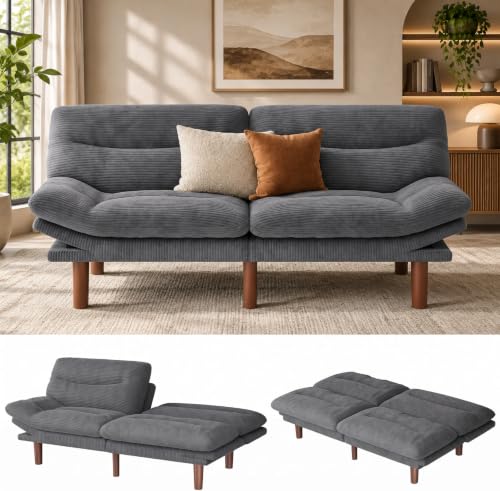
Marsail Futon Sofa Bed, Small Convertible Loveseat Couch, Grey | 66" Versatile 2-in-1 Sleeper Couch with Adjustable Backrest & Armrest, Corduroy Futon Couch for Small Apartment & Living Room
Check price on Amazon
Hanherry Loveseat Sofa, 47” Small Couch for Living Room, Comfy Chenille Fabric Love Seat for Bedroom with Throw Pillow,Removable Cushion Cover,Couches for Small Space,Apartment,Dorm
Check price on Amazon
COMAX Boneless Futon Sofa Bed, 59" Small Low-Profile Floor Couch, Black | 11.8 In Seat Height, Convertible Loveseat, Folding Couch Bed, Sleepover Bed, Dorm or Bedroom Sofa, Folding Floor Bed
Check price on AmazonReady to Choose Your Bedroom Loveseat?
Use the measurements and tier guidance above to narrow your options. The recommended selections below match the compact size, comfort levels, and materials that work best in a bedroom setting.
View Recommended Options