
Small Leather Sectionals for Small Spaces
Compact corner seating with the durability and easy care of leather. This guide explains how to size, choose, and arrange a small leather sectional so your apartment, studio, or cozy living room feels open, comfortable, and purposeful.
Explore Recommended OptionsWhy a Small Leather Sectional Suits Compact Living
A small leather sectional solves a very specific problem: it delivers the seating capacity of a corner sofa while keeping the visual footprint calm and uncluttered. Leather has a smooth, continuous surface that reads as one clean shape rather than a patchwork of cushions and fabrics, which helps a compact living room feel intentional instead of crowded.
Beyond aesthetics, leather is genuinely practical in tighter homes. Spills wipe away quickly, dust does not cling the way it does to deep fabric weaves, and the surface resists everyday wear from keys, bags, and pets. For renters and apartment dwellers who move periodically, a leather sectional also tends to hold its appearance well across multiple living spaces.
The key is choosing the right scale. A sectional that is too deep or too wide will dominate a small room no matter how elegant the leather is. Throughout this guide, you will find sizing benchmarks, configuration advice, and feature checklists that are specifically tuned for compact footprints. If you are still comparing broader categories, our overview of small sectional sofas for small spaces provides useful context on how leather compares with fabric alternatives.
Sizing and Layout Rules for Small Leather Sectionals
Measurements are the single most important decision factor for a compact sectional. The right dimensions depend on your room shape, but the following ranges work well for most apartments and small living rooms.
| Room Size | Suggested Sectional Width | Suggested Depth | Best For |
|---|---|---|---|
| Very small studio (under 150 sq ft living zone) | 70–78 inches | 52–58 inches | Two-seat corner with a shallow chaise or no chaise |
| Small living room (150–220 sq ft) | 78–86 inches | 56–62 inches | Three-seat corner with a compact chaise |
| Open-plan apartment corner | 82–90 inches | 58–65 inches | L-shaped layout that defines the seating zone |
| Narrow rectangular room | 72–80 inches | 52–58 inches | Wall-hugging or reversible chaise configuration |
Walkway and clearance benchmarks
- Main traffic path: keep 30–36 inches between the sectional and other furniture or walls.
- Coffee table gap: leave 14–18 inches between the seat edge and the table so you can sit and stand comfortably.
- TV viewing distance: roughly 1.5 to 2.5 times the screen diagonal, adjusted for your room depth.
- Door swing: confirm that entry doors and closet doors can open fully without touching the sectional.
- Delivery path: measure hallways, stairwells, and elevator doors. A sectional that cannot reach the room is a costly mistake. Models built for narrow passages, such as a sofa that can fit through narrow doors, are worth prioritizing.
Depth matters more than width in small rooms
A 34-inch seat depth feels generous in a large room but can crowd a compact one. For small spaces, a seat depth around 20–22 inches and an overall depth under 62 inches keeps legroom intact. If you want a lounge feel without the footprint, look at models described as apartment-scale or compact. Our guide to small sofas for small rooms covers additional depth and height considerations that apply directly to sectionals.
Best Sectional Configurations for Compact Rooms
Not every sectional shape is equally space-efficient. The configuration determines how much floor area the sofa actually consumes and how flexible the room feels around it.
L-shaped with a compact chaise
An L-shaped sectional with a short chaise is the most popular choice for small living rooms. The chaise adds lounge seating without extending the full length of the sofa. Place the chaise on the side of the room with less foot traffic so it does not block the main path. If you want a deeper breakdown of this shape, see our guide to the small L-shaped sofa.
Reversible chaise
A reversible chaise can be moved from left to right, which is invaluable in apartments where you may rearrange furniture or move to a new unit. It also lets you adapt the sectional to a corner that changes with the season or a new layout.
Storage sectional
In compact homes, hidden storage is a genuine functional upgrade. A small sectional with storage in the chaise or under the seat can absorb blankets, remotes, and seasonal items that would otherwise need separate furniture. Our article on the small sectional sofa with storage explains what to check for in the mechanism and lining.
Modular pieces
Modular sectionals can be reconfigured as your space changes. The trade-off is that each module needs its own clearance, so modular designs tend to suit slightly larger small rooms rather than the tightest studios.
Leather Types Explained for Compact Sectionals
The leather grade affects durability, feel, and how the sofa ages. For a small sectional that will be used daily, the leather type is one of the most important long-term decisions.
| Tier | Leather Type | Durability | Best For |
|---|---|---|---|
| Entry-level | Bonded leather or split leather | Moderate; best for light daily use | Guest rooms, occasional seating, first apartments |
| Mid-range | Top-grain leather | High; supple with good resistance | Everyday family seating and pet-friendly homes |
| Premium | Full-grain leather | Very high; develops a natural patina | Long-term daily use in main living areas |
| Luxury | Aniline or semi-aniline full-grain | Exceptional; premium tactile finish | Design-forward spaces where leather is a focal point |
Top-grain versus full-grain in a small room
Top-grain leather is the balanced choice for most small sectionals. It is sanded lightly to remove imperfections, which makes it more uniform and slightly more resistant to staining than full-grain. Full-grain leather retains the natural surface and grows more characterful with age, but it can show marks more readily. In a compact room where the sofa is the visual anchor, a uniform top-grain surface often looks cleaner and more intentional.
Color and perceived space
Lighter leathers such as camel, sand, and warm gray reflect more light and make a small room feel larger. Dark leathers such as espresso or black create a dramatic, grounded look but can visually compress a tight space. If you love dark leather, pair it with light walls and a pale rug to balance the weight. Our guide to a camel leather sofa explores how a warm mid-tone leather can anchor a compact room without making it feel heavy.
Pet and family considerations
Leather is generally easier to clean than fabric, but claws can scratch softer finishes. A top-grain or full-grain leather with a protective finish holds up better than bonded leather. If pets are part of the household, our pet-friendly sofa guide covers finishes and maintenance routines that extend the life of leather upholstery.
Features That Make a Leather Sectional Space-Efficient
Small-space furniture earns its place through smart details. When comparing models, prioritize features that reduce clutter or improve how the sofa fits into the room.
- Slim arms: narrow or track arms save several inches of width compared with rolled arms, which matters in tight rooms.
- Low back height: a back under 34 inches keeps sightlines open and makes the room feel taller.
- Removable or reversible chaise: lets you adapt the layout without buying new furniture.
- Hidden storage: absorbs blankets and remotes that would otherwise need separate storage furniture.
- Tight or attached back cushions: fewer loose cushions means less visual clutter in a small room.
- Legs with clearance: visible floor space under the sofa makes the room feel larger and simplifies cleaning.
- Modular or split-frame delivery: essential for apartments with narrow halls and stairwells.
If you are weighing a reclining model, note that power mechanisms add depth and require wall clearance. A small reclining sofa for small spaces can work if it uses a wall-hugger mechanism, but a stationary leather sectional is usually the more space-efficient choice for the tightest rooms.
Recommended Small Leather Sectionals for Small Spaces
⚠️ AFFILIATE DISCLOSURE: This website contains affiliate links. As an affiliate Associate, we earn from qualifying purchases. If you make a purchase through these links, we may receive a small commission at no additional cost to you. Read our full affiliate policy.

VANOMi Faux Leather Couch with Reversible Chaise for Apartment, Brown | 100" W Faux Leather Sofa, L-Shaped Couches for Living Room, Office, 3 Seater, Sectional
Check price on Amazon
COPIAE 89 inch L-Shaped Sectional Sofa Sleeper with Storage Space & Side Pocket, Anti-Scratch Faux Leather Couch Bed with USB Port & Cup Holder, Modern Piano Design Pull Out Bed for Living Room
Check price on Amazon
82.5" Sectional Sofa with Pull-Out Bed, L-Shaped Couch with Storage Chaise | Pull-Out Sleeper Design, Leather-Look Fabric, Hidden Storage Chaise, Cup Holders, L-Shaped Sectional, Space-Saving Sofa
Check price on Amazon
78" L Shaped Faux Leather Sectional Sofa, Couch with Storage Ottoman, Camel | Small sofa for small spaces, living rooms, apartments, offices, reversible ottoman, 2 cup holders, 4 side pockets
Check price on Amazon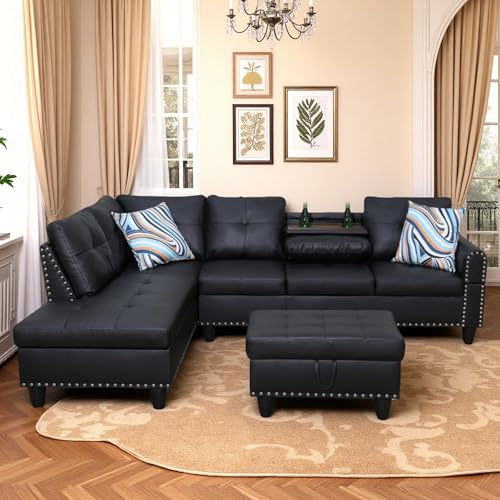
Trygoal Leather 3-Piece L-Shaped Couches for Living Room, Sectional Sofa with Storage Ottoman & Movable Chaise, Modular Convertible Couch for Bedroom & Apartment, Midnight Black
Check price on Amazon
Modular Sectional Couch, 83" Faux Leather Storage L Shaped Sofa, Brown | Comfy Cloud Deep Seat Sofas, Hidden Storage Space, Movable Ottoman, Support Pillow for Living Room, Easy Assembly
Check price on Amazon
Topcomfy Faux Leather Sectional Couches for Living Room - L Shaped Orange | 97.5"L x 66.5"W, Cup Holder/Movable Chaise/Storage Ottoman, Home Modular Sofas , Living Room Furniture Sets, Modern Apartment
Check price on Amazon
Faux Leather Modular Sectional Sofa, L Shaped Couch for Living Room | Plush Cushion, Sturdy Frame, Easy Assembly, Movable Ottoman, Classic Look, Water Resistant, Easy to Clean, Scratch-Resistant
Check price on AmazonBuying Checklist for a Compact Leather Sectional
Use this checklist before you commit. It is organized around the decisions that most often cause regret in small spaces.
Before you order
- Measure the room’s usable width and depth, not just the wall length.
- Mark the planned footprint on the floor with painter’s tape and live with it for a day.
- Confirm delivery path dimensions: hallway width, stair turns, elevator depth, and door width.
- Check that the sectional’s widest point fits through the narrowest part of the path.
- Decide whether you need a reversible chaise, storage, or a sleeper function.
- Verify the leather tier and the warranty terms for the frame, cushions, and leather surface.
At delivery
- Inspect the leather for transit marks before signing the delivery receipt.
- Test the chaise or storage mechanism through a full cycle.
- Confirm that all legs, connectors, and hardware are present.
- Keep the packaging until you are certain the sectional fits the intended layout.
Arranging a Small Leather Sectional in a Compact Room
Placement determines whether a sectional feels like a smart space solution or an obstacle. The following arrangements work well in apartments and small living rooms.
Float the sectional in open-plan layouts
Pulling the sectional slightly away from the wall creates a deliberate seating zone and improves traffic flow. Leave at least 30 inches behind the sofa if it floats, or use a slim console to define the boundary. In open-plan apartments, the back of the sectional can act as a soft divider between living and dining areas.
Anchor with a rug
A rug that extends at least a few inches under the front legs of the sectional ties the seating group together. In small rooms, choose a rug that contrasts gently with the leather tone so the sofa remains the focal point. Light rugs under dark leather, or warm neutral rugs under camel leather, tend to work well.
Keep the corner light
The corner of an L-shaped sectional can become a dark visual pocket. Add a floor lamp or a small side table with a lamp to brighten the corner and make the seating area feel intentional. A sofa side table with storage is especially useful in compact rooms where every surface should do double duty.
Use vertical space
Because a sectional occupies a large share of the floor, move storage and display upward. Wall shelves, tall bookcases, and wall-mounted lighting reduce the need for floor furniture and keep the room feeling open.
Ready to Compare Compact Leather Sectionals?
Review the recommended options above, then use the buying checklist to confirm dimensions, leather tier, and delivery path before you decide.
View Recommended ModelsFrequently Asked Questions
What size leather sectional works best in a small living room?
Is a leather sectional a good choice for small spaces?
Which leather type should I choose for a small sectional?
How do I arrange a small leather sectional in an apartment?
Can a leather sectional work in a studio apartment?
Final Thoughts
A small leather sectional is one of the most practical investments for a compact home. It delivers corner seating, easy maintenance, and a clean visual line that helps a small room feel calm rather than crowded. The decision comes down to three things: accurate measurements, a leather tier that matches your daily use, and a configuration that fits the way you move through the room.
Start with the room dimensions and delivery path, then choose a leather tier, then compare configurations and features. The recommended options above are filtered for compact footprints, and the checklist in this guide will help you confirm the details before you commit. With the right scale and placement, a leather sectional can make even a small living room feel generous and well designed.