
Small Sectional Sofas for Small Spaces
A complete guide to choosing compact sectional sofas that fit small living rooms, apartments, and studios — with size guidance, layout tips, and features that maximize comfort.
EXPLORE COMPACT OPTIONSQuick answer: Small sectional sofas for small spaces are compact sectionals designed to fit tight living rooms, apartments, and studios while still offering the seating benefits of a full sectional. They typically combine a small footprint (often around 75 to 90 inches wide) with a corner or chaise section, so you get more seating per square foot without crowding the room. The right choice depends on your measurements, your layout, and how you plan to use the space.
Why Choose a Small Sectional for a Compact Room
A small sectional is a practical way to add comfortable, multi-person seating to a compact room. Unlike two separate chairs or a sofa plus a loveseat, a sectional uses the corner of the room efficiently, which often frees up floor space for walkways and other furniture. For many small living rooms and apartments, this makes a compact sectional the most space-efficient seating option available.
The key advantages include:
- Seating per square foot — a corner or chaise sectional seats more people than a straight sofa of the same width.
- Defined seating zone — a sectional naturally anchors a living area in an open-plan or studio space.
- Fewer pieces — one sectional can replace a sofa plus accent seating, simplifying the layout.
- Flexible orientation — an L-shape or chaise can fit a corner that a straight sofa cannot use well.
If you are still deciding between a sectional and a straight sofa, our guide to apartment sofas covers the compact straight-sofa option, while our guide to sectional sofas explains the full range of sectional configurations.
How to Measure Before You Buy
Measuring is the most important step when buying a small sectional. A piece that is slightly too large will make a compact room feel crowded and block walkways, while a piece that is too small will leave the room feeling unfinished. Follow these steps before choosing a model:
1. Measure the Room
Measure the length and width of your living room, and note the location of doors, windows, radiators, and any built-in furniture. Mark the floor with painter's tape to outline the footprint of the sectional you are considering. This simple step prevents the most common buying mistake.
2. Leave Clear Walkways
Leave at least 18 inches (about 45 cm) of clear walkway around the sectional so people can move through the room comfortably. In smaller rooms, aim for 24 inches where possible. A sectional that fits the wall but leaves no walkway will feel cramped even if it technically fits.
3. Check the Chaise or Corner Depth
The chaise or corner section of a small sectional often extends further into the room than the main seating row. Measure the depth of the chaise and confirm it does not block a walkway or extend into a doorway. Our guide to the chaise lounge explains how chaise depth affects layout.
4. Confirm Doorway and Stair Clearance
A sectional must fit through the doorway and any stairwell or hallway on the way to the room. Small sectionals are generally easier to move than large ones, but a corner sectional still has a fixed shape. Measure the narrowest point of your entry path, and compare it to the sectional's dimensions. A modular design can be split into pieces that fit more easily — see our guide to modular sofas for details.
Common Small Sectional Configurations
Several sectional layouts work well in compact rooms. The best choice depends on where the seating will go and how the room is used:
- Small L-shaped sectional — the most popular compact layout. It uses a corner efficiently and often seats three to four people.
- Chaise sectional — a straight row with a chaise at one end, useful when the room has a long wall but no good corner.
- Reversible sectional — a chaise that can be placed on either the left or right side, which helps when you are unsure of the final layout.
- Modular small sectional — individual pieces that can be rearranged, expanded, or split apart later.
- Apartment-size sectional — a compact sectional specifically designed for smaller rooms, often with a shallower depth.
If you are planning a studio or open-plan layout, our guides to studio apartment living and small living rooms cover additional layout strategies that pair well with a compact sectional.
Features That Help in Small Spaces
Sleeper Function
A sleeper or convertible sectional adds a guest bed in a small space without a separate guest room.
Storage Chaise
A storage compartment under the chaise or seat keeps blankets and cushions out of sight.
Reversible Chaise
A chaise that moves from left to right lets you change the layout without buying a new sofa.
Modular Design
Split the sectional into pieces for moving, or rearrange it when your room layout changes.
Shallow Depth
A shallower seat depth keeps more floor space free in a compact room.
Performance Fabric
Stain-resistant performance fabric suits small spaces shared with kids and pets.
If a guest bed is a priority, our guides to convertible sofas, pull-out sofas, and sofa beds compare the main sleeper options. For family-friendly upholstery, see our guide to fabric sofas.
Small Sectional vs. Other Compact Seating
It helps to compare a small sectional against the other seating options commonly used in compact rooms. The table below summarizes the practical differences.
| Feature | Small Sectional | Apartment Sofa | Loveseat |
|---|---|---|---|
| Seating capacity | Usually 3 to 4 people | Usually 2 to 3 people | Usually 2 people |
| Space efficiency | High — uses the corner | Moderate — straight layout | High — compact footprint |
| Layout flexibility | Good — L-shape or chaise | Simple — one orientation | Simple — one orientation |
| Best for | Small living rooms, apartments, studios | Rooms where a straight sofa fits better | Tight spaces with one or two users |
| Typical build tiers | Entry-level to luxury | Entry-level to luxury | Entry-level to luxury |
A loveseat is the most compact option and works well in very tight rooms or as a secondary seat. An apartment sofa keeps the layout simple when the room is narrow. A small sectional offers the most seating per square foot and defines a seating zone better than the other two, which is why it is often the best choice for a small living room or studio. Our guide to loveseats covers the two-seat option in more detail.
What to Look for Before You Buy
Build quality matters as much as size when choosing a small sectional. Check these factors before deciding:
1. Frame and Construction
A solid wood or high-grade engineered wood frame will hold up far better than particleboard. Check that the frame is reinforced at the joints, especially on an L-shaped sectional where the corner takes extra stress. Durable construction here is the difference between a sofa that lasts a few years and one that lasts a decade or more.
2. Cushion and Upholstery Quality
High-density foam wrapped in fiber or down offers a comfortable balance of support and softness. On entry-level sectionals, cushioning is usually basic foam; mid-range and premium models typically use higher-density foam and better upholstery that holds its shape longer. Performance fabric is the most practical choice in small spaces shared with kids and pets.
3. Seat Depth and Height
A shallower seat depth keeps more floor space free in a compact room, but it should still be comfortable for the people who use it most. Check the seat height as well, especially if the sectional will be used by older family members. Our guide to recliner armchair for elderly covers support and ease-of-use considerations that also apply to sofa seating.
4. Delivery and Assembly
Confirm that the sectional fits through your entry path and check whether assembly is required. Some compact sectionals ship in pieces that assemble in the room, which is easier in tight apartments. Our guide to delivery and assembly covers what to expect.
Layout Tips for Small Living Rooms
The right layout makes a small sectional feel spacious rather than cramped. These strategies work well in compact rooms:
- Place the corner in the room's corner — this uses the least floor space and keeps walkways clear.
- Float the sectional only if the room allows — a floating layout can define zones in an open plan, but it needs more floor space.
- Choose a light or neutral upholstery — light colors make a compact room feel larger. Our guide to neutral living palettes covers this in more detail.
- Use a rug to define the zone — an area rug under the sectional anchors the seating area without adding visual weight.
- Keep side tables small — slim or nesting end tables save floor space. See our guide to end and side tables.
- Add a mirror or wall art — a mirror reflects light and makes a small room feel larger. Our guide to wall art and mirrors covers placement.
For more layout strategies, see our guides to small living rooms, open concept living, and bright and airy looks.
Care and Maintenance
Caring for a small sectional is similar to caring for any upholstered sofa. Vacuum cushions and crevices regularly, rotate seat cushions to distribute wear evenly, and clean spills promptly with a fabric-appropriate cleaner. In a small room, dust and pet hair accumulate more visibly, so a regular cleaning routine matters. For detailed cleaning steps, see our fabric sofa cleaning guide and stain removal guide. If you have pets, our pet-friendly protection guide covers upholstery protection.
Recommended Small Sectional Sofas for Small Spaces
⚠️ AFFILIATE DISCLOSURE: This website contains affiliate links. As an affiliate Associate, we earn from qualifying purchases. If you make a purchase through these links, we may receive a small commission at no additional cost to you. Read our full affiliate policy.

Boneless Couch, Cloud Couch Sofa, Sectional Couches for Living Room | Comfy L-Shaped Modern Sectional Sofa, Upholstered Corduroy Couch with Storage Pocket for Apartment, No Assembly Required
Check price on Amazon
Homall 72" L Shaped Sofa Couches for Small Spaces , Apartment Drak Gray | Wood Frame Chenille Fabric Sectional Couches with Reversible Ottoman Couches for Small Living Room Bedroom Office
Check price on Amazon
HONBAY Corduroy Sectional Sofa with Storage Ottoman, 6 Seaters L Shaped Small Sectional Couch for Living Room, Green
Check price on Amazon
Korser Cloud Modular Sectional Sofa with L-Shaped, Boneless Couches for Living Room, Fluffy Comfy Corduroy Deep Seat with Ottoman, Bedroom, Apartment, No Assembly Required
Check price on Amazon
Boneless Couch Small, Convertible Sleeper Sofa Bed, Mini Modular Sectional Sofa, Tri-Folding Cloud Couch with L-Shape Chaise, Corduroy Futon Couch for Small Spaces, Bedrooms, Apartment, No Assembly
Check price on Amazon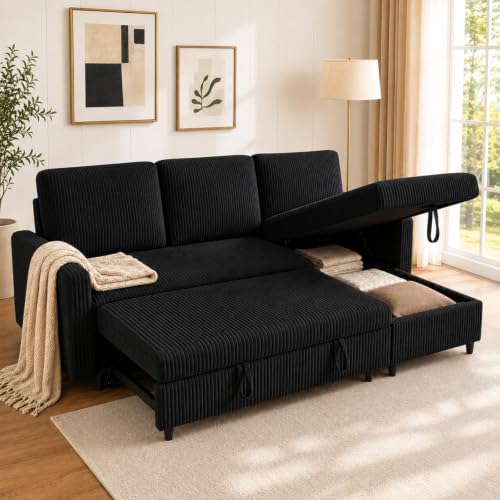
Walsunny 77" Sectional Sleeper Sofa with Pull Out Bed, Modern L-Shaped Corduroy Convertible Couch with Storage Chaise, Reversible 3-Seat Sofa Bed for Small Spaces, Apartment, Office, Black
Check price on Amazon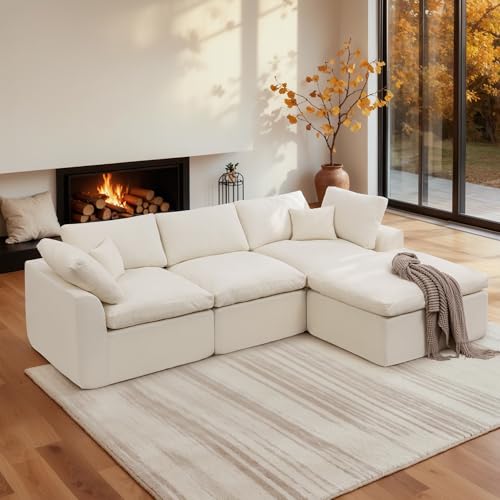
Korser 110" Cloud Sectional Couches for Living Room, Modern Modular Sectional Sofa with Ottoman, Boneless Cloud Couch with Comfy Deep Seats, Fluffy Chenille L-Shape Sofa Couch for Living Room, Beige
Check price on Amazon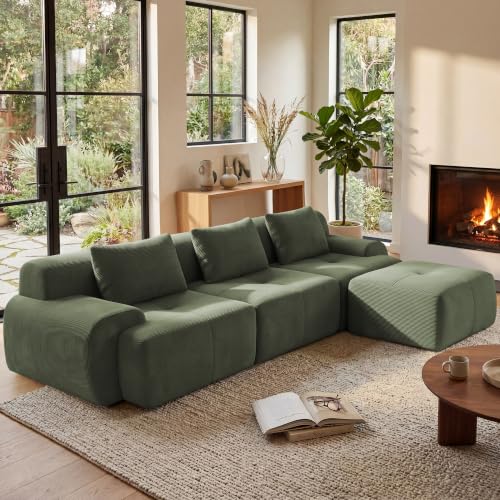
GRUSIGN 108'' Modular Boneless Sofa,Sectional Couch for Living Room | Tufted Oversized L Shape Deep Seat Sectional Sofa with Ottoman & 3 Throw Pillows,Corduroy Cloud Couch,Green
Check price on AmazonReady to Choose Your Small Sectional?
Use this guide to compare sizes, configurations, and build quality. When you know which layout fits your room, you can shop with confidence and choose the compact sectional that will serve your living space for years.
VIEW COMPACT OPTIONSFrequently Asked Questions
What size sectional sofa is best for a small space?
A small sectional for a compact room generally measures around 75 to 90 inches wide and 55 to 65 inches deep. Measure your room first, leave clear walkways, and choose a compact or apartment-size sectional that fits without crowding the space.
Are small sectional sofas good for apartments?
Yes. Small sectionals are popular in apartments because they maximize seating in a compact footprint, often fit through narrow doorways, and can define a seating zone in an open-plan studio.
What is the difference between an apartment sofa and a small sectional?
An apartment sofa is a compact straight sofa, while a small sectional includes a corner or chaise section. A small sectional offers more seating per square foot, while an apartment sofa keeps the layout simpler.
Can a small sectional fit in a studio apartment?
Yes, when it is the right size. A small L-shaped or chaise sectional can define a living zone in a studio without blocking walkways. Measure the room, leave at least 18 inches of walkway, and consider a modular design for flexibility.
Should I choose a sectional with a chaise or a corner for a small room?
Choose a chaise if the room has a long wall but no usable corner. Choose a corner sectional if the room has a clear corner that can anchor the seating. In very tight rooms, a reversible chaise offers the most flexibility.