
Slipcovers for Sofa with Attached Back Cushions
Attached back cushions protect the frame and hold their shape, but they make fitting a cover trickier. This guide explains how to choose, measure, and install a slipcover that stays smooth on a one-piece backrest.
EXPLORE TOP OPTIONSWho this guide is for: If your sofa has back cushions sewn or fixed to the frame, standard two-piece covers often bunch at the rear. The right approach is a single-piece stretch cover or a tailored fit that wraps the entire backrest as one continuous panel.
Below you will find fabric guidance, a measurement checklist, installation steps, and a comparison of cover categories by tier so you can move from research to a confident purchase.
Recommended Slipcovers for Attached Back Sofas
⚠️ AFFILIATE DISCLOSURE: This website contains affiliate links. As an affiliate Associate, we earn from qualifying purchases. If you make a purchase through these links, we may receive a small commission at no additional cost to you. Read our full affiliate policy.

Easy-Going 7 Pieces Stretch Sofa Couch Cover, Large, Dark Grey | Washable Sofa Cover Set for 3 Backrest and Seat Cushion Couch Anti-Slip Sofa Slipcover Furniture Protector
Check price on Amazon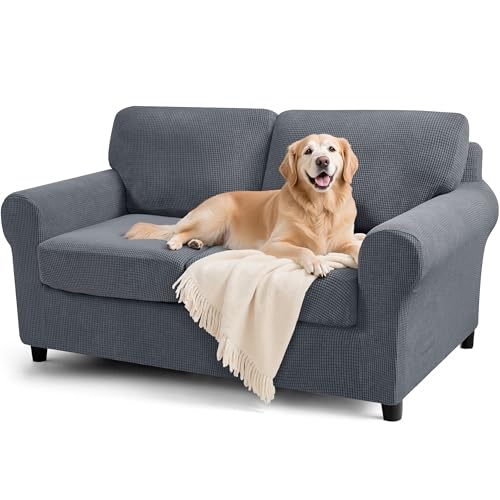
SUBRTEX 5 Piece Stretch Loveseat Slipcover,Couch Cover for 2 Cushion Washable Sofa Cover with Individual Backrest Cushion Covers for Living Room(Medium,Gray)
Check price on Amazon
H.VERSAILTEX 4 Piece Stretch Sofa Covers for 3 Cushion Couch Covers for Living Room Furniture Slipcovers (Base Cover Plus 3 Seat Cushion Covers) Upgraded Thicker Jacquard Fabric (Sofa, Sage)
Check price on Amazon
H.VERSAILTEX Velvet Stretch Couch Cushion Cover Plush Cushion Slipcover for Chair Loveseat Sofa Cushion Furniture Protector Seat Cushion Sofa Cover (3 Piece Sofa Cushion Covers, Grey)
Check price on AmazonWhy Attached Back Cushions Change the Slipcover Equation
A sofa with attached back cushions uses a single upholstered panel instead of loose cushions that can be lifted out. That design has real advantages: the backrest keeps a clean silhouette, cushions do not slide out of place, and there are no gaps behind the seat. It also means a conventional two-piece slipcover — one piece for the frame, one for the cushions — has nothing to grip at the rear.
A slipcover designed for this layout wraps the backrest and seat as one form. Stretch models rely on elastic conformity, while woven tailored models use a generous back panel that tucks into the seat crease. Choosing the wrong type is the most common reason covers look baggy or pull loose within days.
If your sofa instead has removable cushions, a different product category will fit better — see our guide to slipcovers for sofas with 3 separate cushions. For sofas where the cushion cannot be detached at all, the non-removable cushion slipcover guide covers the specific fitting method.
Types of Slipcovers That Fit an Attached Back
Stretch-Fit One-Piece Covers
These use a spandex or jersey blend that expands over the frame and backrest as a single unit. They are the most forgiving option for fixed cushions because the fabric conforms to the curve of the back rather than hanging from it. Elastic hems at the base and arm openings keep the cover anchored.
Tailored Woven Covers
A woven cover with a full back panel and tuck-in flaps gives a more upholstered, furniture-like finish. These require more precise measurements because the fabric has limited give. The rear panel must be long enough to drop behind the seat and tuck into the gap between seat and backrest.
Quilted and Padded Covers
Quilted covers add a layer of padding and a textured surface. They work well on attached-back sofas where the backrest feels thin, but the extra bulk can make tucking into the seat crease harder. Look for models with a dedicated tuck flap.
Furniture-Throw Style Covers
A drape-style throw is the least structured option. It suits casual rooms and quick refresh projects, but it will not hold a crisp line on a fixed backrest without frequent adjustment. Treat it as a seasonal or temporary solution rather than a long-term fit.
Comparing Slipcover Categories by Tier
| Tier | Best For | Fit Behavior on Attached Backs | Durability Profile |
|---|---|---|---|
| Entry-level | Quick refresh, low-traffic rooms | Thin stretch fabric; conforms easily but may lose tension over time | Lightweight construction; suited to occasional use |
| Mid-range | Everyday family living rooms | Thicker stretch blend or woven with tuck flaps; holds shape through regular use | Reinforced seams and elastic hem; balanced tier for daily wear |
| Premium | High-traffic homes and pet households | Dense knit or structured woven; precise paneling for a tailored silhouette | Heavy-duty fabric with stain-resistant finish; long-term investment |
| Luxury | Design-focused rooms and formal living spaces | Custom-cut panels with minimal stretch; upholstery-grade drape | Professional-grade materials; closest to a reupholstered look |
Reading the table: A mid-range cover is usually the sweet spot for attached-back sofas. It offers enough elasticity to conform to the fixed backrest while keeping seams reinforced for daily use. Premium and luxury tiers make sense when the sofa is a long-term centerpiece and the cover needs to look upholstered rather than draped.
Fabric Choices for Fixed Cushion Profiles
Because the backrest does not separate from the frame, fabric behavior matters more than on a standard sofa. The cover must stretch or drape across a continuous surface without forming horizontal folds behind the seat.
- Spandex and elastane blends: Maximum conformity. Ideal for rounded or tightly curved backrests. Prone to thinning over years of use in the entry-level tier.
- Jersey knit: Soft hand feel and good stretch. Works well in bedrooms and low-traffic lounges but shows wear faster than woven blends.
- Polyester-cotton woven: Limited stretch but a cleaner tailored look. Requires accurate measurement and a tuck flap behind the seat cushion line.
- Microfiber: Dense and smooth, with moderate stretch. Resists pet hair and wipes clean easily, making it a strong mid-range choice for families.
- Chenille and textured weaves: Rich appearance that hides minor frame irregularities. Heavier fabric needs a well-anchored tuck to stay neat on a fixed back.
For a broader look at fabric and construction choices across all sofa styles, the slipcover resource hub organizes guides by material, fit type, and room context.
How to Measure a Sofa with Attached Back Cushions
Accurate measurements separate a smooth fit from a cover that sags behind the backrest. Take all four measurements with the sofa empty and cushions in their normal position.
- Overall width: Measure across the widest point, from the outside of one arm to the outside of the other.
- Overall depth: Measure from the front edge of the seat to the back of the frame at floor level.
- Back height: Measure from the floor to the highest point of the backrest. For attached cushions, this is the top of the fixed panel, not a removable cushion.
- Seat width and depth: Measure the usable seating area between the arms and from the front edge to where the backrest meets the seat.
- Arm height: Measure from the floor to the top of the arm. The cover's arm panel must clear this point without pulling.
Add a small allowance for tuck-in if you choose a woven cover. Stretch covers generally need measurements within a few inches of the stated range, so confirm the manufacturer's fit window before ordering.
Installation Steps for a Snug Fit
- Remove loose items, vacuum the sofa, and push the frame away from the wall so you can reach the rear panel.
- Drape the cover over the backrest first, centering the back panel seam on the top edge of the fixed cushion.
- Pull the front of the cover down over the seat and smooth it from the center outward to avoid trapped air.
- Tuck the rear excess into the gap between the seat and the attached back cushion, working from one arm to the other.
- Fit the arm panels and pull the elastic hem or fasteners underneath the base of the sofa.
- Run your hand along the backrest to release any horizontal folds, then let the cover settle for a day before final adjustment.
Fitting tip: On attached-back sofas, the tuck behind the seat is the anchor point. If the cover has no dedicated tuck flap, fold the rear excess into a flat pleat before pushing it into the crease. This prevents the fabric from riding up when someone sits down.
Care and Longevity
Wash stretch covers on a gentle cycle in cold water and air dry to preserve elasticity. Woven covers can usually be machine washed, but check the care label for shrinkage guidance. Rotate the cover front-to-back every few months so the seat area does not wear unevenly, and re-tuck the rear panel after washing while the fabric is still slightly damp so it sets into the crease.
For sofas where the cushion arrangement changes seasonally, it helps to keep a dedicated cover for each configuration. Our guide to slipcovers for sofas with back cushions explains how to adapt the same frame across different cushion styles.
Related Slipcover Guides
Explore these closely related topics to match the right cover to your exact sofa layout:
- Attached Back Cushion Slipcovers
- Slip Covers for Sofas with Back Cushions
- Slip Covers for Sofas with Cushions
- Slipcovers for Sofas
- Slipcovered Sofa
- Slipcovered Sofas
- Slipcovered Furniture
- Loveseat Slipcovers with 2 Cushions
- Reclining Sofa and Loveseat Slipcovers
- Double Recliner Slipcover with Console
- Slipcovered Sectional with Chaise
- Slipcovered Sectional Sleeper Sofa
Frequently Asked Questions
Can you put a slipcover on a sofa with attached back cushions?
Yes. Choose a single-piece stretch cover or a tailored model with a full back panel and tuck flap. These designs wrap the fixed backrest as one continuous surface, which is why they stay smooth where a two-piece cover would bunch.
Do stretch covers work on attached back cushions?
Stretch covers are the most reliable option for attached backs because the fabric conforms to the curve of the fixed panel. Look for an elastic hem and a reinforced seat seam to keep tension across the tuck line.
How do I stop the cover from riding up behind the seat?
Push the rear excess into the crease between the seat and the fixed backrest, folding it into a flat pleat first. If the cover includes anti-slip straps or foam anchors, secure them under the seat cushion line before smoothing the front.
What measurements matter most for a fixed-back sofa?
Overall width, overall depth, and back height are the three critical figures. Seat width and arm height determine whether the cover clears the frame without pulling. Confirm the manufacturer's fit window before ordering.
Can I use a standard two-piece slipcover on an attached-back sofa?
It is not recommended. A two-piece cover relies on a removable back cushion to hold the rear panel in place. On a fixed backrest, the rear panel has nothing to grip and tends to sag or pull loose within days.
Final Thoughts
An attached-back sofa is not a barrier to a clean slipcovered look — it just requires the right product type. Prioritize a one-piece stretch or tailored cover with a dedicated tuck flap, measure the back height and seat depth carefully, and anchor the rear panel into the seat crease. With those three steps, the cover will hold its line through daily use and look closer to upholstery than a throw.
If your living space is compact, pair the cover choice with a layout review using our small living room planning guide so the sofa proportions work with the room, not just the fabric.