
Sectional Sofa with Pull Out Sleeper: The Complete Buyer's Guide
Everything you need to know before choosing a sectional that seats your family by day and hosts overnight guests by night — from mattress systems and frame construction to room layout and long-term durability.
Why this guide matters: A sectional sofa with pull out sleeper is one of the most versatile furniture investments you can make. It serves as the centerpiece of your living room, provides generous seating for gatherings, and transforms into a comfortable bed when guests arrive. But not all sleeper sectionals are created equal — the difference between a good experience and a regretful purchase often comes down to details most shoppers overlook.
What Is a Sectional Sofa with Pull Out Sleeper?
A sectional sofa with pull out sleeper combines the expansive seating of an L-shaped or U-shaped sectional with a hidden bed mechanism built into one of its sections. Unlike a standard sofa bed where the entire seating surface folds out, a sleeper sectional typically conceals a folded mattress and metal frame beneath the seat cushions of the main section. When needed, the mechanism pulls outward and unfolds into a flat sleeping surface.
These pieces are particularly valuable in multi-functional rooms — a living room that doubles as a guest room, a home office that needs occasional sleeping space, or a family room where movie nights often end in sleepovers. The appeal is obvious: you get the social seating capacity of a large sectional without dedicating a separate room to a guest bed.
If you are still comparing broader options, our guide to sectional sofas with chaise for small spaces covers how chaise configurations differ from sleeper mechanisms. For those who want the combination of sleeping and reclining features, a sectional sofa with pull out bed and recliner offers an even more versatile setup.
Types of Pull Out Sleeper Sectionals
The market offers several distinct configurations, each suited to different room shapes and usage patterns. Understanding these types helps you narrow your search before you ever visit a showroom or browse an online catalog.
L-Shaped Sectional with Pull Out Sleeper
The most common configuration, featuring a main seating section with a chaise or return on one side. The sleeper mechanism is typically located in the main section, while the chaise provides extended lounging space. This layout works well in rectangular living rooms and open-plan spaces. For rooms that need a right-facing orientation, a sectional sofa with right side chaise paired with a sleeper mechanism is a practical choice.
U-Shaped Sleeper Sectional
These larger configurations wrap around a coffee table or focal point, providing maximum seating. The sleeper mechanism is usually built into one of the longer sections. U-shaped sleepers are ideal for spacious family rooms but require careful measurement — when the bed extends, the surrounding layout must accommodate the extra footprint.
Reversible Chaise Sleeper Sectional
A reversible chaise allows you to switch the orientation of the extended section from left to right, making it adaptable if you move homes or rearrange your room. Paired with a sleeper mechanism, this configuration offers the most flexibility. Our article on sectional sofa with reversible chaise explains how these models handle the added weight of a sleeper mechanism.
Small Space Sleeper Sectionals
Compact sleeper sectionals are designed for apartments and smaller living rooms. They typically feature a shorter main section, a slim chaise, and a smaller mattress — often a full or twin size rather than queen. If space is tight, a small reclining sectional sofa for small spaces or a dedicated small reclining armchair may complement the layout better than a full-size sleeper.
Recommended Sectional Sofa with Pull Out Sleeper
⚠️ AFFILIATE DISCLOSURE: This website contains affiliate links. As an affiliate Associate, we earn from qualifying purchases. If you make a purchase through these links, we may receive a small commission at no additional cost to you. Read our full affiliate policy.

WUNSTANTE Sectional Sleeper Sofa with Pull Out Bed, Plush Corduroy 7 Seat Modular Sectional Sofa with Storage Chaise and Adjustable Backrest, Cloud Couches for Living Room, Apartment, Dark Grey
Check price on Amazon
WUNSTANTE Sectional Sleeper Sofa with Pull Out Bed, Plush Corduroy 5 Seat Modular Sectional Sofa with Storage Chaise and Adjustable Backrest, Cloud Couches for Living Room, Apartment, Dark Grey
Check price on Amazon
108'' Modular Sectional Sleeper Sofa Couches for Living Room, Dark Grey | L/U Shaped Sleeper Sofa, Pull Out Couch Bed, Hidden Storage, Modular Design, Comfy Corduroy, Removable Cover, Movable Ottoman
Check price on Amazon
Marsail 110" Modular Sectional Sleeper Sofa, Pull Out Sofa Bed with Storage | 7 Seat Comfy Cloud Sofas for Living Room, Chenille Sectional Couches with USB Ports & Cup Holders, Dark Gray
Check price on Amazon
85'' Modular Sectional Sofa with Pull Out Bed, Sleeper Sofa, Dark Gray | L Shaped 5 Seat Sectional Couches for Living Room, Cloud Modular Couch with Storage, Pull Out Couch, Removable Sofa Cover
Check price on Amazon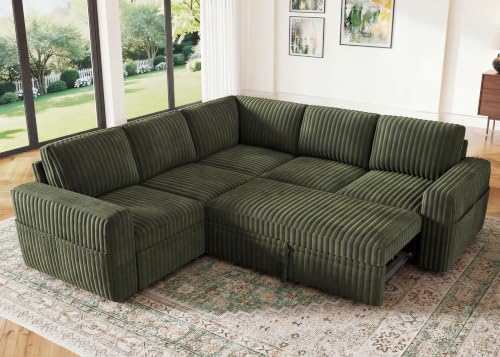
HONBAY Corduroy L Shaped Sectional Sleeper Sofa with Pull Out Bed,Green | modular design,built-In storage, couches for living room and apartment guest sleeping space,removable cushions
Check price on Amazon
Huatean Home Oversized Sleeper Sofa Couch, Sectional Sofa Bed, Dark Grey | 110 inch 2 in 1 Pull Out Couch with Double Storage Chaise, Sectional Sleeper Sofa Bed with Side Pocket for Living Room
Check price on AmazonKey Features to Evaluate Before You Buy
When you are researching a sectional sleeper sofa, the specifications that matter most are not always the ones featured prominently in marketing materials. The following criteria will help you separate a well-built piece from one that may disappoint within a year or two.
Mattress Quality and Thickness
The mattress is the heart of any pull out sleeper. Entry-level models often include thin foam mattresses measuring around 3 to 4 inches. These are acceptable for occasional, short-term use but may not provide adequate support for guests staying multiple nights. Mid-range models typically feature 4.5 to 5.5-inch high-density foam or innerspring mattresses. Premium and luxury tiers often include memory foam, gel-infused foam, or coil-spring mattresses that rival standalone sofa beds.
If mattress comfort is your top priority, compare models against our guide to a sectional sleeper sofa with memory foam mattress, which explains how foam density and layering affect sleep quality. For a simpler, dedicated sleeper option, a loveseat sleeper may suit tighter rooms.
Frame Construction and Mechanism
The folding mechanism — the metal frame that supports the mattress — bears the most mechanical stress over time. Look for mechanisms described as heavy-duty, reinforced, or rated for frequent use. Steel frames with anti-rust coatings and smooth-glide hinges are hallmarks of mid-tier and high-end models. Entry-level sleeper sectionals may use lighter-gauge metal and simpler hinge designs that are better suited to occasional use.
The sofa frame itself should be solid wood or high-grade engineered wood. Particleboard frames are common in entry-level furniture but may not withstand the weight and movement of a sleeper mechanism over many years. A premium sleeper sectional is a long-term investment — the frame is one of the primary reasons why.
Cushion Support and Comfort
Remember that a sleeper sectional is first and foremost a sofa. The seat cushions should provide comfortable, supportive seating for daily use. High-resilience foam with a density rating appropriate for the tier is a good indicator. Some premium models use pocket coil cushion cores or foam wrapped in down-blend toppers. If the sofa feels uncomfortable in the showroom, it will not improve at home — the sleeper mechanism does not compensate for poor seating comfort.
Storage Features
Many sleeper sectionals include built-in storage compartments, often in the chaise or beneath the main seating area. These are ideal for storing bedding, pillows, or throws that would otherwise clutter your living space. A sectional sofa with storage and pull out bed combines two highly practical features, though storage compartments can add weight and reduce the internal space available for the mattress mechanism in some designs.
Upholstery Material
Fabric and leather are the two primary choices. Fabric upholstery — whether polyester blends, woven textiles, or performance fabrics — offers a wide range of colors and textures and is generally easier to clean with standard upholstery cleaners. Leather sleeper sectionals are durable and easy to wipe down but may feel cold in winter and hot in summer without a mattress topper. For more on leather options, see our guide to a leather sectional with recliner and chaise.
Tier Comparison: What to Expect at Each Level
The following table uses universal quality descriptors rather than specific figures, helping you understand how features scale across the market. Use this as a reference when evaluating product listings and showroom models.
| Feature | Entry-Level / Essential Tier | Mid-Range / Balanced Tier | Premium / High-End Tier |
|---|---|---|---|
| Mattress | Thin foam, 3–4 inches, basic support | High-density foam or innerspring, 4.5–5.5 inches | Memory foam, gel foam, or coil-spring, 5.5–6+ inches |
| Frame | Engineered wood or lighter-gauge metal | Solid wood with reinforced metal mechanism | Hardwood frame, heavy-duty commercial-grade mechanism |
| Cushion Foam | Standard foam, moderate density | High-resilience foam, good shape retention | Pocket coil or high-density foam with plush topper |
| Upholstery | Basic polyester or microfiber | Performance fabric, durable weave, or bonded leather | Top-grain leather, premium woven fabric, stain-resistant treatment |
| Best For | Occasional guest use, light daily seating | Regular guest hosting, daily family use | Frequent overnight guests, heavy daily use, long-term investment |
Space Planning: Measuring for a Sleeper Sectional
The most common mistake buyers make is measuring only the sofa footprint and forgetting the extended bed. When the sleeper is deployed, the mattress extends forward from the back of the sofa, often occupying the same area where your coffee table sits. Before purchasing, measure the following:
- Wall length: The full width of the sectional along the wall, including any chaise extension.
- Room depth: The distance from the back wall to the opposite wall or major furniture piece.
- Extended mattress length: Typically 75 to 90 inches for queen-size sleepers, depending on the model.
- Clearance: At least 18 to 24 inches of walking space around the extended bed for comfortable access.
- Doorways and stairwells: Confirm the sectional can be delivered through your entryways — some large sectionals ship in modular pieces, but sleeper mechanisms can add bulk.
For rooms where every inch counts, our guide to modern sofa set for small space offers layout strategies that pair well with compact sleeper sectionals. If the room is exceptionally narrow, consider whether a narrow recliner sofa or a single sofa bed might serve the same dual purpose with a smaller footprint.
Placement and Room Layout Ideas
A sleeper sectional anchors the living room layout, so its placement affects traffic flow, TV viewing angles, and conversation seating. Consider these approaches:
Facing a Focal Point
Position the main section facing your fireplace, television, or picture window. The chaise extends toward the room's center, creating a natural boundary. Ensure the sleeper mechanism pulls out into open floor space — not toward a coffee table or wall.
Floating Layout for Open Plans
In open-concept spaces, a sectional can float in the center of the room, defining the living area without relying on walls. This works best when the back of the sectional is finished (not against a wall) and the sleeper extends into a dedicated zone. Pair with a room divider or a low console behind the sofa to visually separate zones.
Corner Placement for Small Rooms
Tucking the sectional into a corner maximizes floor space. A reversible chaise or a compact L-shape works well here. Just verify that the sleeper extension does not collide with adjacent furniture when deployed. A sectional sofa with matching chair can complete the seating group without overwhelming the room.
Care and Maintenance for Sleeper Sectionals
A sleeper sectional has more moving parts than a standard sofa, so maintenance routines should address both the upholstery and the mechanism.
- Vacuum regularly: Use an upholstery attachment to remove dust and debris from seams, crevices, and the mattress compartment. For deep cleaning, see our guides on fabric sofa cleaning and leather conditioning.
- Lubricate the mechanism: Apply a silicone-based lubricant to the folding hinges every six to twelve months, or as recommended by the manufacturer. Avoid oil-based lubricants that attract dust.
- Rotate and flip cushions: If your seat cushions are reversible, rotate them monthly to distribute wear evenly. This is especially important on the section above the sleeper mechanism, which may see heavier use.
- Air out the mattress: When the sleeper is not in use for extended periods, open it occasionally to allow the mattress to air out and prevent musty odors.
- Protect the upholstery: Consider a slipcover or a leather sofa cover if you have pets or young children. For fabric models, a fabric protectant spray can help repel spills.
If your sectional includes a storage chaise, keep the storage compartment dry and avoid overloading it — excess weight can stress the hinges and frame. Our guide to a sectional sofa with storage chaise covers best practices for these hybrid designs.
Alternatives to Consider
A sleeper sectional is not the only solution for dual-purpose living rooms. Depending on your priorities, these alternatives may be worth evaluating:
- Sectional with pull out bed and recliners: Adds reclining seats to the sleeper functionality, ideal for family rooms. See our guide to a sectional with pull out bed and recliners.
- Sectional with storage and pull out bed: Prioritizes hidden storage alongside sleeping space. Explore sectional sofa with storage and pull out bed options.
- Loveseat sleeper or single sofa bed: Better suited to very small rooms or secondary spaces. Compare loveseat sofa beds for small spaces and single sofa beds for small rooms.
- Pop-up sofa or convertible sofa: Simpler mechanisms with a different comfort profile. See our guide to a pop-up sofa or convertible sofas.
Frequently Asked Questions
What is the difference between a pull out sleeper and a convertible sectional?
A pull out sleeper features a mattress that folds out from beneath the seat cushions, typically using a metal frame mechanism. A convertible sectional usually refers to a sectional where a chaise or section folds flat into a bed without a separate mattress system. Pull out sleepers generally offer better long-term comfort for overnight guests, while convertible designs are simpler and often lighter.
What mattress thickness should I look for in a sleeper sectional?
Mid-range and premium sleeper sectionals typically include mattresses between 4.5 and 6 inches thick. Thinner mattresses under 4 inches are common in entry-level models and may not provide adequate support for nightly use. For regular guests, look for a high-density foam or innerspring mattress that is at least 5 inches thick.
How much floor space does a sectional with pull out sleeper require?
When the sleeper is fully extended, you need clear space in front of the sectional equal to the mattress length plus some clearance. A queen-size pull out typically extends 80 to 90 inches from the back of the sofa. Always measure your room and account for walking space around the extended bed before purchasing.
Can a sectional sofa with pull out sleeper be used daily?
Yes, but quality matters. Mid-tier and high-end sleeper sectionals with reinforced frames, high-density foam cushions, and quality mattress mechanisms are designed for daily seating use. Entry-level models may experience faster wear on the folding mechanism and cushion foam if used heavily every day.
Is a sleeper sectional comfortable for everyday seating?
The seating comfort depends on the cushion construction, not the sleeper mechanism. High-resilience foam cushions in mid-range and premium models provide supportive daily seating. The sleeper mechanism is concealed beneath the seating surface and does not affect how the sofa feels when seated, unless the mattress is poorly folded or the compartment is uneven.
Ready to Choose Your Sleeper Sectional?
Explore our curated selection of sectional sofas with pull out sleepers and compare features that matter for your space and lifestyle.
View Top Recommendations