
Wingback Recliner Chair: The Complete Buying Guide
Combine classic elegance with modern comfort. Learn everything you need to know before choosing a wingback recliner chair for your living room, study, or reading nook.
EXPLORE TOP PICKSWhy a wingback recliner chair? Few pieces of furniture blend timeless character with everyday relaxation as well as the wingback recliner. The tall, winged back that once protected sitters from drafty fireplaces now delivers cozy, cocooning support — while a hidden reclining mechanism transforms it into your favorite spot for reading, napping, or watching TV. This guide walks you through every decision, from frame construction to upholstery, so you can buy with total confidence.
What Exactly Is a Wingback Recliner Chair?
A wingback recliner is a hybrid piece that pairs the distinctive silhouette of a traditional wingback chair — high back, prominent side "wings," and often rolled arms — with a built-in reclining mechanism. The result is a chair that looks refined in a formal living room yet performs like a dedicated relaxation seat. Traditional wingbacks were designed to trap heat from a fireplace and shield the sitter from drafts. Modern wingback recliners keep that protective, enveloping feel but add push-back, manual lever, or power reclining options.
Because the wings wrap slightly forward, they create a natural sense of privacy and focus — ideal if you want a designated reading corner or a quiet spot in an open-plan room. If you are furnishing a larger seating arrangement, this chair can act as an elegant accent alongside a modern white leather sectional or a classic tufted Chesterfield sofa.
Types of Wingback Recliner Chairs
Wingback recliners come in several configurations. Understanding the differences helps you match the chair to your room, your body, and your daily routine.
Push-Back Recliner
The simplest mechanism: lean back and the chair reclines using body weight. No levers or motors. Fewer parts means fewer failure points, making this an excellent entry-level or starter tier choice for occasional lounging.
Manual Lever Recliner
A side handle releases the footrest and backrest. Manual levers are reliable, easy to repair, and common in mid-range models. They suit households where the chair is shared among family members of different sizes.
Power Recliner
Electric motors adjust the back and footrest at the touch of a button, often with USB charging ports and infinite positioning. Premium and luxury tier power wingbacks deliver the smoothest, most customizable comfort.
Glider & Swivel Recliner
Combines reclining with gentle rocking or 360-degree swivel. These are especially popular in nurseries and family rooms, and they pair well with a wicker sofa in relaxed, coastal-inspired spaces.
Wall-Hugger / Zero-Wall Recliner
Reclines with minimal clearance behind the chair, so it can sit close to a wall. Ideal for apartments and small living rooms. Explore related options in our zero-wall reclining sofa guide.
Massage & Heated Recliner
Adds vibration massage and lumbar heating. A top-tier comfort feature for buyers who want a wellness-focused seat. Similar technology appears in zero gravity recliners with heat and massage.
Anatomy of a Quality Wingback Recliner
Before comparing models, learn what separates durable construction from a chair that will sag within a year. These are the components that matter most.
| Component | What to Look For | Tier Indicator |
|---|---|---|
| Frame | Kiln-dried hardwood or engineered hardwood; corner-blocked and glued joints | Entry-level may use softwood; premium uses solid hardwood |
| Reclining Mechanism | Smooth, quiet operation; steel or heavy-duty alloy hardware | Mid-range for manual; high-end for power |
| Cushion Foam | High-resilience (HR) foam, 2.0 lb density or higher; wrapped in fiber for softness | Essential tier uses standard foam; luxury uses memory or gel foam |
| Upholstery | Tight, even stitching; fabric rub count of 15,000+ for daily use; full-grain leather on premium models | Balanced tier for performance fabric; top-tier for leather |
| Support | Sinuous wire springs or pocket coils; webbing on entry models | Professional-grade uses eight-way hand-tied springs |
Upholstery Options: Fabric vs Leather
The covering you choose affects comfort, maintenance, and how the chair ages. There is no universal winner — only the best match for your household.
Fabric Wingback Recliners
Performance fabrics such as microfiber, polyester blends, and woven tweeds resist stains and fading. They feel warmer in cool climates and offer the widest range of colors and patterns. Families with pets should favor tight-weave fabrics with a high rub count. For a soft, relaxed look, consider pairing fabric upholstery with western throw pillows for a layered, lived-in feel.
Leather Wingback Recliners
Leather develops a rich patina over time and wipes clean easily. Top-grain and full-grain leather are the most durable; bonded leather is an entry-level option with a shorter lifespan. A leather wingback recliner makes a refined statement in a study or beside a leather wingback armchair. If you love the leather look throughout the room, browse our white leather sofa and loveseat set for coordinating ideas.
Velvet & Textured Weaves
Velvet brings a luxury, boutique-hotel feel and is surprisingly durable when treated. Bouclé and chenille add tactile coziness. These textures work beautifully in reading corners, especially when anchored by a wood console table holding a lamp and books.
Sizing & Fit: Getting the Dimensions Right
A wingback recliner is a substantial chair. Measure twice before you buy. Use this checklist to avoid the most common mistake — a chair that reclines into a walkway or blocks a doorway.
- Seat height: Your feet should rest flat on the floor with knees at roughly a 90-degree angle. Typically 18–20 inches from floor to seat top.
- Seat depth: Allow 2–4 inches between the back of your knees and the seat edge. Shorter sitters should favor shallower seats.
- Seat width: Aim for at least 20 inches between armrests for comfortable lounging.
- Reclined footprint: Measure how far the chair extends when fully reclined and confirm clearance from coffee tables and traffic paths.
- Wall clearance: Standard recliners need several inches behind the back; wall-hugger models need almost none.
- Doorway fit: Confirm the chair fits through doorways and stairwells, especially if delivered upstairs.
If space is tight, a compact wingback recliner can sit beside a white sofa for a small living room without overwhelming the room. For a broader look at space planning, see our guide on modular sectionals and how flexible seating adapts to different layouts.
Where to Place Your Wingback Recliner
The wingback recliner is one of the most versatile accent seats available. Here are proven placement strategies:
The Reading Nook
Angle the chair toward a window or a floor lamp, with a small side table for a cup of tea. The wings block peripheral distractions, making it easier to focus on a book. Pair it with a C-shaped end table that slides over the seat for convenience.
The Fireside Companion
Position the chair at a slight angle to the fireplace, not directly in front, so the warmth reaches the sitter without overwhelming them. This classic arrangement suits traditional and transitional interiors alike.
The Conversation Corner
Place two wingback recliners facing a sofa to form a U-shaped conversation zone. A conversation sofa paired with matching recliners creates an intimate, balanced seating group.
The Home Office or Study
A leather wingback recliner doubles as a comfortable reading and thinking chair in a home office. Add a brown leather desk chair at the desk and reserve the wingback for breaks and phone calls.
Recommended Wingback Recliner Chairs
⚠️ AFFILIATE DISCLOSURE: This website contains affiliate links. As an affiliate Associate, we earn from qualifying purchases. If you make a purchase through these links, we may receive a small commission at no additional cost to you. Read our full affiliate policy.

Mid Century Wingback Recliner Chair for Adults, Modern Linen Fabric Push Back Recliner Chairs with Button Tufted Upholstered Back & Footrest, Manual Recliner Chais for Living Room, Nursery, Blue
Check price on Amazon
OQQOEE Wingback Recliners Set of 2, Massage & Heat, Manual Push-Back, Beige | Set of 2 fabric wingback recliners with 5 vibration modes, 3 massage zones, lumbar heat, push-back recline and footrests.
Check price on Amazon
PALLOME Wingback Recliner Chair, Push Back Arm Chair (1,Navy Blue) | Recliner Chair with Massage & Heat, Wingback Chair for Living Room Bedroom Home Theater
Check price on Amazon
Mid Century Wingback Recliner Chair for Adults, Modern Linen Fabric Push Back Recliner Chairs with Button Tufted Upholstered Back & Footrest, Manual Recliner Chais for Living Room, Nursery, Gray
Check price on Amazon
OQQOEE Wingback Recliner, Massage & Heat, Manual Push-Back, Dark Grey | Fabric wingback recliner with 5 vibration modes, 3 massage zones, lumbar heat, manual push-back recline and footrest.
Check price on Amazon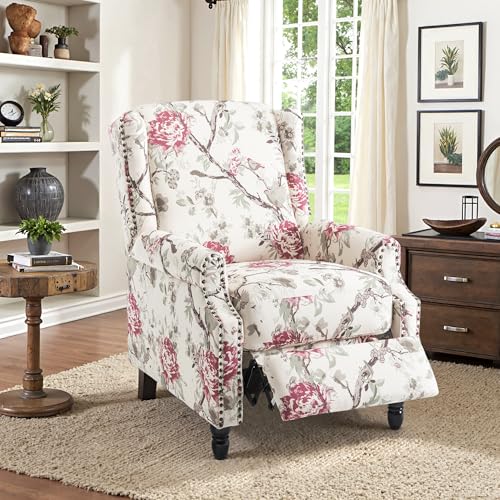
DREAMSIDEA Wingback Floral Pushback Recliner Chair, Plants Floral, Set of 1 | Comfy Accent Chair with Adjustable Backrest & Footrest, Cotton Linen Fabric, Solid Wood Frame, For Living Room & Bedroom
Check price on Amazon
EBELLO Pushback Recliner Chair, Fabric Armchair Push Back Recliner with Rivet Decoration, Mid Century Wingback Accent Chair for Living Room, Bedroom, Beige
Check price on AmazonComfort Features That Matter
A recliner is only as good as its support. Look beyond the upholstery and evaluate these comfort elements:
- Lumbar support: A built-in lumbar cushion or channeled back keeps the lower spine aligned during long sitting sessions.
- Head and neck support: The tall wingback back often reaches the head, but check that the top cushion is soft enough for napping yet firm enough for reading.
- Armrest height: Arms should support your forearms at a natural angle. Padded, rolled arms are a hallmark of the wingback style.
- Footrest extension: A chaise-style footrest that extends fully supports the calves and reduces pressure on the knees.
- Infinite positioning: Power models with infinite recline let you stop at any angle, which is especially helpful for people with back or joint concerns.
Durability & Long-Term Care
A well-built wingback recliner is a long-term investment. Protect it with these habits:
- Vacuum fabric upholstery monthly with a soft brush attachment to lift dust and pet hair.
- Condition leather every 6–12 months with a pH-neutral leather conditioner.
- Keep the chair out of direct sunlight to prevent fading.
- Have the reclining mechanism inspected annually; lubricate metal joints per the manufacturer's guidance.
- Rotate the chair's position periodically to distribute wear evenly.
If you want to protect fabric models from everyday spills, explore sectionals with washable covers for inspiration on easy-care upholstery choices. And for seasonal refresh, yellow decorative pillows can brighten a neutral wingback instantly.
Wingback Recliner vs Other Recliner Styles
How does the wingback compare with other popular recliner formats?
| Style | Best For | Trade-off |
|---|---|---|
| Wingback Recliner | Reading, style-conscious living rooms, cozy corners | Taller back may feel enclosed for some sitters |
| Zero Gravity Recliner | Full-body relaxation, wellness, napping | Larger footprint; more clinical look |
| Wide Recliner | Sharing the seat; larger body types | May dominate small rooms |
| Power Reclining Sofa | Multi-person lounging | Needs more wall clearance |
If you prefer a broader seat, our wide recliner guide covers options with extra shoulder and hip room. For immersive home theater setups, compare with a zero gravity recliner chair.
How to Buy: A Step-by-Step Decision Framework
Follow this sequence to make a confident purchase:
- Define the primary use. Reading, napping, TV watching, or all three? Usage shapes the recline type and cushion firmness you need.
- Measure your space. Confirm the fully reclined footprint, wall clearance, and doorway width.
- Choose the mechanism. Push-back for simplicity, manual for shared use, power for premium adjustability.
- Select upholstery. Performance fabric for families and pets; leather for low-maintenance elegance.
- Test the sit (if possible). Sit for at least five minutes, recline fully, and check lumbar and neck support.
- Check the warranty. Look for coverage on the frame, mechanism, and cushions — each often has a different term.
Frequently Asked Questions
Is a wingback recliner comfortable for everyday use?
Yes. The tall back and wings support the shoulders and head, and most models include padded lumbar support. For daily use, prioritize high-resilience foam and a sturdy hardwood frame.
How much space does a wingback recliner need?
Allow for the fully reclined depth plus a few inches of clearance. Wall-hugger and zero-wall models need minimal rear clearance, making them ideal for smaller rooms.
Can a wingback recliner work in a small apartment?
Absolutely. Choose a compact or wall-hugger model and place it at an angle in a corner. A light-colored fabric can also help the chair feel less visually heavy.
Which upholstery is best for households with pets?
Tight-weave performance fabrics and top-grain leather are the most pet-resistant. Avoid loose weaves and delicate velvets in high-traffic homes.
How do I maintain the reclining mechanism?
Vacuum the mechanism area, keep it free of debris, and have it inspected annually. Follow the manufacturer's lubrication schedule and avoid exceeding the weight rating.