
What Is a Modular Sectional Sofa?
A complete guide to understanding modular sectional sofas, how they work, their benefits, and how to choose the right configuration for your living room.
EXPLORE MODULAR OPTIONSQuick answer: A modular sectional sofa is a sectional couch assembled from separate, interchangeable pieces that connect together. Unlike a fixed sectional, each module — seat, corner, chaise, ottoman, or armless chair — can be rearranged, added, removed, or split apart. This lets you reshape the sofa to fit a new room, expand seating over time, or reconfigure the layout without replacing the whole piece.
How a Modular Sectional Sofa Works
A modular sectional works like building blocks for your living room. Each individual module is a self-contained unit with its own frame, cushioning, and upholstery. Modules are held together by connectors, brackets, or simple gravity and friction fit, depending on the design. Most quality modular sectionals use metal brackets or locking mechanisms so the pieces stay firmly together during daily use but can still be separated when you want to reconfigure.
The most common modules include:
- Armless chair modules — the basic seat that can be placed anywhere in a row.
- Corner modules — angled pieces that let you turn a corner and create an L-shape or U-shape.
- Chaise modules — extended seats for lounging, often used as the end piece of a sectional.
- Ottoman modules — standalone pieces that can act as seating, a footrest, or a coffee table alternative.
- Arm modules — left and right arms that finish the ends of a configuration.
- Corner wedge modules — rounded or angled pieces for curved and U-shaped layouts.
Because the pieces are independent, the same set of modules can form a straight three-seater, an L-shaped sectional, a U-shaped conversation pit, or even a few separate chairs. If you want to see how different shapes work in practice, explore our guides to the U-shaped sectional sofa with chaise and the U-shaped sofa for layout inspiration.
Key Benefits of Choosing a Modular Sectional
Flexible Configuration
Rearrange modules to change the shape and size of your sofa whenever your room layout or needs change.
Easy to Move
Individual pieces fit through doorways and stairwells far more easily than one large fixed sectional.
Expandable Over Time
Add modules later to increase seating as your family grows or your space changes.
Easier Maintenance
Replace or reupholster a single module instead of the entire sofa if one piece wears out.
Great for Renters
Split the sofa into separate pieces to fit a new apartment or studio without buying new furniture.
Open-Plan Friendly
Use modules to define zones in an open living space without committing to one fixed footprint.
Modular Sectional vs. Standard Sectional
The biggest difference is flexibility. A standard sectional is built as one fixed piece in a specific shape, such as a left-facing chaise or a right-facing L. A modular sectional is assembled from individual pieces, so its shape is a choice rather than a permanent commitment. The table below summarizes the practical differences.
| Feature | Modular Sectional | Standard Sectional |
|---|---|---|
| Layout flexibility | High — rearrange, add, or remove modules | Fixed — shape is set at purchase |
| Moving and delivery | Easier — pieces fit through tight spaces | Harder — one large piece must fit through doorways |
| Expansion | Add modules later to increase seating | Cannot expand without replacing the sofa |
| Repair and replacement | Replace a single module or cushion | Often requires whole-sofa repair or replacement |
| Best for | Renters, growing families, open-plan spaces, frequent movers | Homeowners with a settled layout and fixed seating needs |
| Typical build tiers | Entry-level to luxury, depending on frame and upholstery | Entry-level to luxury, depending on frame and upholstery |
Types of Modular Sectional Configurations
Because modular pieces can be combined in many ways, the same set can produce several popular layouts. These are the configurations most buyers choose:
- L-shaped sectional — the most common layout, using a corner module plus armless chairs and a chaise. Ideal for defining a living area in an open plan.
- U-shaped sectional — two corner modules create a conversation-friendly U. See our U-shape sofa with pull-out bed guide for a sleeper version.
- Straight sofa — armless modules in a row with arms on each end, giving a clean three-seater look.
- Chaise sectional — a chaise module at one end for lounging, which is especially useful in smaller living rooms.
- Pit or conversation layout — modules arranged around a central point for social seating. Our pit sectionals guide covers this layout in more depth.
What to Look for Before You Buy
Not all modular sectionals are built to the same standard. Before choosing a configuration, check these factors:
1. Connector Quality
The connectors are what keep the modules from sliding apart. Metal brackets and locking mechanisms are more secure than simple hook-and-loop or gravity-fit designs. On entry-level models, connectors are often simpler; mid-range and premium models typically use reinforced metal brackets that hold the modules tightly together.
2. Frame Construction
A solid wood or high-grade engineered wood frame will hold up far better than particleboard over time. Look for kiln-dried hardwood or high-density plywood, and check that the frame is reinforced at the joints. A durable construction here is the difference between a sofa that lasts a few years and one that lasts a decade or more.
3. Upholstery and Cushioning
Modular sectionals are available in a wide range of materials, including performance fabric, velvet, leather, and tweed. Performance fabric is the most family-friendly choice because it resists stains and is easier to clean. If you want a specific look, explore our guides to performance fabric sectionals and velvet sofas. For cushioning, high-density foam wrapped in down or fiber offers a comfortable balance of support and softness; down-filled options feel plusher but require more fluffing.
4. Module Availability
Before buying, confirm that the manufacturer sells individual modules separately. A modular sofa is only as flexible as the pieces you can actually add later. Brands that offer a full range of corner, chaise, armless, and ottoman modules give you the most long-term flexibility.
Who Is a Modular Sectional Best For?
A modular sectional is a strong choice in several common situations:
- Renters and frequent movers — the pieces move easily and can be reconfigured for each new space.
- Growing families — add seating modules as children get older or as guests become more frequent.
- Open-plan homes — use modules to define seating zones without permanent built-ins.
- Small living rooms — start with a compact configuration and expand later if space allows. See our small living room guide for layout ideas.
- Anyone who likes to change layouts — rearrange for movie nights, gatherings, or a fresh look.
A fixed sectional may still be the better choice if your room layout is settled, you want a seamless one-piece look, and you do not expect to move or expand seating. For many households, though, the flexibility of a modular design outweighs the slightly higher complexity.
Modular Sectional Care and Maintenance
Caring for a modular sectional is similar to caring for any upholstered sofa, with one advantage: you can clean and maintain each module separately. Vacuum cushions and crevices regularly, rotate seat cushions to distribute wear evenly, and clean spills promptly with a fabric-appropriate cleaner. If one module becomes damaged, it can often be reupholstered or replaced without touching the rest of the sofa. For detailed cleaning steps, see our fabric sofa cleaning guide and stain removal guide.
Recommended Modular Sectional Sofas
⚠️ AFFILIATE DISCLOSURE: This website contains affiliate links. As an affiliate Associate, we earn from qualifying purchases. If you make a purchase through these links, we may receive a small commission at no additional cost to you. Read our full affiliate policy.

121.2" Large Sectional Couches for Living Room with Chaise & Cup Holders | Oversized 7 Seater Deep Seat Modular Sectional Sofa, U Shaped Couch with Storage Ottoman, Chenille Corner Cloud Couch, Gray
Check price on Amazon
Ihanherry 108" Modular Sectional Sofa with Pull Out Bed, 7-Seater L Shaped Sectional Sleeper Couch with Storage, Chenille Convertible Couches for Living Room, Apartment (Grey)
Check price on Amazon
92.5" Modular Sectional Sofa, L-Shaped Cloud Couch with Deep Seats and Chaise, Upholstered Corduroy Boneless Couch for Living Room Small Space, No Need Assembly - Black(Left Facing Chaise)
Check price on Amazon
114.17" Modular Sectional Sofa with Storage, 8 Seat, Dark Grey | U Shaped Convertible Modular Couch with Chaise, Sectional Couchse for Living Room, Comfy Seating with Flexible Layout
Check price on Amazon
Ihanherry 83" Modular Sectional Cloud Sofa, U Shaped 5 Seat Chenille Couch with Movable Ottomans and 48" Deep Seat, Couches for Living Room, Blue
Check price on Amazon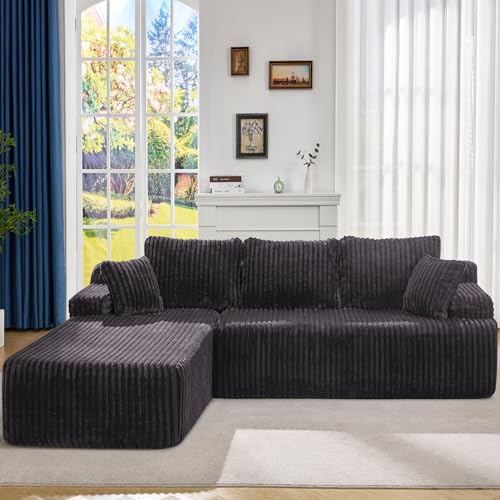
Hobestluk Boneless Couch Modular Sectional Sofa L-Shape Oversized Chaise | 108" Left Facing Chaise Darkgrey,Memory Foam,Removable Cover,Non-slip Bottom,No Assemble Required,Living Room Furniture
Check price on AmazonReady to Choose Your Modular Sectional?
Use this guide to compare configurations, connector quality, and upholstery options. When you know which layout fits your room, you can shop with confidence and choose the modular sectional that will serve your living space for years.
VIEW MODULAR OPTIONSFrequently Asked Questions
What is a modular sectional sofa?
A modular sectional sofa is a sectional couch built from separate, interchangeable pieces that connect together. You can rearrange the modules to change the shape, size, and layout of the sofa as your space or needs change.
Is a modular sectional sofa worth it?
A modular sectional is a worthwhile investment if you want flexibility, easy moving, and the ability to expand seating over time. It suits renters, growing families, and open-plan living rooms especially well.
Can a modular sectional sofa be reconfigured later?
Yes. That is the defining feature. Most modular sectionals use connectors or brackets so you can add, remove, or rearrange modules to create an L-shape, U-shape, straight sofa, or even separate chairs.
What is the difference between a modular sectional and a standard sectional?
A standard sectional is a fixed piece built in one shape. A modular sectional is assembled from individual pieces, so it can be reconfigured, expanded, or split apart without replacing the entire sofa.
Are modular sectionals good for small living rooms?
Yes, when chosen carefully. A compact L-shape or a chaise configuration can fit a small living room, and the modular design lets you expand later if you move to a larger space. Measure your room and leave clear walkways before choosing a configuration.