
Swivel Rocker Recliner Chairs for Living Room: The Complete Buyer's Guide
Learn how to choose a swivel rocker recliner that fits your space, your body, and your daily routine — from mechanism types and upholstery to placement and long-term care.
EXPLORE TOP PICKSWhy this guide matters: A swivel rocker recliner is one of the few living room chairs that works as a TV seat, a reading chair, and a conversation seat at the same time. But the wrong mechanism, size, or fabric can turn a great idea into a daily frustration. This guide walks you through every decision so you can buy with confidence.
What Exactly Is a Swivel Rocker Recliner?
A swivel rocker recliner is a living room chair that combines three motions in one base: a full swivel, a gentle rocking motion, and a reclining backrest with a footrest. That triple function is what separates it from a standard recliner, which usually only reclines and rocks. The swivel is the key differentiator — it lets you rotate the chair toward the television, toward a conversation circle, or toward a window without dragging the furniture across the floor.
Most swivel rocker recliners use a circular steel base plate that sits under the seat frame. The rocker mechanism is mounted above that plate, and the recline mechanism is built into the back and footrest assembly. In better-built chairs, the steel is heavier gauge and the pivot points are reinforced, which reduces wobble over time. If you are comparing this chair type against other living room seating, it helps to first understand the broader range of sofa and chair types available before committing.
Because the chair swivels, it also works as a flexible accent piece. In open-plan homes, a swivel recliner can face the sofa during conversation and then rotate toward the TV for movie night. That versatility is why the chair has become a favorite in living rooms that need to serve multiple functions.
Why a Swivel Rocker Recliner Belongs in Your Living Room
Living rooms are multi-purpose spaces. They host conversations, movie nights, reading sessions, and quiet morning coffee. A fixed chair forces you to choose one orientation. A swivel rocker recliner lets the chair adapt to the activity instead of asking you to rearrange the room.
Beyond flexibility, the rocking motion itself is soothing. Many buyers report that a gentle rock helps them relax faster after work, and it is a practical feature for households with young children who like being rocked. The recline function adds another layer, turning the chair into a spot for a nap or a long film.
From a design standpoint, swivel rocker recliners have moved well beyond the bulky, overstuffed look of older models. Contemporary versions come with clean lines, tapered legs, and tailored upholstery that fit modern and transitional living rooms. If you are building out a seating plan, pairing a swivel recliner with a main living room sofa creates a balanced arrangement where one seat is flexible and the others are anchored.
Understanding the Mechanism: Manual vs Power vs Wall-Hugger
The mechanism is the heart of any recliner, and it is where most buyer regret originates. There are three main configurations to understand.
Manual Recline Mechanisms
Manual swivel rocker recliners use a lever or a side handle to release the backrest and footrest. They are simpler, have fewer electronic parts to fail, and are generally lighter. The trade-off is that you cannot stop the recline at a precise angle as easily, and the motion can feel less smooth on entry-level models. Mid-range manual mechanisms typically offer a more controlled recline than starter-tier versions.
Power Recline Mechanisms
Power models use a quiet motor to move the backrest and footrest, usually controlled by a side button panel. They allow infinite positioning, which matters if multiple people of different heights share the chair. Power mechanisms add weight and require a nearby outlet, and the motor is the component most likely to need service over a long ownership period. If you want the same convenience in a different form factor, power swivel recliners are worth comparing directly.
Wall-Hugger and Zero-Wall Mechanisms
A wall-hugger recliner slides the seat forward as the backrest tilts rather than pushing the backrest into the wall. This reduces the clearance needed behind the chair to just a few inches, which is a major advantage in smaller living rooms. Zero-wall mechanisms go a step further by allowing the chair to sit almost flush against the wall. Because a swivel base already lets you angle the chair, combining a swivel with a wall-hugger mechanism is one of the most space-efficient recliner setups available.
Sizing and Fit: Matching the Chair to Your Body and Room
Recliner sizing is not one-size-fits-all. A chair that is too deep forces shorter users to perch on the edge, while a chair that is too shallow leaves taller users without thigh support. Before shopping, measure three things: your seated height from floor to the back of your knee, your seated shoulder width, and the available floor footprint in your living room.
As a rule of thumb, the seat height should let your feet rest flat on the floor when the chair is upright, and the seat depth should support your thighs without a gap behind your knees. If you are shorter than average, look for chairs with a seat height under 19 inches and a shallower seat depth. If you are taller, prioritize models with a seat height of 20 inches or more and a taller backrest.
Room footprint matters just as much. Standard swivel rocker recliners occupy roughly 36 to 40 inches of width, but oversized models can exceed 45 inches. In a compact living room, a swivel rocker recliner for small spaces with a narrower arm profile and a wall-hugger mechanism will fit far more comfortably than a full-size model. Also account for the swivel arc — the chair needs enough room to rotate without clipping a side table or lamp.
Tier Comparison at a Glance
The table below compares swivel rocker recliner tiers by build quality and intended use. It deliberately avoids absolute figures so the guidance stays useful regardless of market conditions.
| Tier | Typical Build | Best For |
|---|---|---|
| Entry-level | Lighter steel frame, basic foam, manual recline | Occasional use, guest seating, first apartment |
| Mid-range | Reinforced frame, higher-density foam, smoother manual or power recline | Everyday living room use by one or two people |
| Premium | Heavy-duty frame, pocket-coil or high-resilience cushioning, wall-hugger power recline | Daily use, shared households, long movie sessions |
| Luxury | Hardwood or commercial-grade frame, full-grain leather, multi-motor positioning | Design-led living rooms, long-term investment seating |
In general, moving from entry-level to mid-range buys you a noticeably smoother recline motion and cushioning that holds its shape longer. Moving from mid-range to premium buys you a heavier frame and better long-term durability. The jump to luxury is mostly about materials and finish, so it makes the most sense when the chair is a visible design feature in the room.
Upholstery Choices: Fabric, Leather, and Performance Materials
The upholstery decision affects comfort, maintenance, and how the chair ages. Here is how the main options compare for a living room swivel rocker recliner.
Performance Fabric
Performance fabric is the most practical all-round choice for family living rooms. Tightly woven synthetics resist stains, spills bead on the surface, and the fabric holds up well against daily use. For households with cats, a tightly woven performance fabric is one of the better defenses against scratching — the same principle behind choosing a sofa material that cats won't scratch. Performance fabric is also breathable, which keeps the chair comfortable in warmer climates.
Leather and Faux Leather
Top-grain leather develops a patina over time and wipes clean easily, making it a strong pick for households with children. Full-grain leather is the most durable tier; bonded leather is the least durable and tends to peel. Faux leather (vinyl) is easier to clean than fabric but can feel warm and sticky in humid conditions. If leather is your preference, note that leather recliners tend to feel firmer at first and soften with use.
Velvet and Microfibre
Velvet brings a premium look and a soft hand, and modern performance velvets are far more stain-resistant than older versions. Microfibre is soft and forgiving but traps pet hair, so it is a weaker choice in homes with heavy-shedding animals. Both need more deliberate maintenance than performance fabric.
Placement and Layout: Where the Chair Works Best
Placement determines whether the swivel feature actually gets used. The chair should sit at the edge of the main conversation area, angled slightly toward the sofa, with enough clear floor around the base to rotate freely. Avoid tucking it into a corner where the swivel arc is blocked by walls.
If the chair is primarily a TV seat, position it so the screen is within a comfortable viewing angle when the chair is rotated toward it, and confirm that the recline clearance does not collide with a coffee table. A wall-hugger mechanism makes this easier. If the chair doubles as a reading seat, place a slim side table and a task light within arm's reach — the table lamps and task lighting guides cover the lighting side in more detail.
In open-plan rooms, a swivel recliner can act as a soft divider between the living zone and an adjacent area. Because it rotates, it does not need to be permanently oriented, which is an advantage over fixed armchairs. Pairing the recliner with a reclaimed wood console table behind the sofa can help define the boundary without blocking sightlines.
Finally, think about the chair's relationship to the rest of the seating. In rooms with a large sectional, one swivel recliner adds a flexible seat without competing for space. In rooms with two sofas, a swivel recliner can replace a static armchair and give the layout more breathing room. The two sofas in living room guide is useful if you are weighing that arrangement.
Comfort Features Worth Prioritizing
Not every feature on a spec sheet matters equally. These are the ones that most affect day-to-day comfort in a living room swivel rocker recliner.
- Lumbar support: A built-in lumbar curve or adjustable lumbar mechanism reduces lower-back strain during long sits. Adjustable lumbar is a meaningful upgrade for anyone who spends hours in the chair.
- Seat cushion density: High-resilience foam and pocket-coil construction hold their shape longer than low-density foam. A firmer seat may feel less plush on day one but will outperform a soft seat over several years.
- Armrest height and padding: The armrest should support your forearm at roughly elbow height when seated. Padded arms matter if you rest a tablet or book on them.
- Footrest length: A footrest that is too short leaves your heels hanging; one that is too long pushes your knees up. Check that the extended footrest supports your calves fully.
- Swivel tension: A well-tuned swivel base rotates smoothly without spinning freely. If the swivel feels loose on the showroom floor, it will likely worsen with use.
If you want to go further into powered comfort adjustments, the power sofa with adjustable lumbar support guide explains how motorized lumbar systems work and what to check before buying.
Durability and Build Quality: What to Inspect
A swivel rocker recliner has more moving parts than a static chair, so build quality matters more than it does for a simple armchair. When evaluating a model, look for these signals.
Frame material. Hardwood and high-grade steel frames outlast particle board and thin-gauge metal. A reinforced frame is the single best predictor of long-term durability.
Mechanism warranty. The recline and swivel mechanisms are the components most likely to fail. A longer mechanism warranty is a strong indicator that the manufacturer trusts its own hardware.
Weight capacity. Standard models typically support around 250 to 300 pounds. Heavy-duty and oversized models are reinforced to support 350 to 500 pounds or more. Choose a capacity above your heaviest user — the chair will last longer when it is not working at its limit. The lift chair recliner for large person guide covers reinforced construction in more depth.
Fabric rub count. For upholstered chairs, a higher rub count generally means better abrasion resistance. Performance fabrics with high rub counts are the safest bet for daily use.
Stitching and seams. Double-stitched seams at stress points — the seat front, arm tops, and footrest edge — are a sign of careful construction.
Maintenance and Care for Long-Term Performance
Basic care keeps a swivel rocker recliner comfortable and extends its service life. Vacuum the chair weekly with a soft brush attachment to lift dust and crumbs from seams. Rotate the cushion if the model allows it, so wear is distributed evenly. Wipe leather with a dry microfibre cloth and condition it a few times a year to prevent cracking.
For the mechanism, keep the swivel base and recline track free of debris and hair, which can work into the moving parts and cause squeaks. If the chair develops a squeak, a small amount of silicone lubricant on the pivot points usually resolves it — avoid oil-based lubricants, which attract dust. Power models should be unplugged before any cleaning around the control panel.
If the upholstery begins to show wear, a fitted cover is a practical stopgap. The leather sofa covers guide explains how to choose a cover that fits without bunching at the mechanism points. For deeper cleaning guidance, the broader fabric cleaning resource covers stain removal and spot treatment.
Common Buying Mistakes to Avoid
Most disappointing recliner purchases trace back to a handful of avoidable errors. Watch for these.
Buying without measuring the recline clearance. A chair that cannot fully recline because it is too close to a wall or sofa defeats the purpose. Measure the clearance behind the chair and the distance to the nearest obstacle before choosing a mechanism.
Choosing a chair that is too large for the room. Oversized recliners can dominate a small living room and crowd the swivel arc. Match the footprint to the room, not to the showroom floor.
Ignoring the seat height. A chair that is too tall leaves shorter users with dangling feet; one that is too low is hard to stand up from. Sit in the chair — or check the seat height against your own measurements — before buying.
Overlooking the household. Pets, children, and multiple users all change the calculus. A pet-friendly performance fabric and a higher weight capacity are worth prioritizing in a busy household.
Assuming all power mechanisms are equal. Motor quality and control-panel design vary widely. A smoother, quieter motor with a simple control layout is worth prioritizing over extra features you will not use.
How Swivel Rocker Recliners Compare to Alternatives
The swivel rocker recliner is not the only flexible seating option, and understanding the alternatives helps you choose the right chair for your room.
Versus a standard recliner. A standard recliner is usually less complex and can be a solid pick if you only need recline and rock. The swivel adds flexibility but also adds a moving part. If the chair will sit in a fixed position facing the TV, a standard recliner may be sufficient. If it needs to serve multiple orientations, the swivel earns its keep.
Versus a glider recliner. A glider recliner moves forward and back on a track rather than rocking on an arc. The motion is smoother and quieter, which many parents prefer for nurseries, but gliders do not swivel unless they are specifically built as swivel gliders. The swivel rocker glider recliner chair guide compares the two motions directly.
Versus a lift recliner. Lift chairs add a motorized lift function for easier standing, which is valuable for older users or anyone with mobility limitations. They are typically larger and heavier than swivel rocker recliners. If standing assistance is the priority, the lift recliner with heat and massage guide covers the added features.
Versus a massaging recliner. Massage chairs add vibration or roller massage to the recline function. They are a nice extra for relaxation-focused buyers but add complexity and weight. The swivel rocker recliner massage chair guide explains what the massage function actually delivers.
Who Should Buy a Swivel Rocker Recliner?
This chair suits a wide range of living situations, but it is a particularly strong fit for a few buyer profiles.
TV-focused living rooms. If the living room is arranged around a screen, the swivel lets the chair face the TV directly without forcing the rest of the seating into an awkward line.
Open-plan homes. In a room that serves as both a conversation space and a media space, a swivel chair adapts to both without being moved.
Smaller living rooms. A single swivel recliner can replace both an armchair and a TV chair, saving floor space and reducing furniture count.
Households with mixed users. A power recline mechanism lets people of different heights share one chair comfortably, which is a practical advantage in a family living room.
Readers and nappers. The rocking motion and full recline make the chair a strong choice for anyone who uses the living room for long, quiet sessions.
If your living room is arranged around a larger sectional and you only need supplementary seating, a swivel recliner is a lighter addition than another sofa. The extra seating guide covers how to layer additional seats into an existing layout without crowding it.
Choosing the Right Tier for Your Needs
Rather than chasing the lowest figure on a listing, think in terms of which tier matches how often the chair will be used and by whom. A guest-room recliner that is used a few times a year is well served by an entry-level model. A chair that anchors a family living room and is used daily justifies a premium or luxury tier, because the mechanism and cushioning will hold up far longer.
The most reliable way to compare models is to look at mechanism type, frame material, cushion construction, and weight capacity side by side, rather than focusing on a single headline feature. A mid-range chair with a reinforced frame and a smooth power mechanism usually represents a better long-term decision than an entry-level chair with extra decorative features but a lighter frame.
For buyers who are replacing an older recliner, the same logic applies: if the old chair failed at the mechanism or the cushion, prioritize those components in the replacement rather than adding features that do not address the failure. The reclining arm chairs for living room guide offers a useful cross-check on how armchair construction compares.
Recommended Swivel Rocker Recliner Chairs for Living Room
⚠️ AFFILIATE DISCLOSURE: This website contains affiliate links. As an affiliate Associate, we earn from qualifying purchases. If you make a purchase through these links, we may receive a small commission at no additional cost to you. Read our full affiliate policy.

ComeWay Manual 360° Swivel Rocker Recliner Chair for Living Room, Gray | 360° Degree Swivel & Rocking,Plush Padded Armrests,Adjustable Backrest
Check price on Amazon
Korser 360° Swivel Rocker Recliner for Adults, Nursery Glider Recliner with Massage and Heating, Rocking Chair with Cup Holder, Manual Recliner Chair for Living Room, Bedroom (Fabric, Dark Gray)
Check price on Amazon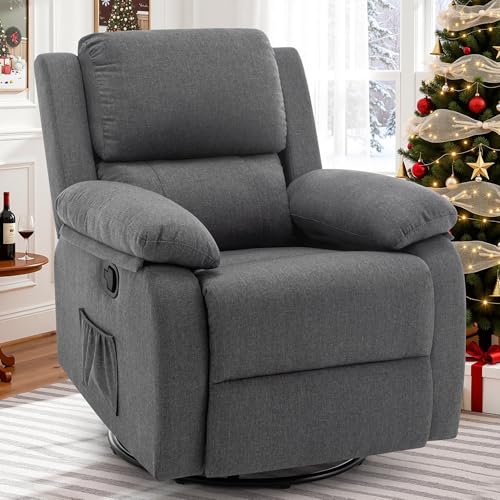
Korser Recliner Chair, 360 Swivel Rocker Chair for Adults, Small Rocking Recliner for Small Spaces, Upholstered Fabric Glider Recliner Nursery
Check price on Amazon
MAHOMICO Swivel Rocker Recliner Chair with Vibration Massage and Heat for Living Room,with Rocking Function and Side Pocket, USB Charge Port,2 Cup Holders
Check price on Amazon
Korser Rocking Recliner Chair, Nursery Rocker Chair for Adults, Small Recliners for Small Spaces, Swivel Rocker Recliner with Cushion, Upholstered Rocking Chairs for Living Room, RV, Corduroy
Check price on Amazon
Cooexult Oversized Recliner Chair Swivel Rocker Manual Lazy Boy Recliners | Heavy Duty, 400LBS, Velvet, Big and Tall, for Big Man & Lazyboy Living Room, Large Rocking Single Sofa Reclining, Coffee
Check price on Amazon
LAFWELL Rocking Recliner Chair, Massage Rocker Recliner Chair with Vibration Massage and Heat, USB and Type-C Ports,360° Swivel Faux Leather Chairs, Living Room, Bedroom, Nursery, RV, Black
Check price on AmazonFrequently Asked Questions
What is the difference between a swivel rocker recliner and a standard recliner?
A swivel rocker recliner combines a 360-degree swivel base, a rocking motion, and a reclining backrest. A standard recliner typically only reclines and may rock, but it does not swivel, which limits how you can angle the chair toward a TV, conversation area, or window.
How much space do I need behind a swivel rocker recliner?
Traditional recliners need roughly 12 to 18 inches of clearance behind them to fully recline. Many swivel rocker recliner chairs use wall-hugger or zero-wall mechanisms that need only a few inches, and because the chair swivels, you can often angle it away from the wall before reclining. Always check the manufacturer's recommended clearance for the specific model.
Are swivel rocker recliners suitable for small living rooms?
Yes, when you choose the right model. Compact swivel rocker recliners with wall-hugger mechanisms, narrower arm profiles, and a smaller footprint work well in apartments and small living rooms. Prioritize wall-hugger recline, measure your floor space carefully, and choose a chair that swivels so it can serve as both a TV seat and a conversation seat without being moved.
What upholstery is best for a living room swivel rocker recliner?
It depends on your household. Performance fabric and top-grain leather are the most durable choices for everyday living rooms and pet-friendly homes. Velvet and microfibre offer softness and stain resistance but need more careful maintenance. For households with cats, tightly woven performance fabric or full-grain leather holds up best against scratching.
What weight capacity should I look for in a swivel rocker recliner?
Standard swivel rocker recliners typically support around 250 to 300 pounds, while heavy-duty and oversized models are reinforced to support 350 to 500 pounds or more. If multiple household members will use the chair, choose a model rated above your heaviest user and look for reinforced steel frames and high-density foam.
Should I choose manual or power recline?
Manual recline is simpler, lighter, and has fewer electronic parts to fail. Power recline offers infinite positioning and is easier for people with limited grip strength or mobility. If the chair will be shared by users of different heights, power recline is usually worth the added complexity.
Final Thoughts: Buying With Confidence
A swivel rocker recliner is a long-term purchase, and the right choice depends far more on mechanism quality, frame construction, and fit than on any single decorative feature. Measure your room and your seated dimensions first, decide between manual and power recline based on who will use the chair, and choose an upholstery that matches your household's daily reality.
If you take those steps in order, the chair you buy will do more than recline — it will become the seat everyone in the household reaches for first. Use the product section above to compare models by tier and features, and cross-reference the guides linked throughout this article for deeper detail on any specific aspect of the decision.