
Small Sofa Chairs for Living Room: The Compact Seating Guide
Find the right compact sofa chair for tight living rooms, apartments, and reading corners. Learn sizing rules, seating types, and smart placement so every square foot works harder.
Why this guide matters: In a small living room, the wrong chair wastes floor space and blocks traffic flow. The right one adds a comfortable seat without crowding the room. This guide walks you through the small sofa chair options available today, how each type performs, and how to place one so your living room still feels open and breathable.
What Counts as a Small Sofa Chair?
A small sofa chair is a single-person seat with a wider profile than a standard accent chair but a smaller footprint than a full sofa or loveseat. Typical widths fall between 28 and 42 inches, with depth ranging from 30 to 38 inches. The category overlaps with compact loveseats, apartment-size recliners, and oversized accent chairs, which is why shoppers often compare all three before deciding.
Because these chairs sit close to walls and walkways, two dimensions matter most: overall width and reclined depth. A model that measures 36 inches wide but extends to 64 inches when reclined will not fit a narrow room, no matter how compact it looks in the showroom. Always check both the closed and open footprint before you commit.
If your living room is genuinely tight, it also helps to review broader strategies for small living rooms before shopping, so the chair you pick supports the overall layout rather than working against it.
Types of Small Sofa Chairs Compared
Compact seating splits into a handful of practical categories. Each solves a different problem, and choosing the right one depends on how you use the room most of the time.
| Type | Best For | Typical Width | Tier Guidance |
|---|---|---|---|
| Compact accent chair | Reading corners, visual interest, pairing with an existing sofa | 28–34 in | Entry-level to mid-range |
| Small loveseat | Seating two people, small apartments, studio layouts | 48–58 in | Essential tier to premium |
| Small recliner chair | Lounge comfort, movie nights, ergonomic support | 30–38 in | Mid-range to top-tier |
| Swivel chair | Open-plan rooms, conversation zones, multi-directional seating | 30–36 in | Mid-tier to high-end tier |
| Wall-hugger recliner | Rooms where the chair must sit close to a wall | 32–40 in | Mid-range to premium |
| Chaise-style chair | Lounging, stretching out, bedroom corners | 34–42 in | Balanced tier to luxury |
Compact Accent Chairs
Accent chairs are the most flexible option. They add a pop of personality, fit into odd corners, and pair easily with a main sofa. A small armchair works well when you need a single seat that does not dominate the room. Look for models with tapered legs and open frames, since visible floor space under the chair keeps the room feeling lighter.
Entry-level accent chairs often use basic foam cushions and simple frames. Mid-range models typically add reinforced joinery and denser cushioning. If the chair will be used daily rather than occasionally, a mid-range build is the smarter long-term investment.
Small Loveseats
A small loveseat for small space bridges the gap between a chair and a full sofa. At roughly 48 to 58 inches wide, a compact loveseat seats two without demanding the wall length of a three-seater. These work especially well in studio apartments where the loveseat doubles as the main seating piece.
For bedrooms used as dual-purpose rooms, a small loveseat for bedroom placement at the foot of the bed creates a natural sitting area without blocking circulation. If you need sleeping capacity as well, compare small sofa bed options, which combine loveseat proportions with an occasional sleep surface.
Small Recliner Chairs
Recliners deliver the most comfort per square foot, but they also demand the most clearance. A standard recliner needs 12 to 20 inches behind it to fully recline. A small recliner chair with a wall-hugger mechanism reduces that requirement dramatically, making it viable in rooms where the chair must sit near the wall.
Shoppers comparing small recliners should check the recline mechanism quality closely. Entry-level models use simpler lever systems, while mid-range and premium models often feature smoother push-back or power mechanisms. For rooms with limited floor space, small reclining chairs for small spaces are specifically engineered around compact footprints.
Swivel and Rocker Options
Swivel chairs let one seat serve multiple zones: face the sofa for conversation, then rotate toward the television. A small swivel recliner for small spaces combines both functions in a single footprint. Rocker variants add gentle motion and suit nursery-adjacent or reading areas. A small rocker recliner is a practical middle ground when you want motion but not a full recliner's depth.
Leather and Fabric Considerations
Material choice affects both upkeep and perceived bulk. Leather reads as sleek and reflects light, which helps small rooms feel larger. A small leather recliner for small spaces is a strong pick for high-traffic rooms because it wipes clean easily. Fabric chairs, by contrast, absorb sound and feel warmer, but light-colored fabrics show wear faster in busy households.
For a wider view of compact leather seating, see the guide to small leather sofas for small rooms. If you prefer upholstered pieces, the collection of small sofas for small rooms covers fabric options in depth.
Pair a compact chair with a small side table that slides under the sofa to keep drinks and lamps within reach without adding permanent floor clutter.
How to Size a Small Sofa Chair for Your Room
Start with a simple floor plan. Measure the wall where the chair will sit, then subtract door swings, walkway widths, and any furniture that must stay. The remaining number is your maximum chair width. Repeat the process for depth, accounting for the fully reclined position if applicable.
Next, check seat height against your existing furniture. A chair seat that sits much lower or higher than the main sofa will look out of place and feel awkward to use. Standard seat heights run 17 to 19 inches from floor to cushion top. If you are pairing the chair with a coffee table, the table surface should sit roughly level with or slightly below the chair seat.
Finally, consider visual weight. Chairs with exposed legs, slim arms, and light upholstery occupy less visual space than fully upholstered, skirted models. In a compact room, the lighter silhouette almost always wins.
Matching a Small Sofa Chair to Your Existing Layout
The chair should complete the seating group, not compete with it. If your main sofa is a small sectional sofa, add one compact chair opposite the chaise to close the conversation loop. If you have a small sofa against the long wall, place the chair perpendicular to it, creating an L-shaped arrangement that defines the living zone.
Rooms anchored by a small corner sofa often have a leftover nook near the window. That is the natural home for an accent chair or swivel seat. Similarly, a small L-shaped sofa leaves the open side of the room available for a single chair that can be moved as needed.
If your seating needs extend to occasional overnight guests, review small sleeper sofas for small spaces before finalizing the layout. A sleeper piece may replace both the sofa and the extra chair, which simplifies the floor plan considerably.
Comfort Features Worth Prioritizing
Compact does not have to mean uncomfortable. The features below matter most in daily-use chairs:
- Cushion density: High-resilience foam holds its shape longer than low-density foam. Mid-range and premium chairs typically use denser cores.
- Frame construction: Hardwood or engineered hardwood frames outlast particleboard. Reinforced corner blocks reduce squeaks over time.
- Armrest height: Arms that sit at or slightly below elbow height reduce shoulder strain during long sitting sessions.
- Recline mechanism: Test the motion before buying. Smooth, quiet mechanisms signal better build quality than stiff or noisy ones.
- Removable covers: Chairs with zip-off covers are easier to maintain, especially in homes with pets or children.
If the chair will sit in a sunny spot, factor in fade resistance. The same principles that apply to small sofas for small rooms apply here: darker dyes and solution-dyed fabrics resist fading better than light, surface-dyed textiles.
Small Sofa Chair Placement Scenarios
Studio Apartments
In a studio, the chair often doubles as the reading seat and the guest seat. A swivel chair works best because it can face the sofa, the kitchen, or the window without being moved. Pair it with a small apartment sofa to define the living zone without walling it off.
Reading Corners
A compact accent chair, a floor lamp, and a side table form a complete reading nook in under 20 square feet. Choose a chair with a higher back for neck support during long reading sessions. Fabric upholstery absorbs sound and feels warmer in the evening.
Bedroom Sitting Areas
A chair at the foot of the bed or beside a window turns an unused corner into a functional spot. A small sofa for end of bed placement works when the room is wide enough; otherwise, a single recliner or accent chair is the better fit. Bedroom chairs benefit from stain-resistant fabric and a compact footprint that leaves closet doors clear.
Open-Plan Living
In open-plan rooms, a chair can act as a soft divider between the living and dining zones. Place it with its back to the dining area so it visually anchors the living room without blocking sightlines. Swivel models are especially useful here because they let one person join either zone.
Maintenance and Longevity
Compact chairs take more daily abuse per square inch than large sofas because they are used more intensively by fewer people. Vacuum upholstery weekly, rotate cushions monthly, and tighten leg bolts every few months. Leather chairs benefit from periodic conditioning to prevent cracking, while fabric chairs should be spot-cleaned promptly to stop stains from setting.
If the chair sits near a heating vent or radiator, add a small barrier to prevent the upholstery from drying out. This simple step extends the life of both fabric and leather significantly.
Common Mistakes to Avoid
- Buying without measuring reclined depth. A chair that fits when closed may block a doorway when open.
- Ignoring scale. A chair that is too small looks lost beside a large sofa; one that is too large overwhelms a compact room.
- Skipping the walkway check. Leave at least 18 inches of clear path around the chair.
- Choosing style over seat comfort. Sit in the chair for at least five minutes before deciding.
- Overlooking material upkeep. High-maintenance fabrics cost more in time than they save in appearance.
Frequently Asked Questions
What is the difference between a small sofa chair and a loveseat?
A small sofa chair seats one person with a wider, chair-like profile, while a loveseat seats two. Both are compact options for tight living rooms, but loveseats offer shared seating while sofa chairs provide focused single-person comfort.
How do I choose the right size small sofa chair for my living room?
Measure your available floor space first, then leave at least 18 inches of walkway clearance. Account for the chair's full reclined depth if you choose a recliner, and verify the seat height matches your coffee table and room proportions.
Are small recliner chairs suitable for apartments?
Yes. Wall-hugger and swivel recliners are designed for tight footprints and need only a few inches of rear clearance. Look for models labeled as apartment-size or space-saving for the best fit.
Can a small sofa chair replace a full sofa?
In very small rooms, a pair of compact chairs can replace a sofa for single occupants or couples. However, for seating three or more people, a small loveseat paired with one chair is usually the more practical arrangement.
What material is best for a small chair in a high-traffic room?
Leather and tightly woven performance fabrics hold up best in high-traffic rooms. They resist staining, clean easily, and maintain their appearance longer than loosely woven or light-colored textiles.
Recommended Small Sofa Chairs for Living Room
⚠️ AFFILIATE DISCLOSURE: This website contains affiliate links. As an affiliate Associate, we earn from qualifying purchases. If you make a purchase through these links, we may receive a small commission at no additional cost to you. Read our full affiliate policy.

Homall Recliner Chair, Recliner Sofa Leather for Adults Dark Black Recliner | Massage Home Theater Seating with Lumbar Support, Reclining Sofa Chair for Living Room
Check price on Amazon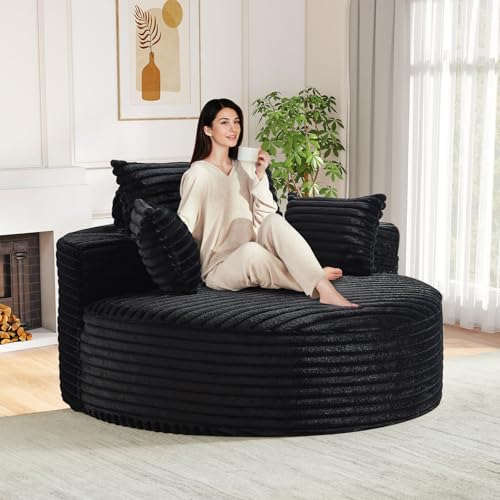
Oversized Round Chaise Longue Chair Indoor, Modern 55-inch Upholstered Corduroy Deep Seat Circle Single Cloud Lounge Floor Sofa Chair for Living Room, Bedroom Apartment, Black
Check price on Amazon
Homall Recliner Chair, Recliner Sofa PU Leather for Adults, Black Recliners | Home Theater Seating with Lumbar Support, Reclining Sofa Chair for Living Room
Check price on Amazon
Homixis Accent Chairs Set of 2 for Living Room, Mid-Century Upholstered Armchair with Foldable Table & 2 Side Pockets, Modern Linen Wooden Sofa Chair for Bedroom & Reading Room, Beige
Check price on Amazon
MALOL PU Leather Accent Chair with Solid Wood Frame, Chocolate Brown | Living Room Armchair Sofa with Removable Cushions & Stitched Armrest Design, Mid-Century Bedroom Chair with Plastic Legs
Check price on Amazon
Yaheetech Compact Sherpa Accent Chairs Set of 2 for Small Spaces, Ivory | Compact Cozy Barrel Chairs with a Curved Silhouette, Upholstered Furry Armchair for Small Spaces, Living Room Bedroom Corner
Check price on Amazon
HAPPYMONT Mid Century Modern Accent Chairs Set of 2 with Lumbar Pillows | Beige Upholstered Lounge Chairs, Double-Layer Cushions & Rubberwood Frames, 16" Seat Height for Living Room, Bedroom
Check price on Amazon