
Genuine Leather Sectional Sleeper Sofa: The Complete Buying Guide
Everything you need to know before choosing a leather sectional that seats the whole family by day and hosts overnight guests by night — materials, mechanisms, sizing, comfort, and long-term care.
Explore Recommended OptionsWhy this guide matters: A genuine leather sectional sleeper sofa is a dual-purpose investment. It anchors your living room seating layout and doubles as a guest bed when friends or family stay over. Because leather is a premium upholstery choice, the buying decision deserves careful research — from hide grade and sleeper mechanism to frame construction and mattress type. This guide walks you through every factor so you can choose with confidence.
What Is a Genuine Leather Sectional Sleeper Sofa?
A genuine leather sectional sleeper sofa combines two functions in one footprint: a multi-seat sectional configured with a chaise or extended corner, plus a hidden sleeper mechanism that converts part of the seating into a bed. The upholstery is real leather — typically full-grain, top-grain, or a split-grain hide — rather than synthetic polyurethane or vinyl.
Unlike a standard fabric sleeper, leather brings natural durability, a breathable surface that adjusts to room temperature, and a patina that deepens with age. If you are still exploring alternatives, our guide to a faux leather sectional sleeper sofa explains where synthetic upholstery differs and when it may suit a household better.
Why Choose Leather for a Sleeper Sectional?
- Exceptional durability: High-grade leather resists cracking, tearing, and pilling far longer than most fabrics, which matters in a piece that gets daily use as both a sofa and a guest bed.
- Easy maintenance: Spills bead on the surface, making cleanup quicker. Regular dusting and periodic conditioning keep the hide supple.
- Hypoallergenic surface: Leather does not trap dust mites or pet dander the way woven fabrics can, an advantage for allergy-sensitive households.
- Timeless appearance: A leather sectional suits modern, transitional, and traditional interiors, so it stays visually relevant through years of decor changes.
- Comfort that adapts: Leather warms with body heat in winter and feels cooler in summer, helping the sleeper surface stay comfortable across seasons.
Understanding Leather Grades Before You Buy
Not all genuine leather is equal. The grade of the hide directly affects durability, feel, and how the sofa ages. Here is how the main tiers compare:
| Tier | Leather Type | Characteristics | Best For |
|---|---|---|---|
| Top-tier | Full-grain leather | Intact natural grain, develops rich patina, most durable hide | Long-term investment in high-traffic family rooms |
| High-end tier | Top-grain leather | Lightly sanded surface, uniform grain, supple feel, excellent resilience | Balanced choice for everyday comfort and durability |
| Mid-range | Split-grain leather | Lower hide layer, often embossed with a grain pattern, firmer hand | Households wanting genuine leather at a moderate tier |
| Entry-level (leather match) | Bonded or bi-cast leather | Leather fibers or split hide with a polyurethane coating | Occasional-use spaces where leather look matters most |
A top-grain hide is generally the sweet spot for a sleeper sectional: it is supple enough for comfortable seating, holds up to the mechanical flex of a sleeper frame, and resists the creasing that appears at fold points. Full-grain hides are the flagship tier and age beautifully, while split-grain options offer a solid choice for the category when the budget tier is a consideration.
Sleeper Mechanisms: How the Bed Unfolds
The mechanism is the most important functional component of any sleeper sofa. It determines how much floor space you need, how comfortable the bed feels, and how long the piece lasts. There are three main systems used in leather sectional sleepers:
- Pull-out (innofl ex) mechanism: The most common design. The seat lifts and a folded mattress platform pulls outward and unfolds. It requires clear floor space in front of the sofa equal to roughly the bed length. Look for a reinforced steel frame and smooth-glide rollers.
- Fold-out (click-clack) mechanism: The backrest folds down flat, and the seat section slides forward. These are typically lighter and simpler, suited to occasional guest use, and pair well with compact sectional configurations like the 3-in-1 convertible sleeper sofa bed style.
- Pop-up / trundle mechanism: A mattress platform rises from beneath the seat or slides out from a lower compartment. These are ideal where you want the bed to tuck away without moving the entire sofa, and they are common in L-shaped sectionals.
For households that host guests frequently, a pull-out mechanism with a thick, high-density foam or innerspring mattress delivers the most supportive sleep surface. If the room is tight, a fold-out design combined with a chaise layout — similar to an L-shaped sectional with sofa bed — keeps the footprint practical.
Sizing a Leather Sectional Sleeper for Your Space
Measure twice before ordering. A sectional sleeper occupies more floor area than a standard sofa, and the bed function adds a second set of spatial requirements. Use this checklist:
- Wall length: Confirm the full assembled length of the sectional against your longest usable wall, leaving at least 18 inches of walkway clearance.
- Bed extension depth: Measure the floor space needed in front of the sofa when the sleeper is fully unfolded. This often ranges from roughly 70 to 80 inches depending on mattress size.
- Chaise orientation: Decide whether the chaise sits left or right, and confirm the sectional can be delivered through doorways and stairwells.
- Sleeping capacity: A queen sleeper typically accommodates two adults; a full-size sleeper suits one adult or two children. If you regularly host couples, prioritize a queen configuration.
- Ceiling and rug clearance: Leave room for a rug to extend under the front legs, and confirm the backrest height clears any windows or wall art.
Pro tip: Place painter's tape on the floor to mark both the sofa footprint and the unfolded bed footprint. Walk the layout for a week before committing — it is the most reliable way to catch sizing mistakes.
Comfort Factors: Cushions, Mattress, and Support
A leather sectional sleeper must feel comfortable in two modes. In seating mode, look for high-density foam or pocket-coil seat cushions wrapped in fiber, with a frame that includes sinuous springs or webbing for consistent support. In sleeping mode, the mattress quality matters as much as the mechanism.
- Mattress thickness: A mattress of roughly 4.5 to 6 inches is typical for sleeper sofas. Thicker mattresses offer better pressure relief but require a deeper mechanism cavity.
- Mattress type: Innerspring mattresses provide traditional bounce and airflow; high-density foam mattresses suit side sleepers and reduce motion transfer.
- Seat depth: Standard sectional seat depth of 20 to 22 inches suits most adults. Deeper seats feel lounge-like but can be harder to get up from for guests with mobility concerns.
- Leather softness: Top-grain hides with a supple hand feel more comfortable against skin than firm split-grain surfaces, especially for overnight sleeping.
If you want maximum relaxation in seating mode, consider a reclining configuration such as a leather sectional sofa with chaise and recliner, which pairs power recline with the sleeper function for a true multi-purpose centerpiece.
Construction Quality: What to Inspect
The frame and joinery determine how long your sectional sleeper survives daily conversion. Prioritize these build details:
- Frame material: Kiln-dried hardwood or furniture-grade plywood outperforms particle board. Reinforced corner blocks and doweled joints add rigidity.
- Mechanism hardware: Look for heavy-duty steel rails, ball-bearing glides, and a weight rating that matches your household. A commercial-grade mechanism is the top-tier choice for frequent use.
- Stitching and seams: Double-stitched seams at stress points resist splitting, especially around the chaise corner and sleeper fold lines.
- Leg support: Solid wood or metal legs with floor-protective glides keep the frame stable and prevent wobble.
- Warranty coverage: A frame and mechanism warranty of several years signals manufacturer confidence. Check what the warranty covers before purchase.
Caring for Genuine Leather Upholstery
Leather is low-maintenance but not maintenance-free. A simple routine keeps the hide supple and extends its lifespan:
- Weekly: Dust with a soft, dry microfiber cloth to remove grit that can abrade the surface.
- Monthly: Wipe with a damp cloth using a mild leather-safe cleaner, then dry immediately.
- Seasonally: Apply a leather conditioner two to four times per year, depending on climate and use. Conditioners replenish oils that prevent cracking.
- Immediately: Blot spills rather than rubbing, and keep the sofa out of direct sunlight to prevent fading and drying.
- Mechanism care: Lubricate sleeper hinges annually and check bolts for tightness. Store bedding separately to avoid moisture buildup in the frame cavity.
For a deeper dive into fabric and hide-specific cleaning techniques, our sofa care and maintenance section covers stain removal, deodorizing, and protection strategies.
Related Configurations Worth Considering
A leather sectional sleeper sits at the intersection of several furniture categories. Depending on your room and guest needs, these alternatives may fit better:
- Full-grain leather sofa and loveseat set: If you prefer separate pieces over a sectional, a full-grain leather sofa and loveseat pairing offers flexible arrangement with top-tier hides.
- L-shape pull-out sofa bed: A dedicated L-shape pull-out sofa bed prioritizes sleeping capacity over sectional seating.
- King-size fold-out sofa bed: For maximum guest capacity, a king-size fold-out sofa bed provides the largest sleep surface in the category.
- Loveseat sleeper: A compact loveseat sofa bed suits studio apartments and guest rooms where a full sectional is too large.
- Manual recliner sectional: If recline matters more than sleeping, a sectional sofa with manual recliner delivers lounge comfort without sleeper hardware.
Recommended Genuine Leather Sectional Sleeper Sofas
⚠️ AFFILIATE DISCLOSURE: This website contains affiliate links. As an affiliate Associate, we earn from qualifying purchases. If you make a purchase through these links, we may receive a small commission at no additional cost to you. Read our full affiliate policy.
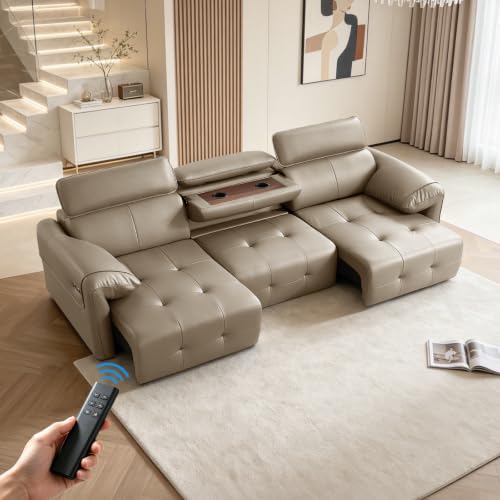
VASOENY 112" Genuine Leather Power Reclining Sectional Sofa with Adjustable Headrests | Electric Pull Out Sleeper Sofa Bed, Home Theater Seating with Drop-Down Table, Cup Holders & USB/Type-C Ports
Check price on Amazon
CHITA 127" Genuine Leather Sofa, Large Sectional Couches, 4 Seater, Saddle | Genuine Leather,Large Sectional Couches,Down Filled, High Density Foam, Super Large,Modular Cloud Couch
Check price on Amazon
Signature Design by Ashley 2-Piece Sleeper Sectional Sofa with Chaise | Faux leather polyester and PU blend, Built-in queen memory foam mattress, Left-arm facing chaise, Living room use, Helson
Check price on Amazon
110’’ Electric Leather Recliner Couch, Power Extendable Pull Out Sofa Bed | 3 Seater Reclining Couch, Convertible Sleeper Sofa, 3 Smart Motor, Cup Holder, Charging Ports, Living Room, Black
Check price on Amazon
Eafurn Tufted Sectional Sleeper Sofa Pull Out Couch Bed Modern Sofabed | Sectional Sleeper Sofa with Pull Out Bed, L Shaped Couch with Reversible Chaise Lounge, Pull Out Couch for Living Room
Check price on Amazon
HONBAY Sleeper Sectional Couch with Pull-Out Bed Sectional Sleeper Sofa Pull Out Bed with Storage Chaise, 6 Seaters Couch for Living Room, Faux Leather Brown
Check price on Amazon
LINSY HOME Faux Leather Couch with Pull Out Bed, Convertible Sofa, Brown | Modular Sectional Couch with Storage, PU Leather, Charging Ports, Side Pocket, Pillows, Adjustable 21-23" Seat Depth, 3 Seats
Check price on AmazonQuick Comparison: Match the Tier to Your Needs
| Tier | Best For | Sleeper Mechanism | Leather Grade |
|---|---|---|---|
| Entry-level | Guest rooms and occasional overnight use | Fold-out click-clack | Leather match / bi-cast |
| Mid-range | Everyday family seating with periodic guests | Pull-out with foam mattress | Split-grain leather |
| High-end tier | High-traffic living rooms and frequent hosting | Pull-out with innerspring mattress | Top-grain leather |
| Luxury tier | Long-term investment with premium comfort demands | Heavy-duty pull-out, reinforced steel frame | Full-grain leather |
Frequently Asked Questions
Is a genuine leather sectional sleeper sofa a good long-term investment?
Yes. Genuine leather is among the most durable upholstery materials available. With proper conditioning and routine care, a high-grade leather sectional sleeper sofa can serve a busy household for many years, making it a worthwhile long-term investment compared to fabric alternatives that may need replacing sooner.
How can I tell genuine leather from faux leather?
Look at the cut edge of the upholstery: genuine leather shows a fibrous, natural grain structure, while faux leather reveals a woven or synthetic backing. Genuine leather also develops a natural patina over time and feels warmer to the touch, whereas faux leather tends to stay uniform and can peel at stress points. Our faux leather sectional sleeper sofa guide covers the trade-offs in detail.
What size sectional sleeper sofa fits a small living room?
For compact spaces, look for an L-shaped configuration with a shorter chaise and a sleeper mechanism that folds inward rather than pulling outward. Measure the wall length, leave clearance for walkways, and confirm the unfolded sleeping footprint before ordering, since the bed extension often needs additional floor space. A 3-seater sofa for small spaces format can also be a practical starting point.
Do leather sectional sleeper sofas require special mattress care?
Most sleeper mechanisms use a foam or innerspring mattress that benefits from periodic rotation. Keep the mattress dry, air it out after extended use, and store bedding separately to prevent moisture buildup inside the leather frame cavity. Check the mechanism hinges and bolts annually.
How should I clean and condition genuine leather upholstery?
Dust regularly with a soft cloth, wipe spills immediately with a damp cloth, and apply a leather conditioner two to four times per year depending on climate and usage. Avoid harsh solvents and direct sunlight, which can dry and crack the hide over time. For a full routine, see our sofa care and maintenance guides.
Ready to Choose Your Leather Sectional Sleeper?
You now have the framework to evaluate hide grade, mechanism type, sizing, and construction. Compare your shortlisted options using the recommended picks above, and confirm the unfolded bed footprint fits your room before ordering.
Compare Features