


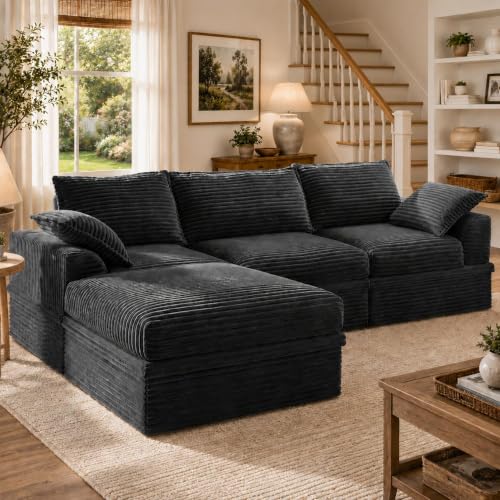


What Makes a Sectional Truly Farmhouse?
A farmhouse sectional sofa with chaise draws its identity from the broader farmhouse design tradition: honest materials, relaxed silhouettes, and a welcoming, lived-in feel. Unlike sleek modern sectionals that emphasize sharp geometry, farmhouse models lean into softness — rolled or track arms wrapped in natural fabrics, skirted or exposed-leg bases, and a color palette drawn from fields, barns, and linen cupboards.
The chaise component adds a practical dimension that pure farmhouse aesthetics sometimes overlook. It transforms a standard sectional into a lounging destination, giving one person a dedicated spot to stretch out while others share the main seating. For families, this combination hits a sweet spot between style and daily usability.
Rustic Warmth
Natural fabrics, soft arms, and earthy tones create an inviting atmosphere that feels collected rather than manufactured.
Chaise Comfort
An extended seat invites reading, napping, and movie marathons without sacrificing the communal seating of a sectional.
Family Practicality
Many farmhouse designs use performance fabrics and slipcovers, making them forgiving of kids, pets, and daily life.
Key Design Elements to Look For
When you shop for a farmhouse sectional sofa with chaise, pay attention to the details that separate a genuine farmhouse piece from a generic sectional painted in a beige tone. The following elements are the hallmarks of the style:
1. Arm Style and Silhouette
Rolled arms are the classic farmhouse signature, though track arms with a slight curve also work well in transitional farmhouse rooms. Look for arms that feel substantial but not bulky, and avoid razor-thin modern profiles that clash with the rustic mood. A skirted base can hide legs and add softness, while exposed turned wood legs lend a subtle vintage character.
2. Fabric and Texture
Texture is where farmhouse style truly lives. Cotton-linen blends, chunky weaves, and subtle ticking stripes or buffalo checks all reinforce the aesthetic. Neutral tones — oatmeal, flax, sage, warm grey, and soft cream — are the safest foundation, but a muted olive or slate blue can add depth without breaking the theme. If the sofa will see heavy use, prioritize performance-treated fabrics that resist stains and fading.
3. Cushion Fill and Support
A farmhouse sectional should feel soft enough to sink into but supportive enough for everyday use. High-resilience foam cores wrapped in down or fiber offer a balanced feel, while sinuous spring or pocket-coil seat decks add durability. Reversible cushions are a practical bonus because you can rotate them to even out wear.
4. Chaise Orientation and Configuration
Chaise sectionals come in left-facing and right-facing orientations, and the right choice depends on your room's traffic flow and focal points. A chaise placed against a wall or in a corner creates a natural lounging nook. A chaise floating in an open-concept space should not block walkways. Some modular farmhouse sectionals let you reconfigure the chaise as your needs change, which is ideal for renters or families who rearrange often.
How to Choose the Right Size and Layout
Size is the single most common source of buyer regret with sectionals. A farmhouse sectional sofa with chaise can easily dominate a room if the footprint is not measured carefully. Follow this process before you commit:
- Measure the full footprint: Include the chaise extension, not just the main sofa body. Mark the footprint on your floor with painter's tape.
- Leave breathing room: Aim for at least 18 to 24 inches of clearance around the sectional for walkways and visual balance.
- Check the delivery path: Measure doorways, stairwells, and hallway turns. A sectional that cannot fit through the door is a problem no design can solve.
- Plan the focal point: Decide whether the sectional will face a television, a fireplace, or a conversation area, and orient the chaise accordingly.
- Consider a rug: A large area rug can visually anchor the sectional and define the seating zone in open-plan rooms.
For rooms on the smaller side, a compact farmhouse sectional with a single chaise and a shorter main body can work beautifully. Pair it with a loveseat sofa bed for flexible guest seating, or explore 3-seater sofas for small spaces if a full sectional feels too large.
Farmhouse Sectional Tiers: Matching Quality to Your Needs
Farmhouse sectionals span a wide range of construction quality. Rather than focusing on numbers, use tier descriptors to understand where a model sits in the market and what that means for longevity and comfort.
| Tier | Best For | Typical Characteristics |
|---|---|---|
| Entry-level | First apartments, guest rooms, occasional use | Simpler frame construction, basic foam cushions, standard fabrics; a solid starting point for lighter use |
| Mid-range | Everyday family living, main living rooms | Reinforced frames, higher-resilience foam, better fabric options, smoother chaise mechanisms; balanced tier for most homes |
| Premium | Heavy daily use, design-conscious households | Hardwood frames, down-wrapped cushions, performance fabrics, refined tailoring, modular flexibility |
| Luxury | Long-term investment, custom-feel interiors | Kiln-dried hardwood, eight-way hand-tied springs, premium upholstery, artisan detailing; flagship tier for discerning buyers |
As a rule, a mid-range farmhouse sectional usually offers the most balanced combination of durability and design flexibility for typical family living. Entry-level models can serve well in lower-traffic spaces, while premium and luxury tiers make sense when the sofa is the centerpiece of daily life.
Farmhouse Styling: Making the Sectional Feel Intentional
Once the sectional is in place, styling determines whether it feels like a showroom piece or a genuine farmhouse living room. Start with a neutral base and layer in texture through throw pillows, blankets, and natural materials. A woven basket beside the chaise, a linen throw draped over one arm, and a mix of solid and patterned pillows in earthy tones will reinforce the farmhouse mood without clutter.
Lighting matters too. A floor lamp with a linen shade near the chaise creates a reading nook, while a pair of table lamps on a console behind the sofa adds warmth in the evening. For more inspiration, explore our guides on cozy sofa styling and farmhouse accent chairs set of 2 to complete the seating arrangement.
Care and Maintenance for Farmhouse Fabrics
Farmhouse fabrics are chosen for their texture and warmth, but they still need sensible care. Vacuum upholstery weekly with a soft brush attachment to lift dust and crumbs. Rotate and flip reversible cushions monthly to distribute wear. Blot spills immediately rather than rubbing, and follow the manufacturer's cleaning code — many performance fabrics can be spot-cleaned with mild soap and water, while some natural weaves require professional cleaning.
Keep the sectional out of direct sunlight to prevent fading, and consider a washable slipcover if the sofa will be used by pets or young children. A well-maintained farmhouse sectional can remain a comfortable centerpiece for many years.
Common Buying Mistakes to Avoid
- Ignoring the chaise orientation: Ordering a left-facing chaise for a right-side corner is a costly mistake. Double-check the orientation against your room layout.
- Underestimating the footprint: A sectional with chaise takes up significantly more floor space than a standard sofa. Tape the footprint before buying.
- Choosing style over substance: A beautiful farmhouse fabric means little if the frame is flimsy or the cushions flatten quickly. Prioritize construction quality.
- Skipping the delivery check: Measure the entire path from the front door to the living room, including turns and stairwells.
- Forgetting the rug: A sectional without an anchoring rug can feel adrift in an open-plan room.
Related Guides on SofaTopics
- Sectional Sofa with Movable Chaise
- L-Shaped Sofa with Chaise Lounge
- Down-Filled Sectional Sofa with Chaise
- Dark Grey Sectional Sofa with Chaise
- Extra Large Sectionals with Chaise and Recliner
- Faux Leather Sectional Sofa with Chaise
- Leather Sectional with Chaise and Recliner
- 2-Piece Sectional Sofa with Ottoman
- Sectional Sofa with Manual Recliner
- Gray Reclining Sectional with Chaise
Frequently Asked Questions
What defines a farmhouse sectional sofa with chaise?
A farmhouse sectional sofa with chaise combines rustic, country-inspired design details such as rolled arms, slipcovers, natural fabrics, and distressed wood accents with the extended lounging comfort of a chaise section. The result is a relaxed, welcoming centerpiece that suits casual family living.
Which fabric works best for a farmhouse chaise sectional?
Cotton and linen blends, textured weaves, and performance fabrics in neutral tones are the most popular choices. They echo the farmhouse aesthetic while offering breathability, durability, and easy maintenance for busy households.
How do I know if a chaise sectional will fit my living room?
Measure the full footprint of the sectional, including the chaise extension, and leave at least 18 to 24 inches of walkway clearance around it. Also account for door widths and hallway turns along the delivery path before ordering.
Can a farmhouse sectional with chaise work in a small space?
Yes. Compact configurations with a single chaise and a shorter main body can fit well in smaller rooms. Choose a light fabric palette, low-profile arms, and a chaise placement that does not block traffic flow.
Should I choose left-facing or right-facing chaise?
The correct orientation depends on your room layout and viewing angles. A left-facing chaise places the extended seat on the left when you face the sofa, which works well when the chaise anchors a corner near a window or beside a wall.
Ready to Bring Farmhouse Comfort Home?
Browse our curated selection of farmhouse sectional sofas with chaise and compare the options that best match your space, style, and daily routine.
View Recommended Models