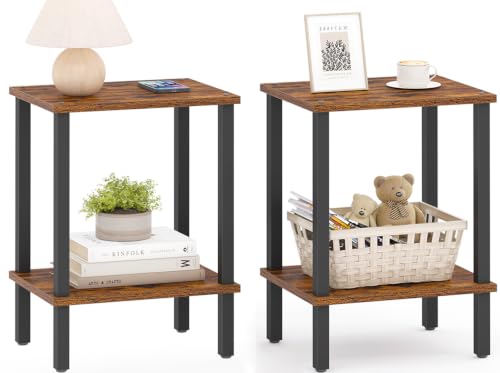
Sofa Side Tables for Living Room: The Complete Guide
Everything you need to know about choosing, sizing, placing, and styling side tables that make your sofa more useful, comfortable, and visually complete.
Why this guide matters: A sofa side table is one of the smallest pieces in a living room, yet it shapes how the entire seating area functions. It holds the lamp you read by, the drink you set down, the remote you always lose, and the book you keep meaning to finish. This guide walks you through the practical decisions — type, size, material, placement, and styling — so you can choose a side table that works as well as it looks.
Why Sofa Side Tables Matter in a Living Room
Most living room conversations focus on the sofa, the coffee table, or the rug. Side tables tend to be treated as an afterthought. In practice, they are the pieces that make a seating arrangement genuinely usable. A sofa without a nearby surface forces people to balance drinks on cushions, reach awkwardly for lamps, or leave phones charging on the floor.
Well-chosen side tables solve several problems at once. They provide a stable landing spot for everyday items, support task and ambient lighting, and frame the sofa so the seating group feels intentional rather than floating. In small rooms, a narrow side table can add function without consuming floor space. In larger rooms, a pair of matching tables can visually anchor a long sofa and balance the proportions of the wall behind it.
Side tables also give you flexibility that built-in furniture cannot. They can be moved when guests arrive, swapped seasonally, or repurposed as a plant stand or a small drinks station. For anyone building a living room from scratch, they are one of the highest-impact small purchases in the room. If you are still mapping out the broader seating plan, our guide to sofa sets for the living room is a useful companion read.
Types of Sofa Side Tables Explained
The category is broader than it first appears. The right type depends on your sofa's arms, the available floor space, and how you actually use the seating area. Here are the main styles worth knowing.
Standard End Tables
A classic rectangular or square table that sits beside the sofa arm. They offer generous surface area for lamps, books, and decor, and are the most common choice for traditional and transitional living rooms.
C-Shaped Tables
Designed to slide over the sofa seat or arm, these tables bring the surface directly to you. They are excellent for laptops, snacks, and coffee, and work well in tight layouts where a conventional table would block movement.
Narrow and Skinny Tables
Built for tight gaps between the sofa and a wall. Narrow tables keep essentials within reach without forcing the sofa forward. They are especially useful in apartments and small living rooms.
Round and Pedestal Tables
Softer in shape and easier to walk around. Round side tables reduce hard corners in busy rooms and pair naturally with curved sofas and organic decor styles.
Nesting Tables
A set of two or three tables that tuck under one another. They offer flexible surface area for entertaining and can be separated when guests need extra room for drinks or plates.
Storage Side Tables
Include drawers, shelves, or a lift-top compartment. Useful for hiding remotes, chargers, and coasters, and a smart pick for family rooms where clutter accumulates quickly.
Charging Side Tables
Feature built-in USB ports or wireless charging pads. A practical upgrade for living rooms used for work and entertainment. See our dedicated guide to a sofa side table with a charging station for a deeper look.
Side Tables for Small Spaces
Compact, often wall-hugging designs that prioritize function over surface area. If floor space is limited, our article on a sofa side table for small spaces covers the key trade-offs.
There is no single best type. A family room with young children often benefits from rounded edges and storage. A reading corner calls for a table that can hold a lamp and a stack of books. A studio apartment may need a C-shaped table that doubles as a work surface. The goal is to match the table to the way the sofa is actually used.
How to Choose the Right Size and Height
Size is where most side table purchases go wrong. A table that is too tall makes reaching for a drink awkward. A table that is too small looks lost beside a large sofa. A table that is too deep can block a doorway or make the room feel cramped.
Height relative to the sofa arm
As a general rule, the tabletop should sit at or slightly below the height of the sofa arm. This puts the surface within comfortable reach from a seated position and keeps the lamp shade from crowding the sofa back. If the table is noticeably taller than the arm, it starts to dominate the seating area. If it is much lower, it becomes a place where items disappear rather than a usable surface.
Width and depth
Width should relate to the depth of the sofa arm. A table roughly as wide as the arm looks proportionate; a table much wider can crowd the next seat. Depth depends on the gap between the sofa and the wall or walkway. In tight spaces, a shallow table of ten to fourteen inches deep is often enough for a lamp, a coaster, and a small tray. In generous rooms, a deeper table can hold a lamp, a plant, and a stack of books without feeling crowded.
Sizing for sectionals and large sofas
Sectionals need different treatment. Place a side table at the open end of the sectional, or beside the chaise, where it can serve the person sitting at the edge. For very long sofas, a pair of matching tables at each end creates visual balance. If the sectional sits in the middle of an open-plan room, a narrow table behind the sofa can act as a console surface without blocking circulation. Our guide to sofa tables for living rooms explores this idea in more detail.
Practical tip: Before ordering, measure the gap between the sofa arm and the nearest wall or walkway, then note the height of the arm from the floor. Take both measurements with you when comparing options. A table that fits the gap but towers over the arm will feel wrong every time you sit down.
Materials and Durability Considerations
Side tables take more daily wear than most people expect. They hold hot mugs, condensation-covered glasses, lamps that stay on for hours, and the occasional pair of feet. Material choice affects both appearance and long-term durability.
Solid wood remains the most forgiving choice for traditional and transitional rooms. It can be refinished if it scratches and pairs naturally with wooden sofa legs. Look for solid build and reinforced joinery rather than thin veneers over particle board, especially on tables that will be moved frequently.
Metal frames — steel, aluminum, or powder-coated iron — offer durable construction and a clean, modern look. They are a good match for contemporary sofas and industrial interiors. A rust-proof finish matters if the table sits near a window or in a humid climate.
Glass tops keep small rooms feeling open and are easy to wipe clean. They show dust and fingerprints more readily, so they suit households that don't mind a quick daily polish. Tempered glass is the safer choice around children and pets.
Stone and marble tops bring a premium feel and resist heat well, but they are heavy and can chip at the edges. They work best on tables that will stay in one place rather than be moved around.
Manufactured wood and laminates are common at the entry-level tier. They can look convincing and are lightweight, but edges and joints are more vulnerable to moisture over time. They are a reasonable choice for a starter apartment or a room that may be redecorated soon.
Whatever the material, check the base. A wide, stable base prevents tipping when someone leans on the table to stand up. Felt pads underneath protect hardwood floors and make the table easier to slide when rearranging.
Placement and Layout Strategies
Placement determines whether a side table feels like part of the room or an obstacle. The guiding principle is simple: the table should be within arm's reach of a seated person and out of the main walking path.
- One table per seat end. For a standard three-seater, place a table at one or both ends depending on space. A single table at the end nearest the reading lamp is often enough.
- Leave walking clearance. Aim for at least a comfortable stride between the table and the nearest doorway, wall, or coffee table. If the gap is too tight, a narrow or C-shaped table is a better fit.
- Anchor the sofa visually. A pair of matching tables at each end of a long sofa creates symmetry. Mixed tables can work too, but keep their heights and visual weight roughly consistent.
- Pair with lighting. A side table is the natural home for a table lamp. Place the lamp toward the back of the table so the light falls over the seat rather than into the room.
- Consider the coffee table relationship. Side tables should complement, not compete with, the coffee table. If the coffee table is large and low, side tables can be taller and lighter in visual weight.
- Use the space behind the sofa. In open-plan rooms, a narrow console-style table behind the sofa adds surface area and can divide zones without a wall. See our guide to sofa tables for layout ideas.
For very tight rooms, a wall-mounted shelf or a slim C-table may be the only workable option. The goal is reachability without obstruction, not symmetry for its own sake.
Styling Your Side Table Like a Designer
A side table is a small stage. With a few deliberate choices, it can look curated rather than cluttered. The most common mistake is treating it as a storage shelf for everything that doesn't have a home.
Start with function. Decide what the table needs to hold before adding decor: a lamp, a coaster, a book, a small tray. Build the arrangement around those essentials. A tray is a useful anchor — it contains small items and gives the surface a defined center.
Work in odd numbers. Three objects of varying heights usually look more natural than two matching ones. A lamp, a small stack of books, and a single decorative object is a reliable formula.
Vary height and texture. Combine a tall lamp with a low bowl and a medium-height plant. Mix smooth ceramic with woven natural fibers or a metal accent. The contrast keeps the arrangement visually interesting without adding clutter.
Keep it proportional. A tiny table with a massive lamp looks unstable. A large table with one small object looks empty. Scale the objects to the surface and to the sofa beside it.
Rotate seasonally. Swapping a candle for a small vase, or a book stack for a bowl of seasonal decor, keeps the table feeling fresh without a full redesign.
Designer habit: Style the side table last, after the sofa, rug, and lighting are in place. The table should respond to the room's palette and scale, not compete with it. A neutral table with one accent object often looks more polished than a busy arrangement.
Feature Comparison at a Glance
Use this comparison to narrow down which type fits your room. The tiers describe relative market position and build quality, not specific figures.
| Type | Best For | Tier Positioning | Key Consideration |
|---|---|---|---|
| Standard end table | Lamps, books, generous surface area | Entry-level to premium | Check height against sofa arm |
| C-shaped table | Laptops, snacks, tight layouts | Mid-range to high-end tier | Base must fit under the sofa |
| Narrow table | Gaps against walls, small rooms | Starter tier to mid-range | Stability on a slim footprint |
| Round pedestal table | Family rooms, curved sofas | Mid-range to premium | Base diameter and tipping resistance |
| Nesting tables | Entertaining, flexible surfaces | Mid-tier to high-end tier | How neatly the set tucks together |
| Storage side table | Family rooms, clutter control | Essential tier to premium | Drawer glide quality and interior depth |
| Charging side table | Work-from-sofa, device-heavy homes | Mid-range to top-tier | Cable management and port placement |
| Small-space side table | Apartments, studio layouts | Starter tier to mid-range | Footprint versus usable surface |
Models in the mid-range tier typically offer more refined finishes and sturdier joinery than entry-level options, while top-tier pieces often use solid materials and more complex construction. The right tier depends on how heavily the table will be used and how long you expect to keep it.
Common Mistakes to Avoid
- Buying before measuring. A table that looks right online can be too tall, too wide, or too deep for the actual gap beside the sofa. Measure the arm height and the floor clearance first.
- Ignoring the sofa arm height. A tabletop far above or below the arm makes the table awkward to use. Aim for level or slightly lower than the arm.
- Choosing style over stability. Slender legs and small bases look elegant but can tip when someone leans on them. Check the base footprint and weight distribution.
- Overcrowding the surface. A side table is not a shelf. Keep the arrangement to a few functional, well-scaled pieces.
- Blocking the walking path. A table placed in the main route through the room will be moved constantly or become a hazard. Prioritize clearance.
- Mismatching scale. A delicate table beside a heavy, oversized sofa looks unbalanced, and vice versa. Match visual weight to the sofa.
- Forgetting cable management. Charging tables without a plan for cords create a tangle. Look for built-in routing or a discreet tray.
Frequently Asked Questions
What size should a sofa side table be?
A sofa side table should generally sit at or slightly below the height of your sofa arm for comfortable reach. Width should relate to the arm depth, while depth is often chosen to suit the available floor space. Narrow or C-shaped designs are useful when the sofa sits close to a wall.
Can I use a side table with a sectional sofa?
Yes. With a sectional, place a side table at the open end or beside the chaise to create a landing spot for drinks, lamps, and remotes. A C-shaped table can slide over the seat for laptop or snack use. Pairing a table with a sofa side table near the chaise is a common layout choice.
Do side tables need to match the sofa?
They do not need to match exactly. Many designers coordinate materials and finishes with other living room pieces, or deliberately mix wood, metal, and stone for a layered look. Consistency in scale and tone usually matters more than an exact match.
How do I place a side table next to a sofa?
Place the table close enough to reach from a seated position, usually within a few inches of the sofa arm, and leave walking clearance behind or beside it. Avoid blocking traffic paths or trapping the table between the sofa and a wall.
Is a side table with a charging station useful?
A side table with built-in charging is a practical addition for living rooms used for work, reading, or entertainment. It keeps cables and devices organized and reduces the need for floor outlets. Our guide to a sofa side table with a charging station covers what to look for.
Ready to Complete Your Living Room Setup?
Compare side tables that match your sofa's proportions, your room's layout, and the way you actually live. The right table is the one you reach for without thinking.
Explore Recommended Side Tables