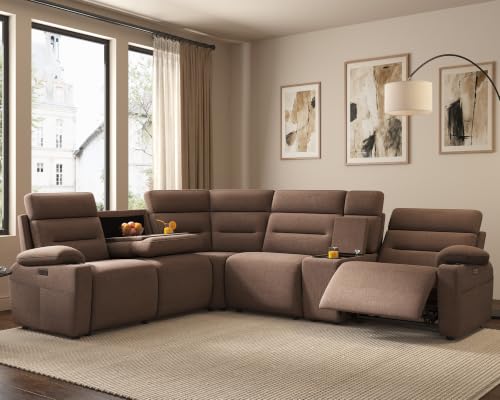
What Is a Reclining Sofa?
A reclining sofa is a multi-seat couch with built-in mechanisms that let the backrest tilt and the footrest extend, turning a standard seating position into a lounging position. Most models seat two or three people, and the recline function may apply to every seat or only to the end seats. The mechanism is either manual (lever or push-back) or power-driven (motorized buttons or switches).
Compared with a fixed sofa, a recliner adds a layer of ergonomic support: the seat back angle and leg elevation work together to reduce pressure on the lower back and legs during long sitting sessions. That makes reclining sofas a practical choice for family rooms, media rooms, and any living space where relaxation is the priority. If you are still mapping out your overall seating plan, our reclining sectionals guide explains how recliners fit into larger L-shaped and U-shaped configurations.
Manual vs Power Reclining Mechanisms
The single biggest functional decision is how the sofa reclines. Both approaches use the same underlying hinge-and-frame architecture, but the user experience and maintenance profile differ.
Manual Recliners
Operated by a side lever or a push-back motion. Fewer electronic parts, generally lighter, and simpler to maintain. Lever models offer precise positional control; push-back models rely on body weight and are common in entry-level and mid-range sofas.
Power Recliners
Driven by quiet motors with button or switch controls. Smooth, gradual motion and easy fine-tuning of the recline angle. Many models add USB charging and lumbar adjustment. Our power recliners overview covers motor types and control layouts in more detail.
Power models typically sit in the mid-range to premium tiers, while manual lever and push-back designs span entry-level through mid-range. If you want to compare specific power configurations, look at models with dedicated comfort features such as lumbar support, built-in USB ports, or integrated cup holders. For push-back style options, see our notes on the push-back recliner.
Wall Hugger vs Standard Recline
Recline travel is measured in inches behind the sofa, and that number determines how much clearance you need between the back of the sofa and the wall.
- Standard recliners need several inches of rear clearance to fully extend. They suit rooms with generous floor space or sofas placed away from walls.
- Wall hugger recliners use a linkage that moves the seat forward as the back tilts, so the sofa can sit close to the wall. They are a strong fit for apartments and compact living rooms; our small wall hugger recliner page covers tight-space sizing.
Measure your wall clearance before choosing. A wall hugger can free up several inches of floor depth, which matters in narrow rooms. If your living room is on the compact side, the small reclining sofas for small spaces guide pairs well with this section.
Common Layouts and Seat Configurations
Reclining sofas come in several seating footprints. The right one depends on room size, household size, and whether you want a shared lounging experience or individual control.
Reclining Loveseat
Two seats with dual recline. Compact and ideal for couples or secondary seating areas. Console versions add a center storage compartment and cup holders between the seats; see our reclining loveseat with console page.
Reclining Sofa with Console
Three seats with a drop-down center console that provides storage and cup holders. A practical family-room layout that keeps drinks and remotes organized. Read more on reclining sofas with consoles.
Reclining Sectional
Multi-piece configurations where one or more sections recline, often combined with a chaise. Best for large rooms and open-plan spaces. Compare options in our reclining sectionals collection.
Sectional with Recliner and Sleeper
Combines recline seating with a pull-out bed for guests. A dual-purpose layout for multi-function living rooms; see sectional sofas with recliner and sleeper.
If you are pairing a recliner with a chaise, the sectional with chaise recliner page explains how the two functions share space. Households with pets should also review our pet-friendly sofa guidance before committing to a fabric type.
Upholstery and Material Considerations
Reclining mechanisms put extra stress on upholstery at the hinge points, so material choice affects both longevity and maintenance.
Frame construction matters just as much as the cover. Look for kiln-dried hardwood or reinforced engineered wood frames, sinuous spring or pocket-coil suspension, and high-density foam cushions. These details separate durable construction from sofas that sag within a couple of years. Our brand comparison tool can help you weigh build quality across manufacturers.
Sizing and Clearance Checklist
Recliners fail at the measurement stage more often than at any other point. Before you shop, confirm the following:
- Seat width per person: allow at least 20–24 inches of seat width per adult for comfortable reclining.
- Fully reclined depth: add the extended footrest length to the sofa depth when checking floor space. A fully open recliner can project substantially further into the room than its closed footprint suggests.
- Wall clearance: confirm whether the model is a wall hugger or needs rear clearance.
- Doorway and stair access: check the delivery path, especially for large three-seat models. Our sofa that fits through narrow doors guide covers this.
- Power outlet access: power recliners need a nearby outlet; plan cord routing before delivery.
Feature Comparison at a Glance
| Tier | Typical Mechanism | Best For | Notable Traits |
|---|---|---|---|
| Entry-level | Manual push-back or lever | Occasional use, guest rooms | Lighter frames, simpler upholstery, basic foam cushions |
| Mid-range | Manual lever or basic power | Everyday family seating | Wall-hugger linkage, performance fabric, USB on select models |
| Premium | Power with smooth motor | Daily lounging, media rooms | Lumbar support, memory presets, reinforced hardwood frame |
| Luxury | Multi-motor power | Dedicated home theater spaces | Full-grain leather, articulating headrest, integrated lighting |
Matching a Recliner to Your Room
A reclining sofa anchors the room, so its proportions and style should match the surrounding layout. In smaller living rooms, a two-seat reclining loveseat preserves walking space better than a three-seat sofa. In open-plan spaces, a reclining sectional with a chaise creates a natural zone boundary without blocking sightlines.
For a unified look, pair the sofa with a complementary accent chair or armchair set. Our armchair and ottoman sets page offers pairing ideas, and the sofa and chair combinations guide covers proportion rules. If the room leans modern, a modern contemporary sectional pairs clean lines with recline function.
Care and Maintenance Basics
Reclining sofas need slightly different care than fixed couches because of the moving parts:
- Vacuum seams, creases, and the footrest underside monthly to remove grit that abrades the mechanism.
- Lubricate metal linkage points per the manufacturer's schedule; avoid over-lubricating fabric-adjacent parts.
- Keep power cords clear of the recline path and check them for wear periodically.
- Rotate seat cushions if the design allows, to distribute wear evenly.
- Blot spills immediately rather than rubbing, especially on velvet and microfiber.
Before purchase, review the manufacturer's warranty terms, especially coverage for motors and mechanisms. Our sofa warranty and returns guide explains what is typically covered and what to confirm in writing. For households with pets, the pet-friendly sofa guide covers scratch-resistant covers and cleaning routines.
Frequently Asked Questions
Is a power recliner worth it over a manual recliner?
Power models offer smoother, more precise positioning and are easier for people with limited mobility. Manual models have fewer electronic parts and simpler maintenance. Choose power if you use the recliner daily and value fine angle control; choose manual if you prefer a simpler mechanism.
Do reclining sofas need to sit away from the wall?
Not necessarily. Wall hugger models are engineered to recline with minimal rear clearance. Standard recliners need several inches behind the sofa. Confirm the specific model's clearance requirement before delivery.
How much seat width should I allow per person?
Plan for at least 20–24 inches of seat width per adult. Three-seat recliners with consoles use part of the center seat for storage, so verify the usable seat width of the end seats.
Can a reclining sofa be used as a sleeper?
Only if the model is explicitly designed as a sleeper or includes a pull-out bed. Standard recliners do not lie flat enough for sleeping. If you need dual function, look for a reclining sectional with an integrated sleeper.
What is the most durable upholstery for a recliner?
Dense performance weaves and microfiber resist wear and stains well, while full-grain leather offers the longest lifespan when properly maintained. Bonded and faux leather are more common in entry-level models and require gentler care.
Ready to Compare Reclining Sofa Options?
Review the curated selection below to compare mechanisms, layouts, and upholstery options side by side, then check availability on the retailer page.
Explore Reclining Sofa Options