


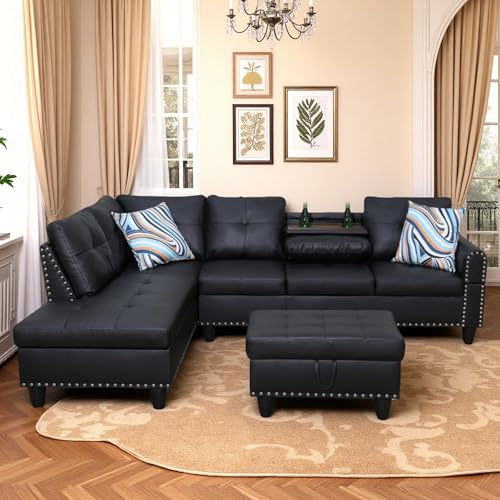


What a 3 Piece Living Room Set with Sleeper Sofa Actually Includes
A three-piece living room set bundles three coordinated seating pieces into one purchase. In the sleeper configuration, the centerpiece is a convertible sofa that folds or pulls out into a bed. The other two pieces vary by manufacturer, but the most common arrangements are:
- Sleeper sofa + loveseat + accent chair. The classic trio. It seats five to six people comfortably and gives you a matched pair plus a single chair for flexibility.
- Sleeper sofa + loveseat + ottoman. A more relaxed setup where the ottoman doubles as a footrest, extra seat, or surface tray.
- Sleeper sofa + two accent chairs. A common option for smaller rooms, where two chairs replace the loveseat and keep the footprint tighter.
- Sleeper sofa + chaise + armchair. A lounge-forward arrangement that suits open-plan living rooms and media spaces.
The defining feature is the sleeper. The other two pieces exist to complete the seating group and to visually anchor the room. That is why the sleeper mechanism deserves more scrutiny than any other component in the set.
Quick definition
A 3 piece living room set with sleeper sofa is a coordinated furniture group in which one seating piece converts into a bed, and the remaining two pieces match it in upholstery, leg finish, and cushion profile. It is designed to be bought, delivered, and arranged as a single design decision.
Why Buyers Choose a Coordinated Set Instead of Separate Pieces
Matching furniture by hand is harder than it looks. Fabric dye lots vary, leg finishes drift between production runs, and seat heights rarely align across brands. A coordinated set eliminates that friction. The benefits are practical rather than cosmetic:
- Visual cohesion without effort. All three pieces share the same upholstery, stitching, and hardware, so the room looks intentional from day one.
- Proportional harmony. Set pieces are engineered together, which means the loveseat and accent chair are scaled to the sleeper sofa rather than guessed at.
- Simpler delivery and setup. One order, one delivery window, and often one assembly session instead of three separate ones.
- Guest readiness built in. The sleeper sofa means you do not need a separate guest room to host overnight visitors.
- Consistent care instructions. Matching upholstery means one cleaning method and one set of care guidelines for the whole group.
The trade-off is flexibility. A set locks you into a specific combination, so it works best when the room dimensions and the household's needs are already clear. If your space has unusual proportions or you plan to reconfigure often, buying pieces individually may serve you better. For most buyers who want a finished, guest-ready living room, the set is the more efficient route.
Common Configurations and Who Each One Suits
Configuration choice should follow room size and seating demand, not the other way around. The table below compares the most common arrangements using tier descriptors rather than any figure-based comparison.
| Configuration | Typical Seating Capacity | Best For | Room Fit |
|---|---|---|---|
| Sleeper sofa + loveseat + accent chair | Five to six | Families that host guests regularly | Mid-size to large living rooms |
| Sleeper sofa + loveseat + ottoman | Four to five | Relaxed lounging and media rooms | Mid-size rooms with open floor space |
| Sleeper sofa + two accent chairs | Four to five | Apartments and compact living rooms | Small to mid-size rooms |
| Sleeper sofa + chaise + armchair | Four to five | Open-plan and lounge-forward spaces | Large or open-concept rooms |
If your room is on the smaller side, the two-accent-chair configuration is usually the safest. It preserves walkways and keeps the visual weight low. If you regularly host overnight guests and also entertain seated groups, the loveseat-plus-chair arrangement is the most versatile.
For buyers comparing seating widths and footprint math, our guide to 2 and 3 seater sofas in the living room breaks down how different widths change circulation. If the sleeper is the priority and the companion pieces are secondary, the dedicated guide to a 3 seater sofa with pull-out bed goes deeper on that single piece.
Sleeper Mechanisms Explained
The sleeper mechanism is the part most likely to fail first, so it deserves the closest inspection. There are three main systems used in coordinated sets:
Fold-out mechanism
The seat cushions lift and a folded metal frame unfolds into the room. This is the most common system in mid-range and premium sets because it produces a flat, stable sleeping surface and supports a thicker mattress. Look for a reinforced steel frame, a smooth hinge action, and a locking bar that secures the frame when open. Entry-level versions can feel stiff at first but often loosen with use; the key is that the frame should not flex or wobble when fully extended.
Pull-out trundle mechanism
A second sleeping platform slides out from beneath the seat and rises to mattress height. Trundle systems are common in compact and apartment-scale sets because they preserve the sofa's closed footprint. They typically support a thinner mattress, so comfort expectations should be calibrated accordingly. The trade-off is that the trundle platform often sits lower than the main seat, which can create a slight height difference between the two sleeping surfaces.
Click-clack and futon-style conversion
The backrest folds flat to create the sleeping surface. This is the simplest and lightest mechanism, and it is frequently found in entry-level convertible sets. It is best suited to occasional use rather than nightly sleeping, because the flat position is firmer and the mattress is thinner. Click-clack designs are popular in studios and guest rooms where the sleeper is a backup rather than a primary bed.
Tier guidance: Entry-level sets most often use click-clack or basic fold-out frames. Mid-range sets typically upgrade to a thicker-gauge fold-out frame with a better hinge system. High-end and premium sets add reinforced locking bars, smoother glide tracks, and mattresses designed for regular overnight use. If the sleeper will be used more than a few times a year, aim for mid-range or above.
Whichever mechanism you choose, test it if you can, or read verified owner feedback about long-term performance. A mechanism that feels smooth in a showroom can still develop squeaks after a year of use, and owner reviews are the best signal of how a specific set holds up.
Mattress Types Inside Sleeper Sofas
The mattress is where most sleeper sofas either earn their keep or disappoint. Coordinated sets generally use one of four mattress types:
- Standard foam. The baseline option. It is lightweight and folds easily, but it compresses over time and offers limited support. Best for occasional guest use.
- Memory foam. Conforms to the body and reduces pressure points. It is heavier and takes longer to expand after unfolding, but it delivers noticeably better comfort for multi-night stays.
- Gel-infused foam. Memory foam with improved airflow, which reduces heat retention. A good middle path for warm rooms and guests who sleep hot.
- Innerspring. A coil-based mattress that feels closer to a traditional bed. It is the most supportive option, but it is heavier and less common in compact sets.
Mattress thickness matters as much as mattress type. Thinner mattresses fold more easily and suit trundle and click-clack systems; thicker mattresses are usually reserved for fold-out frames with deeper storage cavities. If the sleeper will host guests for several consecutive nights, prioritize a memory foam or innerspring mattress over a standard foam pad.
For buyers who want the sleeper to function as a genuine second bed, our guide to a king sofa bed explores how larger sleeping surfaces change the set's footprint and comfort profile. If a full-size sleeping surface is enough, the overview of full size sofa beds for small spaces is a useful cross-check on dimensions.
Quality Tiers Without the Guesswork
Because this guide avoids figure-based comparisons, the table below uses consistent tier descriptors to describe where a set sits in the market. Use it to calibrate expectations before you compare specific products.
| Tier | Frame and Mechanism | Upholstery | Best For |
|---|---|---|---|
| Entry-level | Basic fold-out or click-clack frame, lighter gauge steel | Standard microfiber or polyester blends | Occasional guest use, starter apartments |
| Mid-range | Reinforced fold-out frame, smoother hinge action | Performance fabrics, better stitching, removable covers | Regular hosting, family living rooms |
| Premium | Heavy-duty steel frame, locking bars, glide tracks | High-grade performance fabric or top-grain leather | Frequent overnight guests, long-term use |
| Luxury | Commercial-grade frame and mechanism, extended service life | Premium leathers, tailored upholstery, detailed finishing | Primary living rooms, design-led interiors |
The practical takeaway is that the mechanism tier and the upholstery tier should match. A premium fabric on an entry-level frame is a mismatch that will show up in the sleeper's performance long before the fabric wears. Conversely, a heavy-duty frame under a thin standard fabric is durable where it matters most but may look tired sooner than expected.
Upholstery and Material Choices
Upholstery determines how the set feels, how it ages, and how much maintenance it demands. The main options in coordinated sleeper sets are:
Performance fabric
Tight-weave synthetics engineered to resist stains and moisture. They are the most practical choice for families, pets, and high-traffic living rooms. Many performance fabrics now mimic the texture of linen or woven cotton convincingly, so the durability does not come at the expense of looks. Removable, washable cushion covers are a significant bonus.
Microfiber
Soft, dense, and forgiving. Microfiber resists spills reasonably well and wipes clean easily. It is common in entry-level and mid-range sets and is a solid all-around choice, though it can show crushing and shine in high-wear spots over time.
Faux leather
Easy to wipe down and visually sharp in modern rooms. Faux leather is a strong choice for households with pets because hair and crumbs do not sink into the surface. It can feel warm in hot climates and may crack at stress points in lower-tier versions, so construction quality matters.
Genuine leather
Durable, breathable, and increasingly supple with age. Leather is a long-term investment and suits premium and luxury tiers. It requires conditioning and is more vulnerable to scratches from claws, so it is a better fit for adult households than for homes with exuberant pets.
Velvet and woven blends
Rich and design-forward, but the least forgiving in daily use. Velvet shows marks and requires regular brushing and careful cleaning. It works best in formal living rooms or low-traffic spaces where appearance carries more weight than easy maintenance. If velvet is your preference, our overview of a grey velvet sofa covers the practical care considerations.
Measuring Your Room and Your Entryway Correctly
Measurement mistakes are the most common reason a set gets returned. Three dimensions matter more than any others:
Closed footprint
Measure the length, depth, and height of each piece as it will sit in the room. Do not rely on the product listing alone; compare it against your actual wall length and walkway widths. Leave at least 18 inches of clearance around main walkways, and more if the room is a pass-through space.
Extended footprint
The sleeper needs clearance in front of it when open. Fold-out mechanisms typically require several feet of open floor space, and trundle systems need side clearance as well. Measure the fully extended footprint and confirm that it does not block doorways, heating vents, or traffic paths.
Delivery path
Measure the entry door width, hallway width, stairwell turns, and elevator dimensions. A three-piece set arrives in three separate pieces, but each piece still needs to fit through every opening on the way to the living room. For a closer walkthrough, see our 3 seater sofas for small spaces guide, which covers clearance math in detail.
Measurement shortcut
Use painter's tape to outline the closed footprint of all three pieces on the floor, then lay out a second outline for the sleeper in its extended position. Walking around the tape for a day reveals problems that a tape measure alone will not.
Layout and Arrangement Ideas
A three-piece set gives you enough pieces to define a conversation zone, but the arrangement still needs to respect the room's shape. Three layouts work in most spaces:
The U-shape conversation layout
Place the sleeper sofa on the longest wall or facing the room's focal point. Position the loveseat perpendicular to it, then angle the accent chair to close the U. This layout is the most social and works well in mid-size to large rooms. Keep the coffee table centered in the opening of the U.
The L-shape with open circulation
Anchor the sleeper sofa and loveseat at a right angle in a corner, and place the accent chair near the opposite side of the room. This layout keeps the center open, which suits rooms with a walkway cutting through them. It is a strong choice for apartments and open-plan living areas.
The symmetrical pairing
Center the sleeper sofa on the focal wall, with the loveseat directly opposite and the accent chair off to one side. This is the most formal arrangement and works well in rooms with a fireplace or a defined media wall. It is less flexible for conversation but reads as deliberate and balanced.
In every layout, use an area rug to visually bind the three pieces together, especially in open floor plans where the seating group could otherwise float. If the set is going into a grey-toned room, our overview of furniture for a grey living room covers how to keep a coordinated group from looking flat.
Household Fit: Kids, Pets, and Overnight Guests
The same set can be a great choice for one household and a poor one for another. Match the set to the people who will actually use it:
- Households with young children. Prioritize performance fabric or faux leather, removable cushion covers, and a fold-out mechanism with a locking bar that stays secure when open. Rounded corners and tight upholstery reduce snag points.
- Households with pets. Faux leather and tight-weave performance fabrics are the most forgiving. Avoid velvet and loose weaves. A mid-range or premium mechanism is worth the upgrade because pet households tend to use furniture more heavily.
- Frequent overnight guests. Choose a fold-out frame with a memory foam or innerspring mattress, and confirm that the extended footprint fits the room. A sleeper that is comfortable for one night but not three will not solve the guest problem.
- Renters and movers. Lighter pieces are easier to move, but they should still have a stable frame. Confirm that each piece fits through the tightest doorway in the home.
If the guest function is a priority, our guide to guest room furniture explores how a sleeper set fits into a broader guest-ready room plan. For households that want a second sleeping surface without a dedicated guest room, the comparison of loveseat sofa beds is a useful complement to this guide.
Buying Checklist Before You Commit
Run through this list before ordering. Each item corresponds to a decision covered above, so you can use it as a final verification pass.
- Confirm the three pieces. Know exactly what is included: sofa, loveseat, chair, ottoman, or chaise. Check whether a coffee table or throw pillows are included or sold separately.
- Match the mechanism to use. Click-clack for occasional use, fold-out for regular guests, trundle for tight footprints. Verify the frame material and locking system.
- Check the mattress type and thickness. Memory foam or innerspring for multi-night comfort; standard foam for backup sleeping only.
- Measure the closed and extended footprints. Confirm walkway clearance and that the open sleeper does not block doors or vents.
- Measure the delivery path. Door width, hallway width, stairwell turns, and elevator size. Each piece must pass through every opening.
- Choose upholstery for the household. Performance fabric or faux leather for kids and pets; leather for adult households; velvet only for low-traffic rooms.
- Verify removable covers. Washable cushion covers dramatically extend the set's practical life in busy homes.
- Read owner feedback on the mechanism. Look specifically for comments about squeaks, hinge stiffness, and mattress compression over time.
- Check the return and delivery policy. Confirm who handles assembly and what the process is if a piece arrives damaged.
If you are still comparing broader configurations, the overview of a 2 piece gray living room set shows how a smaller group changes the layout math, while the guide to a 3 in 1 convertible sleeper sofa bed covers the single-piece alternative to a full three-piece set.
Ready to Compare Sets?
Use the recommended products above to compare configurations, mechanisms, and upholstery options side by side. Each listing includes the details you need to match a set to your room and household.
Back to Recommended SetsFrequently Asked Questions
What exactly is included in a 3 piece living room set with sleeper sofa?
A typical set includes a sleeper sofa (the convertible centerpiece), a loveseat or second seating piece, and an accent chair or ottoman. Some configurations swap the accent chair for a chaise or a matching armchair. The core idea is a complete seating group built around a guest-ready sleeper.
How does a sleeper sofa in a 3 piece set differ from a standalone sleeper sofa?
The sleeper mechanism is usually identical, but a set piece is designed to visually coordinate with its companion seating. Fabrics, leg finishes, cushion profiles, and stitching details match across all three pieces, which creates a cohesive look without extra styling effort.
What sleeper mechanism should I look for in a 3 piece set?
Look for a fold-out mechanism with a reinforced metal frame for regular guest use, or a pull-out trundle style for occasional use. Entry-level sets often use a simple fold-out frame, while mid-range and premium tiers add thicker-gauge steel, better hinge systems, and memory-foam or gel-infused mattresses.
Can a 3 piece living room set with sleeper sofa fit in a small apartment?
Yes, provided you choose a compact configuration. Look for apartment-scale sets where the sleeper sofa is around 70 to 78 inches wide and the companion pieces are loveseats or slim accent chairs. Measure the extended footprint and confirm door and hallway clearance before ordering.
What upholstery works best for a family with pets and kids?
Tight-weave performance fabrics, microfiber, and faux leather are the most forgiving choices. They resist staining, wipe clean easily, and hold up to daily wear. Removable, washable cushion covers are a major advantage in any busy household.
How should I arrange a 3 piece living room set in an open floor plan?
Anchor the sleeper sofa on the longest wall or facing the focal point, then place the loveseat perpendicular to it to define the conversation zone. Use the accent chair to close the U-shape or angle it toward the sofa. Keep at least 18 inches between pieces for walkways, and use a rug to bind the seating group together.
Is a 3 piece set a better choice than buying pieces separately?
A coordinated set removes the guesswork of matching fabrics, proportions, and finishes, and it usually delivers a cohesive look with less effort. Buying separately gives you more control over each piece and can be better if your room has unusual dimensions. For most buyers who want a finished, guest-ready living room, a coordinated set is the more efficient route.